Crepe freezing guide
Can You Freeze Crepes? How to Freeze, Thaw and Reheat Them
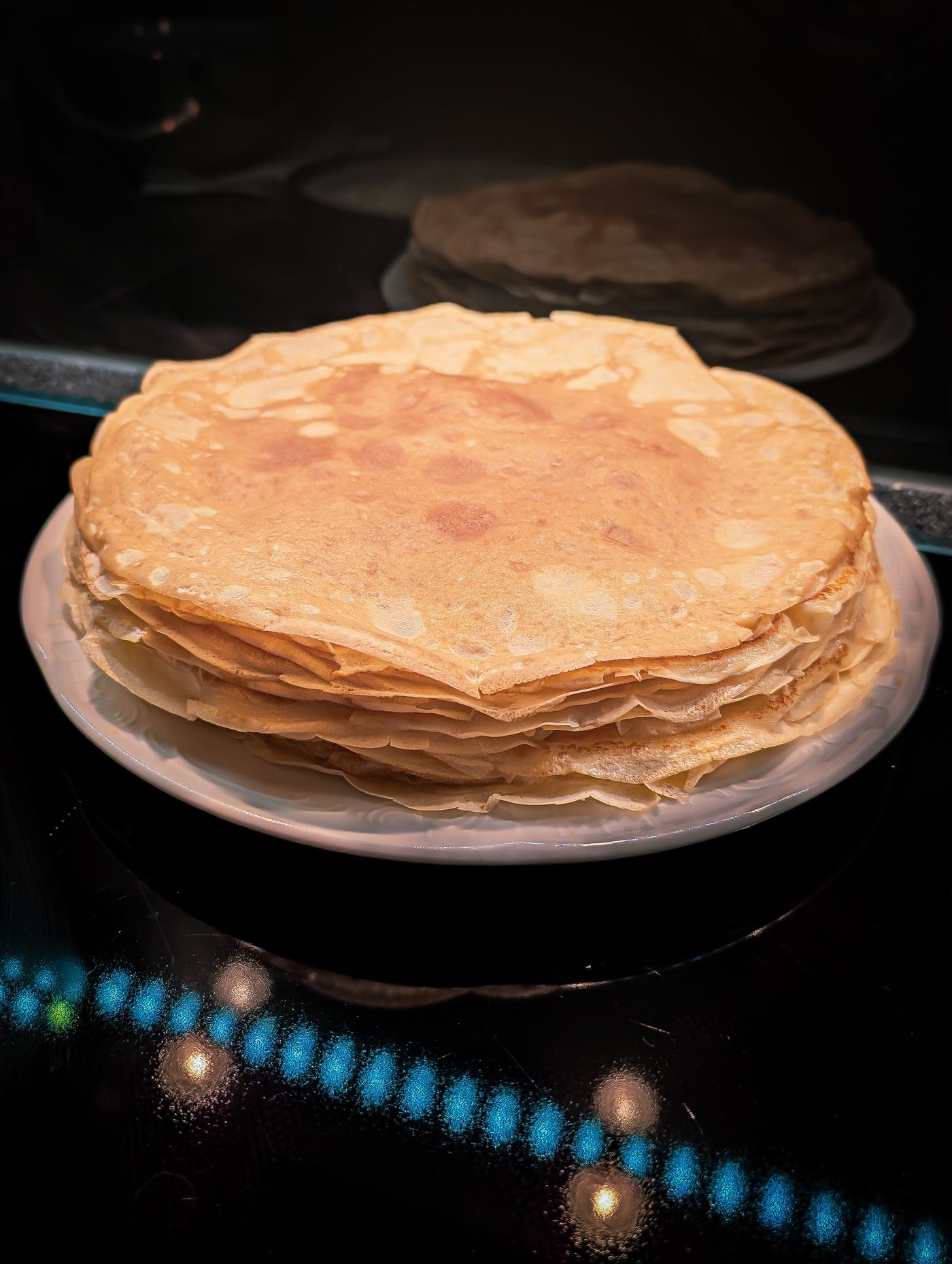
Yes. Cooked crepes freeze well because they are thin and flexible. Cool them completely, place parchment or wax paper between the layers and seal the stack in a freezer-safe bag or container. Plain crepes are the easiest to freeze; filled crepes depend on whether the filling releases water or separates after thawing.
Quick answer
Freeze plain crepes only after they are completely cool. Separate every crepe with parchment or wax paper, package the stack airtight and freeze it flat. A conservative quality target is about one to two months; some recipes allow longer. Thaw the stack in the refrigerator or on a rack before separating, or warm individual crepes gently from frozen.
Do Crepes Freeze Well?
Plain crepes are strong freezer candidates. Food Network instructs cooks to cool crepes, stack them in sealed bags and freeze them, while King Arthur Baking also recommends freezing extra crepes for later.
The thin structure is helpful: a crepe thaws quickly and does not contain a thick, airy center that must be reheated gradually. The main weaknesses are delicate edges, sticking between layers and condensation caused by packaging the crepes while warm.
Freezes best
Plain, completely cooled crepes with paper between every layer.
Freezes acceptably
Crepes filled with firm, low-moisture ingredients.
More difficult
Very thin gluten-free crepes that tear when separated.
Poor candidate
Crepes filled with whipped cream or watery fresh fruit.
How Long Do Frozen Crepes Last?
Reliable recipes do not all give the same number. Food Network's standard crepe recipe allows up to two months, another Food Network recipe gives one month, and Martha Stewart gives one month for gluten-free crepes. For a general article, one to two months is the most defensible quality range.
| Storage method | Practical quality window | Best use |
|---|---|---|
| Room temperature | Serve promptly | Same meal |
| Refrigerator | Several days | Short-term meal prep |
| Freezer | About 1–2 months | Longer make-ahead storage |
| Filled frozen crepes | Filling-dependent | Prepared meals and desserts |
How to Freeze Crepes Step by Step
Cool every crepe completely
Lay the crepes flat on a clean board or rack. Food Network specifically instructs cooks to lay crepes flat so they cool before stacking. Warm crepes create condensation that later freezes between the layers.
Place paper between the layers
Use parchment or wax paper cut slightly larger than the crepe. Food Network's make-and-store method explicitly recommends paper squares between each crepe.
Divide into useful portions
Instead of freezing one large stack, package the number normally used for a meal. Smaller stacks thaw faster and reduce repeated opening.
Package the stack airtight
Use a freezer-safe zip bag or rigid container. Press out excess air without crushing the crepes. A rigid container provides better protection in a crowded freezer.
Label the package
Add the date, quantity and whether the crepes are sweet, savory, gluten-free or filled.
Freeze the stack flat
Keep it level until firm. Once frozen, it can be repositioned carefully without bending the edges.
Should You Freeze Crepes Folded or Flat?
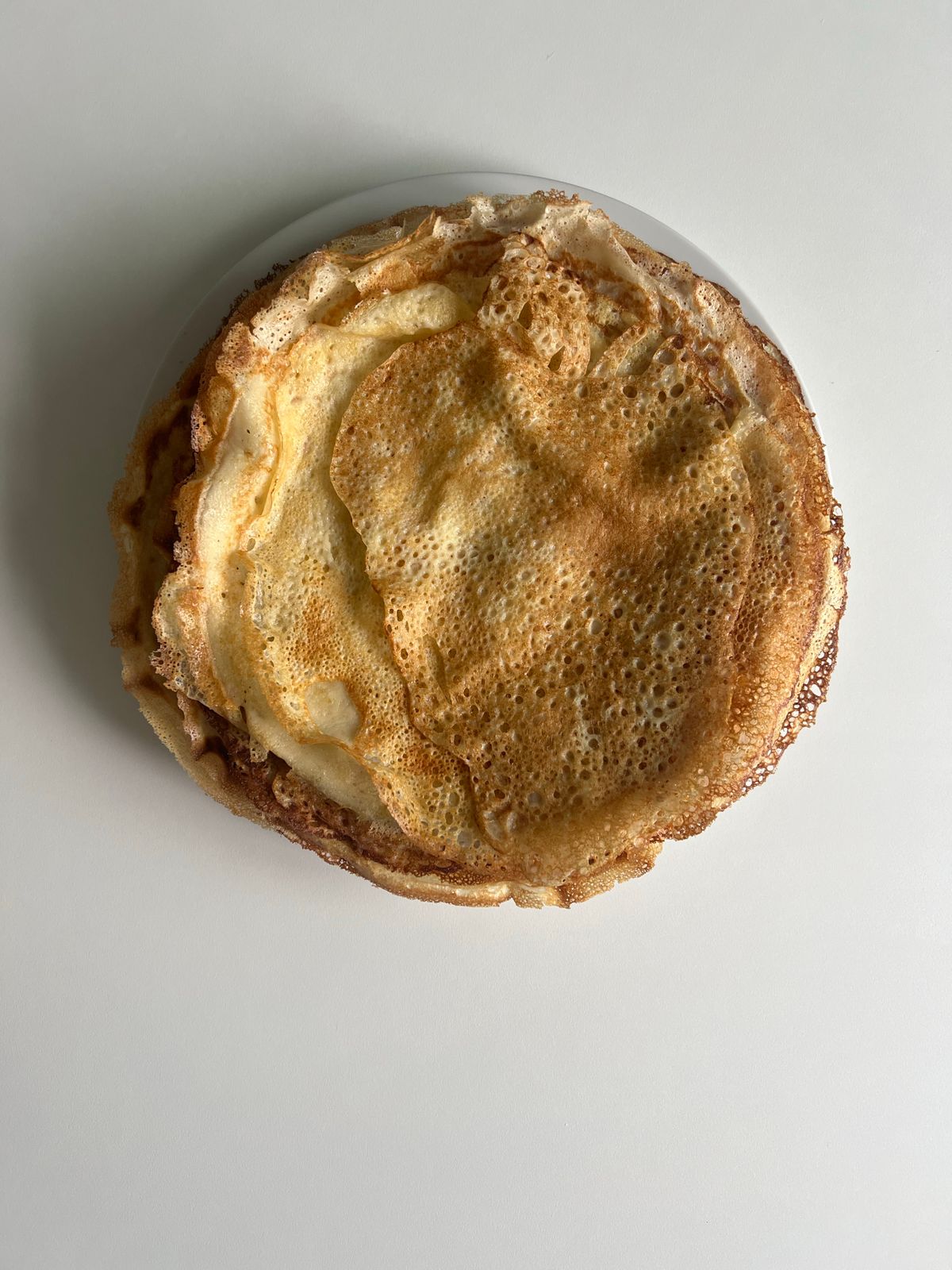
Freeze plain crepes flat. Flat storage makes them easier to separate, protects the fold lines and creates a package that reheats evenly.
Filled crepes may be folded or rolled before freezing when the final dish is designed that way. Freeze them seam-side down on a tray first if the filling makes them difficult to package, then transfer them to an airtight container.
Can You Freeze Filled Crepes?
Yes, but the filling determines the result. King Arthur's baked ham-and-mushroom crepes are suitable for longer freezer storage, while Food Network freezes crepes filled with ice cream for a specific dessert. Those examples show that filled crepes can work, but the thawing and serving method must match the filling.
When possible, freeze crepes plain and add delicate fillings after reheating. This gives the most control over texture.
Which Crepe Fillings Freeze Well?
| Filling | Freezer outlook | Main concern | Best approach |
|---|---|---|---|
| Chocolate or hazelnut spread | Good | Can become firm when cold | Thaw before serving |
| Thick jam or fruit compote | Good | May soften the crepe | Use a thin layer |
| Ham and firm cheese | Good | Cheese releases fat | Reheat in oven or skillet |
| Cooked chicken and mushrooms | Good | Sauce thickness matters | Use a thick filling |
| Ricotta or cream cheese | Moderate | Can become grainy or watery | Use in a baked preparation |
| Fresh berries | Poor to moderate | Release water after thawing | Add after reheating |
| Whipped cream | Poor | Deflates and separates | Add fresh at serving |
| Custard or pastry cream | Poor to moderate | Can weep or split | Freeze only in a tested recipe |

How to Thaw Frozen Crepes
In the refrigerator
Move the sealed package to the refrigerator and let it thaw gradually. This is the most controlled option for a full stack and for filled crepes.
On a rack
Food Network recommends thawing frozen crepes on a rack before gently peeling them apart. Air circulation helps surface moisture escape rather than collecting underneath.
One crepe at a time
When paper separates the layers, remove the number needed and return the rest to the freezer immediately. A plain individual crepe can be warmed gently from frozen.
How to Reheat Frozen Crepes
| Method | Best for | Starting approach | Texture |
|---|---|---|---|
| Skillet | One or two plain crepes | Low heat, 20–40 seconds per side | Flexible with lightly dry surface |
| Microwave | Fast individual serving | Short 10–15-second bursts | Soft; can become rubbery |
| Low oven | A stack or filled batch | Cover loosely and warm gently | Even and soft |
| Toaster oven | Folded savory crepes | Low to moderate heat | Edges become lightly crisp |
| Air fryer | Firm filled crepes | Low heat and short time | Crisp but easy to dry |
Skillet method
Warm a nonstick skillet over low heat. Add the crepe without syrup or filling, warm briefly, flip once and remove as soon as it becomes flexible and hot.
Oven method
Place a stack in an oven-safe dish, cover loosely to limit drying and warm at a low temperature. Filled savory crepes can be reheated as a covered baked dish; King Arthur's ham-and-mushroom version uses foil while heating through.
Microwave method
Cover the crepe loosely and use very short intervals. Thin edges become rubbery or brittle when microwaved too long.
Can You Freeze Crepe Batter?
You can find recipes that store batter in advance, but cooked crepes are usually easier to portion, thaw and reheat. Food Network's standard crepe batter keeps in the refrigerator for up to 48 hours, which is often enough for make-ahead preparation without freezing.
Freezing batter can cause separation and requires thawing, mixing and cooking later. Freezing cooked crepes captures the finished texture and creates a faster meal.
Choose batter storage
You want fresh skillet crepes tomorrow and can refrigerate the batter safely.
Choose cooked freezing
You want ready-to-reheat portions for future breakfasts or meals.
Can You Freeze Gluten-Free Crepes?
Yes. Martha Stewart recommends stacking cooled gluten-free crepes with wax paper, wrapping them and freezing for up to one month.
Gluten-free crepes may be more fragile because the flour blend and binder vary. Use smaller stacks, thaw fully and peel the layers apart slowly.
Frozen Crepe Troubleshooting
| Problem | Likely cause | Try next |
|---|---|---|
| Crepes stick together | No paper separators or condensation | Cool fully and separate every layer |
| Edges crack | Freezer burn or forced separation | Package airtight and thaw longer |
| Crepes are soggy | Warm packaging or watery filling | Cool completely and freeze plain |
| Crepes taste stale | Excess air or long storage | Use smaller airtight portions sooner |
| Microwaved crepes are rubbery | Heating cycle too long | Use short bursts or a skillet |
| Filling leaks | Watery fruit or loose sauce | Use thick cooked filling |
| Stack bends in freezer | Stored before firm | Freeze flat on a rigid surface |
| Gluten-free crepes tear | Separated while too cold | Thaw fully and use smaller stacks |
Common Freezing Mistakes
- Stacking crepes while they are still warm.
- Skipping parchment or wax-paper separators.
- Using ordinary thin sandwich bags instead of freezer-safe packaging.
- Freezing delicate whipped or watery fillings unnecessarily.
- Forcing the frozen stack apart.
- Heating at high temperature until the edges become brittle.
- Freezing one enormous stack instead of practical portions.
Frequently Asked Questions
Can you freeze crepes?
Yes. Cool cooked crepes completely, separate them with parchment or wax paper and package them airtight. For best quality, use them within about one to two months, although some sources allow longer storage.
Can you freeze filled crepes?
Yes, when the filling freezes well. Cooked meat, firm cheese, chocolate spread and thick fruit fillings usually perform better than whipped cream, custard or watery fresh fruit.
How do you thaw frozen crepes?
Thaw the stack in the refrigerator, or place frozen crepes on a rack until flexible before peeling them apart. Individual plain crepes can also be reheated gently from frozen.
How do you reheat frozen crepes?
Use a lightly heated skillet for the best flexibility, a covered low oven for a batch or short microwave intervals for speed. Heat only until warm so the thin edges do not become brittle.
Can you freeze crepe batter?
Crepe batter can be stored briefly, but freezing cooked crepes is usually more convenient and predictable. Many standard batters also keep in the refrigerator for up to about 48 hours when covered and kept cold.
How long can crepes stay in the freezer?
One to two months is a conservative quality range supported by major recipe sources. Package them airtight and label the date.
Do crepes need parchment paper before freezing?
Paper separators are strongly recommended because they let you remove individual crepes and reduce tearing. Wax paper or parchment both work.
Bottom Line
Crepes freeze best when they are plain, completely cool, separated with paper and sealed airtight. Use a one-to-two-month quality target, thaw the stack until flexible and reheat gently.
Freeze filled crepes only when the filling is stable. For whipped cream, watery berries and delicate custards, freeze the plain crepes and add the filling after reheating.