Freezer waffle field guide
Can You Freeze Waffles? How to Freeze Them Without Ruining the Texture
Yes. Homemade waffles freeze well, and the best method is simple: cool them completely on a rack, freeze them flat until firm, then move them to an airtight freezer bag. When breakfast comes around, take out only what you need and reheat it directly from frozen.
Quick answer
Cool → pre-freeze → pack → reheat from frozen. Let waffles cool completely on a wire rack. Put them in a single layer in the freezer until firm, then transfer them to a freezer-safe bag or container and remove as much excess air as practical. For individual servings, a toaster or toaster oven is usually the easiest route back to a crisp exterior.
Choose your freezer method by situation
You do not need the same workflow for two leftover waffles and a double batch. Use the smallest amount of work that still lets you remove waffles individually.
| Situation | Best move | Why |
|---|---|---|
| 1–2 waffles | Cool completely, separate if stacking, seal airtight | A full sheet-pan pre-freeze may be unnecessary. |
| Large batch | Freeze flat first, then bag | Keeps individual waffles easy to remove. |
| Large Belgian waffles | Pre-freeze individually; cut only if that matches how you serve them | Deep waffles take more space and may not fit a toaster whole. |
| Meal prep for kids | Freeze in ready-to-toast portions | No need to thaw or separate a large frozen stack. |
| Serving the whole family | Freeze individually, then reheat several together in the oven | Batch reheating is more practical than cycling through a toaster. |
How to freeze waffles step by step
Cool the waffles completely
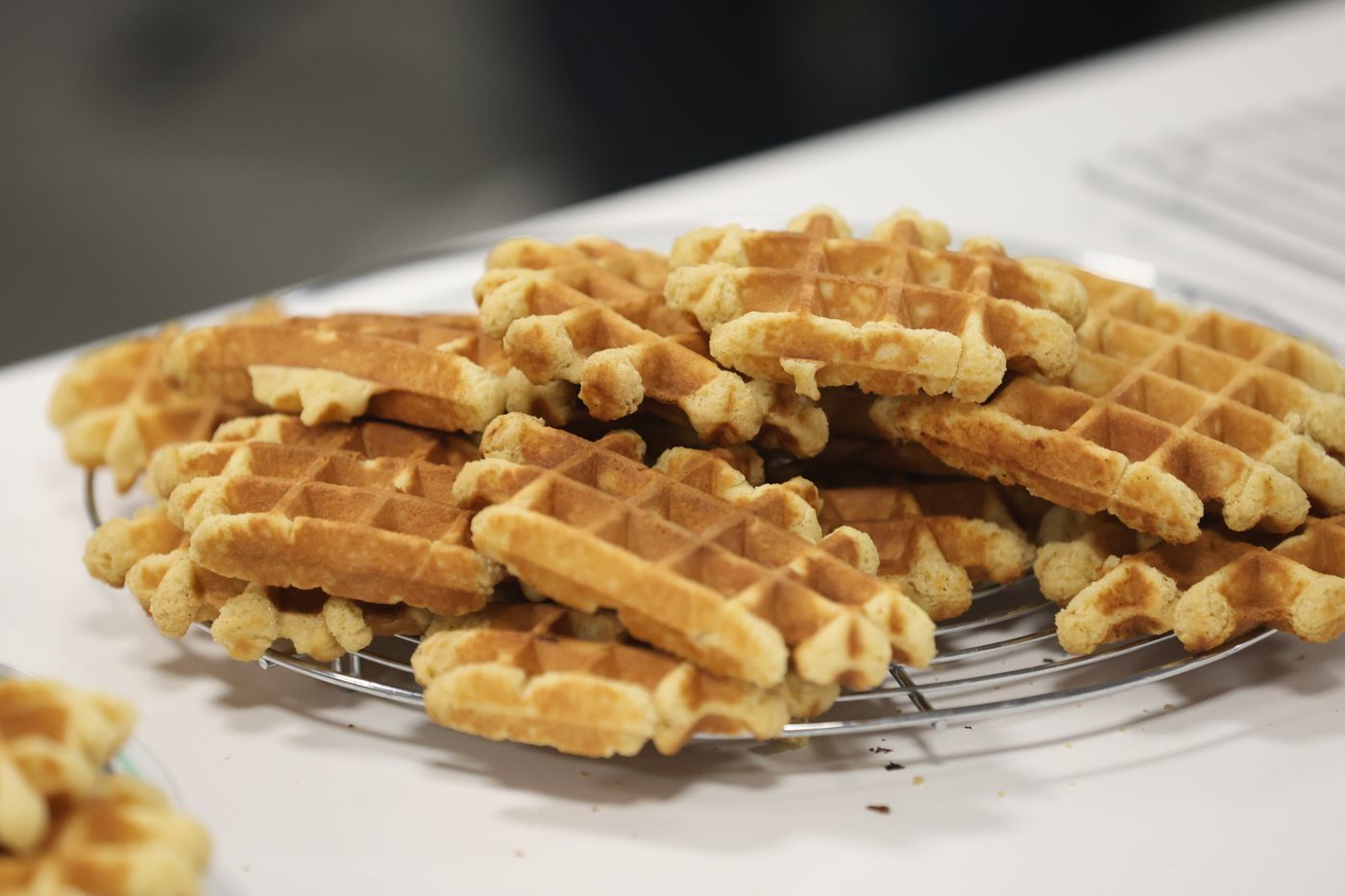
Move each cooked waffle to a wire rack rather than stacking it on a plate. The goal is to let steam escape from both sides. Food Network specifically recommends rack cooling because contact with a plate or sheet can trap steam and make the waffles soggy before they ever reach the freezer.
Portion them the way you will actually eat them
If a large round or Belgian waffle will later be reheated in quarters, separate it before freezing. If it fits your toaster or toaster oven whole, leave it intact. Portioning now avoids wrestling with a hard frozen waffle at 7 a.m.
Freeze flat until firm
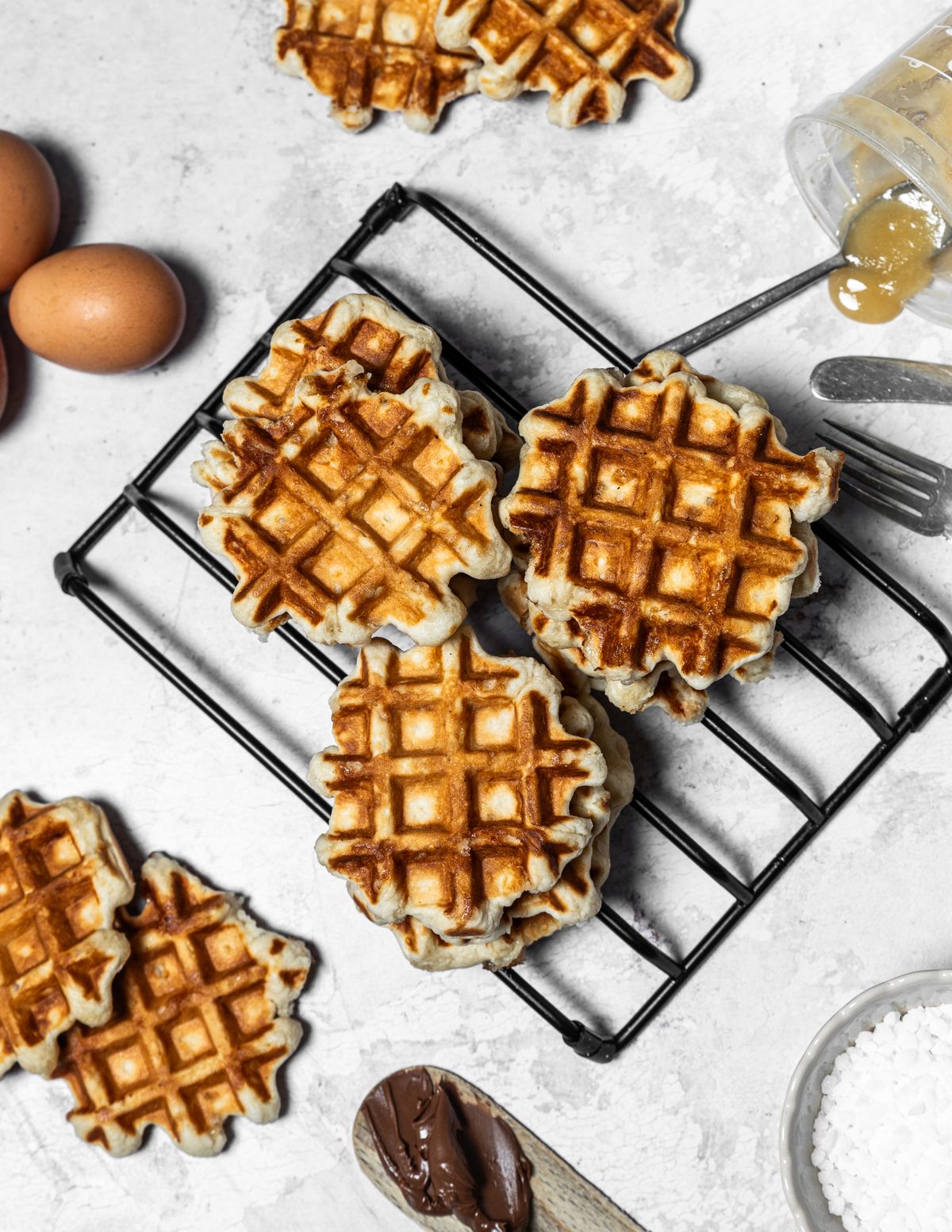
Arrange the cooled waffles in a single layer on a sheet pan. Freeze until solid. Food Network describes about two hours; Valerie's Kitchen uses roughly two to three hours. The exact clock matters less than the result: the surfaces should be firm enough that the waffles can be packed without sticking into one block.
Move them to freezer-safe storage
Transfer the firm waffles to a freezer-safe resealable bag or airtight container. Remove excess air without crushing them. Less air exposure means less opportunity for drying and freezer burn.
Label the package
Add the contents and freezing date. A three-month quality window is a practical target supported by multiple waffle recipes, including Food Network Kitchen and Farmette Kitchen.
Why flash-freeze waffles before stacking them?
Pre-freezing solves a convenience problem: it firms the surface before the waffles are pressed together in a bag. Valerie's Kitchen explicitly uses this technique so frozen waffles do not stick to one another and you can remove only the number needed.
For a large batch, that is a meaningful advantage. You turn one afternoon of waffle making into a freezer full of individual breakfast portions rather than one frozen brick.
Do you need parchment paper between frozen waffles?
Not always. If each waffle is fully pre-frozen before it goes into the bag, the surfaces are less likely to bond together. Parchment is still useful insurance when you are stacking delicate waffles or when your freezer space does not allow a full single-layer pre-freeze.
Food Network recommends parchment or wax paper between layers after the waffles have frozen flat. Valerie's Kitchen also uses parchment or wax paper when multiple layers are needed during freezing.
How long can you keep waffles in the freezer?
For best quality, aim to use homemade frozen waffles within about three months. Food Network Kitchen gives a three-month window in its waffle recipe, and Farmette Kitchen uses the same practical recommendation.
That is a quality target, not a claim that a waffle becomes unsafe at midnight on day 91. Storage conditions, freezer temperature, packaging and air exposure all affect quality. Date the bag so you do not have to guess.
How to reheat frozen waffles
The best method depends on whether you are reheating one waffle or feeding several people. You usually do not need to thaw first.
Toaster
Best for one or two waffles that physically fit. Start conservatively and add another cycle if the center is still cold.
Toaster oven
Useful for thicker waffles and gives you more control than a narrow toaster slot.
Oven
Best for a batch. Food Network specifically recommends oven reheating when you want a crisp exterior and warm center.
Air fryer
A practical dry-heat option. Food Network Kitchen includes air-fryer reheating for frozen homemade waffles.
Microwave
Fast, but not the first choice for crispness. Food Network warns that fully microwaving can leave waffles soft or chewy.
Waffle iron
Possible if the geometry fits, but usually more equipment and cleanup than a toaster or oven.
Should you thaw frozen waffles first?
For normal toaster, toaster-oven or oven reheating, there is usually no need. Going straight from freezer to dry heat is convenient and avoids leaving a moist, thawed waffle waiting on the counter.
Because waffle thickness varies dramatically, treat published reheating times as starting points rather than guarantees. A thin standard waffle and a deep Belgian waffle will not heat through at the same rate.
Can you freeze Belgian waffles?
Yes. The same basic workflow applies: cool completely, pre-freeze and pack airtight. The main difference appears during reheating. A thick Belgian waffle has a larger center to warm, so it can need more time than a thin regular waffle.
If your Belgian waffle is too large for a toaster, a toaster oven or conventional oven is the simpler option. If your site already has a Belgian-vs-regular waffle guide, this is the natural place to link it.
Can you freeze blueberry or chocolate-chip waffles?
Yes. Mix-ins do not fundamentally change the method. Cool the waffles before packing and be aware that exposed pieces of juicy fruit can make local spots softer after reheating.
For heavily topped waffles, freeze the plain cooked waffle and add wet toppings after reheating whenever practical. Syrup, whipped cream and fresh fruit are much easier to control at serving time.
Can you freeze waffle batter instead?
You can find recipes that store batter, but for a make-ahead breakfast, cooked waffles are usually the more convenient format: they go directly from freezer to reheating appliance and are already portioned. Batter performance also depends on its leavening system, so it is not a universal substitute for freezing the cooked waffles.
5 mistakes that make frozen waffles disappointing
1. Packing them while they are still warm
Warm waffles are still releasing steam. Trapping that moisture inside a sealed bag works against the crisp texture you are trying to preserve.
2. Stacking a large fresh batch before freezing
They can stick together and become harder to portion. Freeze flat first when you have enough waffles for this to matter.
3. Leaving too much air in the package
A loose bag exposes more waffle surface to freezer air. Remove excess air gently and use freezer-appropriate storage.
4. Using the microwave when crispness is the priority
The microwave is fast, but dry heat is better suited to restoring a crisp surface. Use a toaster, toaster oven, oven or air fryer when texture matters.
5. Reheating every waffle for the same amount of time
Thickness, sugar content, waffle-maker geometry and appliance power all matter. Use visual and tactile cues: the waffle should be hot through the center and crisp outside without becoming dark or dry.
Freezer-to-breakfast checklist
| Problem | Likely cause | Next-batch fix |
|---|---|---|
| Waffles frozen together | Packed before individually firm | Pre-freeze flat before bagging |
| Lots of ice/moisture in bag | Waffles may have been packed warm | Cool fully on a rack |
| Dry/freezer-burned edges | Air exposure or long storage | Use airtight freezer storage and remove excess air |
| Soft after reheating | Moist reheating method | Finish with toaster/oven-style dry heat |
| Outside dark, center cold | Heat too aggressive for thickness | Use gentler heat or a toaster oven/oven for thick waffles |
Frequently asked questions
Can you freeze homemade waffles?
Yes. Cool cooked waffles completely, freeze them flat until firm, then transfer them to an airtight freezer-safe bag or container with excess air removed.
How long can you freeze waffles?
For best quality, several recipe publishers recommend using homemade frozen waffles within about three months.
Do you thaw frozen waffles before reheating?
Usually no. Individual waffles can be reheated directly from frozen in a toaster, toaster oven, oven or air fryer, depending on their size and thickness.
Can you freeze Belgian waffles?
Yes. Belgian waffles can be frozen using the same cool, pre-freeze and airtight-storage method, although their extra thickness can require longer reheating.
Bottom line
Yes, waffles are a very practical freezer breakfast. The most important step happens before freezing: let them cool completely instead of sealing in residual steam. For a batch, freeze the waffles flat until solid, then consolidate them into airtight freezer storage.
When you want breakfast, remove only what you need and use dry heat to bring back the crisp exterior. That turns homemade waffles from a weekend-only project into something you can realistically eat on a weekday.