MUFFIN TROUBLESHOOTING · BATTER · UPDATED AUGUST 2026
Muffin Batter Too Thin? How to Fix It Without Making Tough Muffins
A diagnosis-first guide to thin muffin batter: identify why it happened, make the smallest useful correction, and avoid turning a loose batter into a tough bake.
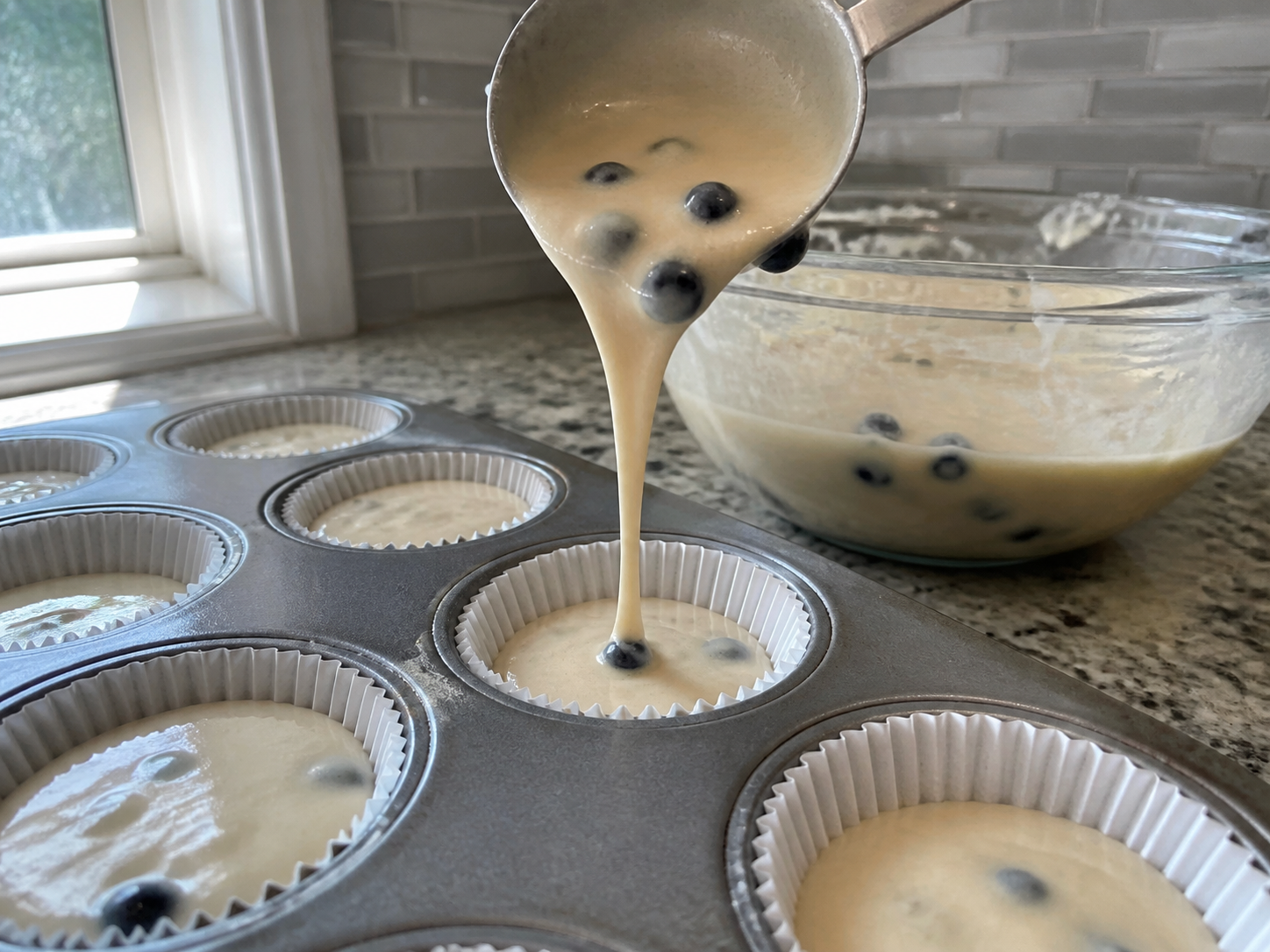
Choose the method that fits what you have
| Your starting point | Best next move | Why |
|---|---|---|
| Batter pours like cream | Likely too much liquid | Add dry ingredients in very small increments |
| Batter seems loose just after mixing | It may need a rest | Wait 10 minutes before correcting |
| Fruit released juice | Mix-in is changing moisture | Drain or toss fruit, then fold gently |
A practical step-by-step method
- Compare the batter with the recipe style. Many muffin batters are scoopable and thick, but some oil-based or fruit-heavy batters are more fluid. Do not fix a normal batter just because it pours.
- If a measuring error is likely, whisk a small amount of flour with any required leavener separately, then fold it in gently. One large addition can make a muffin dry and floury.
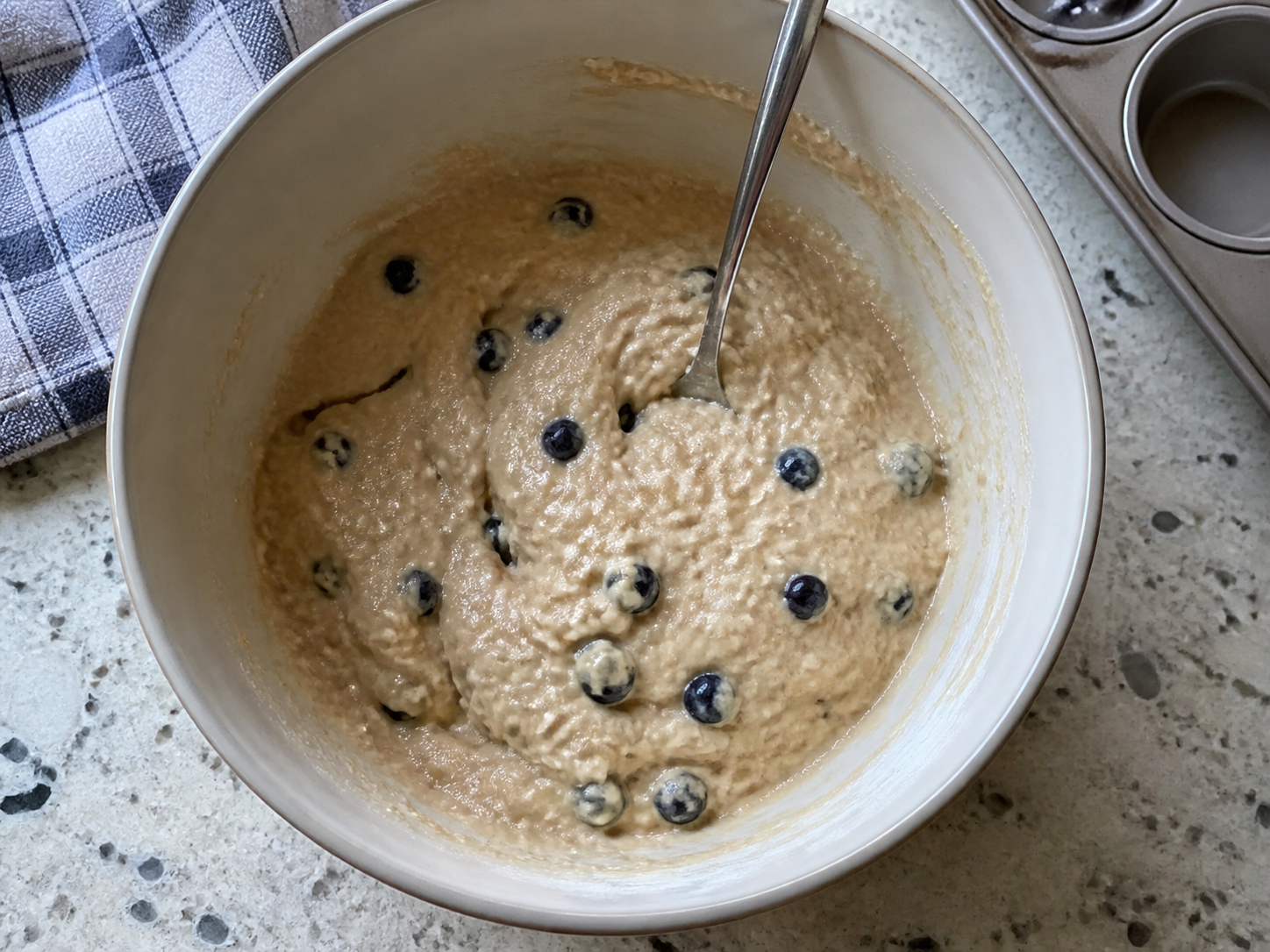
- Let the adjusted batter rest briefly. Flour and oats absorb moisture gradually; this pause may solve the problem without further mixing.
- Check add-ins. Frozen fruit, grated vegetables, yogurt, and thin purées can all make batter appear looser. Drain watery ingredients where appropriate and fold rather than beat.
- Bake one test muffin if you are uncertain. The baked result tells you more than trying to achieve an exact visual thickness from a different recipe.
Why small adjustments matter
A diagnosis-first guide to thin muffin batter: identify why it happened, make the smallest useful correction, and avoid turning a loose batter into a tough bake. The useful part is not an overconfident universal rule: flour absorption, pan heat, moisture, sugar level, appliances and serving time all change the result. Start with the least aggressive correction, then use visible cues—set edges, a dry surface, a light interior, or a stable batter—to decide whether another change is necessary.
For a repeatable result, change one variable at a time. That approach makes it easier to identify the cause rather than creating a new problem with several fixes at once. It also keeps the page useful when the reader is working with a different recipe, brand, oven or portion size.
Common questions
Can I make this ahead?
Prepare only the parts that benefit from waiting. Keep the final texture step—crisping, reheating, freezing or folding—close to serving when possible.
What if my result still looks different?
Use the decision table and the visual cue in the method before changing the whole recipe. A small adjustment is easier to evaluate and less likely to create a dry or tough result.
Which related guide should I read next?
Choose the related page that matches the exact problem you have: storage, reheating, batter consistency, or the final cook.