PANCAKE RECIPE · MUFFIN MIX · UPDATED AUGUST 2026
Muffin Mix Pancakes: How to Convert a Box Mix Without Burnt Edges
Use a muffin mix for pancakes with a batter adjustment, low-heat pan method and flavor-specific checks for blueberry, chocolate chip and fruit mixes.
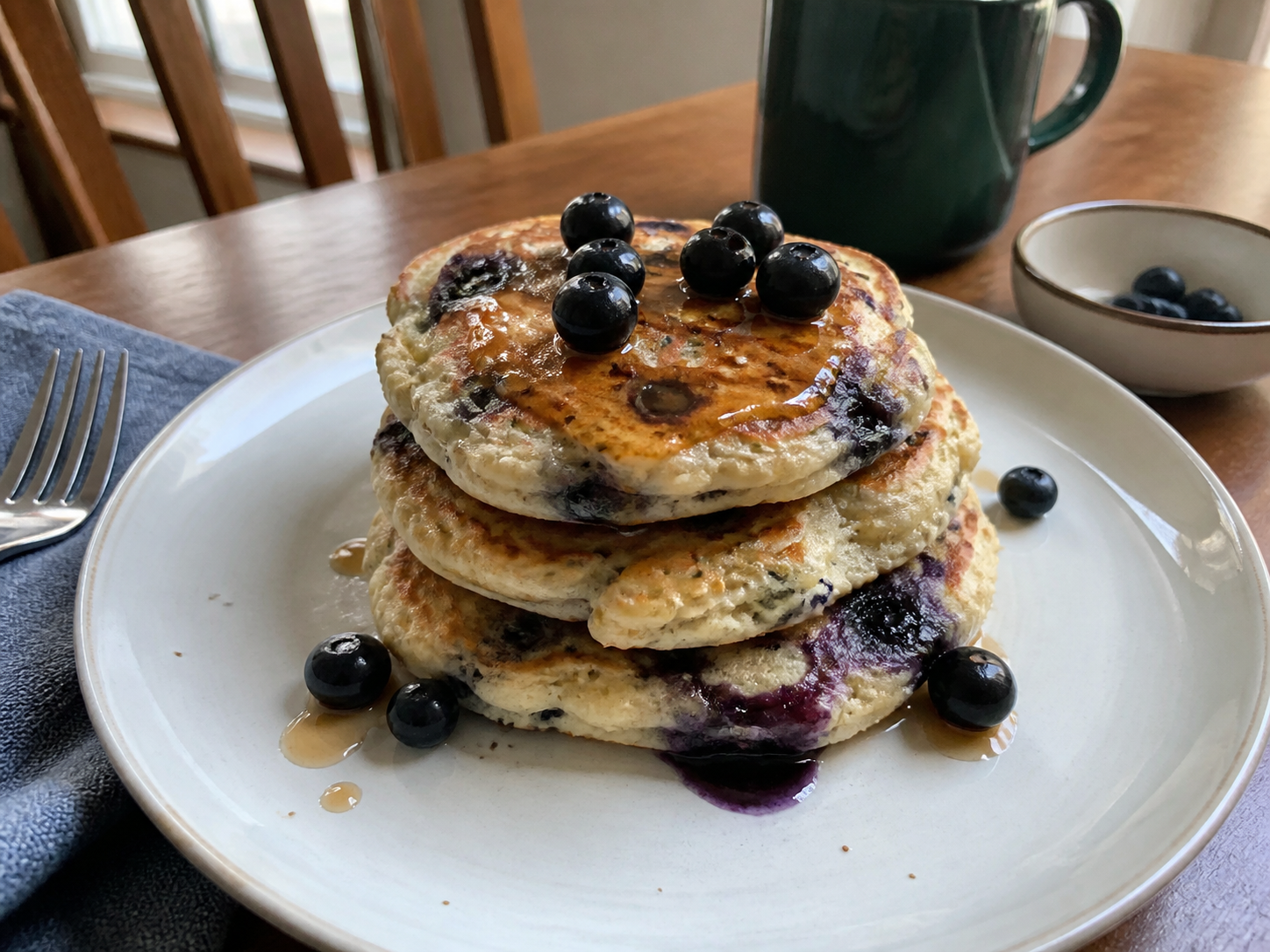
Choose the method that fits what you have
| Your starting point | Best next move | Why |
|---|---|---|
| Sweet berry mix | Use low-to-medium heat | Sugar and fruit brown quickly |
| Chocolate-chip mix | Make smaller pancakes | Chips can scorch on a large pancake |
| Very thick batter | Add liquid one spoon at a time | Aim for a slow pour, not a runny stream |
A practical step-by-step method
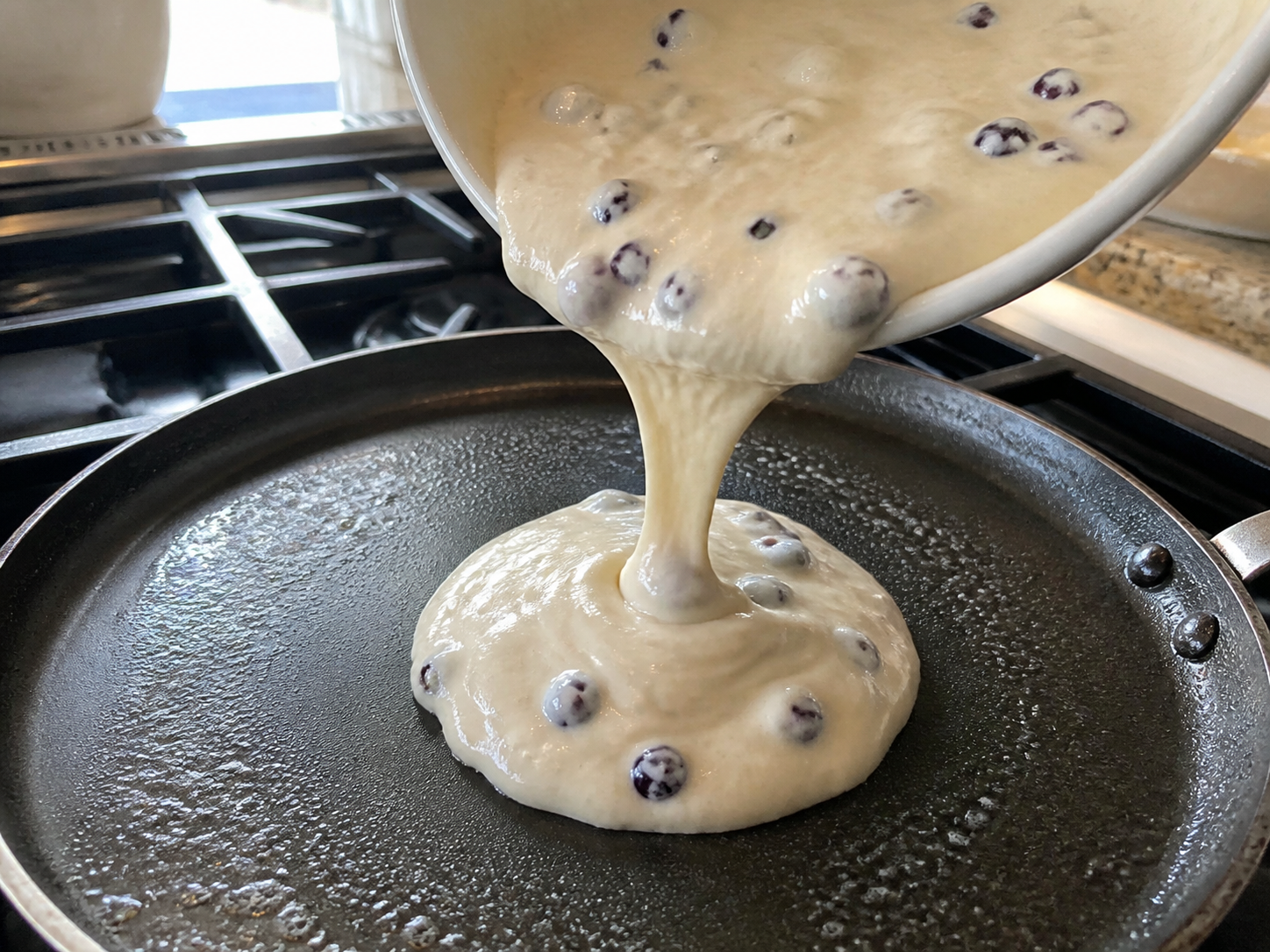
- Start with the package’s muffin ingredients, but add liquid gradually. You want batter that flows slowly from a spoon and spreads only a little when it reaches the skillet.
- Preheat a lightly buttered nonstick skillet over low-to-medium heat. A drop of water should sizzle gently, not vanish instantly.
- Spoon small rounds of batter into the pan. Smaller pancakes give sweet muffin mix enough time to cook through without burning the underside.
- Wait for edges to look set and for bubbles to remain open before flipping. If the bottoms darken too fast, lower the heat before making the next round.
- Serve simply at first. Muffin mixes can be sweet enough without much syrup, so tart fruit or plain yogurt can give a better balance.
Why small adjustments matter
Use a muffin mix for pancakes with a batter adjustment, low-heat pan method and flavor-specific checks for blueberry, chocolate chip and fruit mixes. The useful part is not an overconfident universal rule: flour absorption, pan heat, moisture, sugar level, appliances and serving time all change the result. Start with the least aggressive correction, then use visible cues—set edges, a dry surface, a light interior, or a stable batter—to decide whether another change is necessary.
For a repeatable result, change one variable at a time. That approach makes it easier to identify the cause rather than creating a new problem with several fixes at once. It also keeps the page useful when the reader is working with a different recipe, brand, oven or portion size.
Common questions
Can I make this ahead?
Prepare only the parts that benefit from waiting. Keep the final texture step—crisping, reheating, freezing or folding—close to serving when possible.
What if my result still looks different?
Use the decision table and the visual cue in the method before changing the whole recipe. A small adjustment is easier to evaluate and less likely to create a dry or tough result.
Which related guide should I read next?
Choose the related page that matches the exact problem you have: storage, reheating, batter consistency, or the final cook.