Pancake troubleshooting guide
Why Are My Pancakes Flat? 12 Causes and How to Fix Them
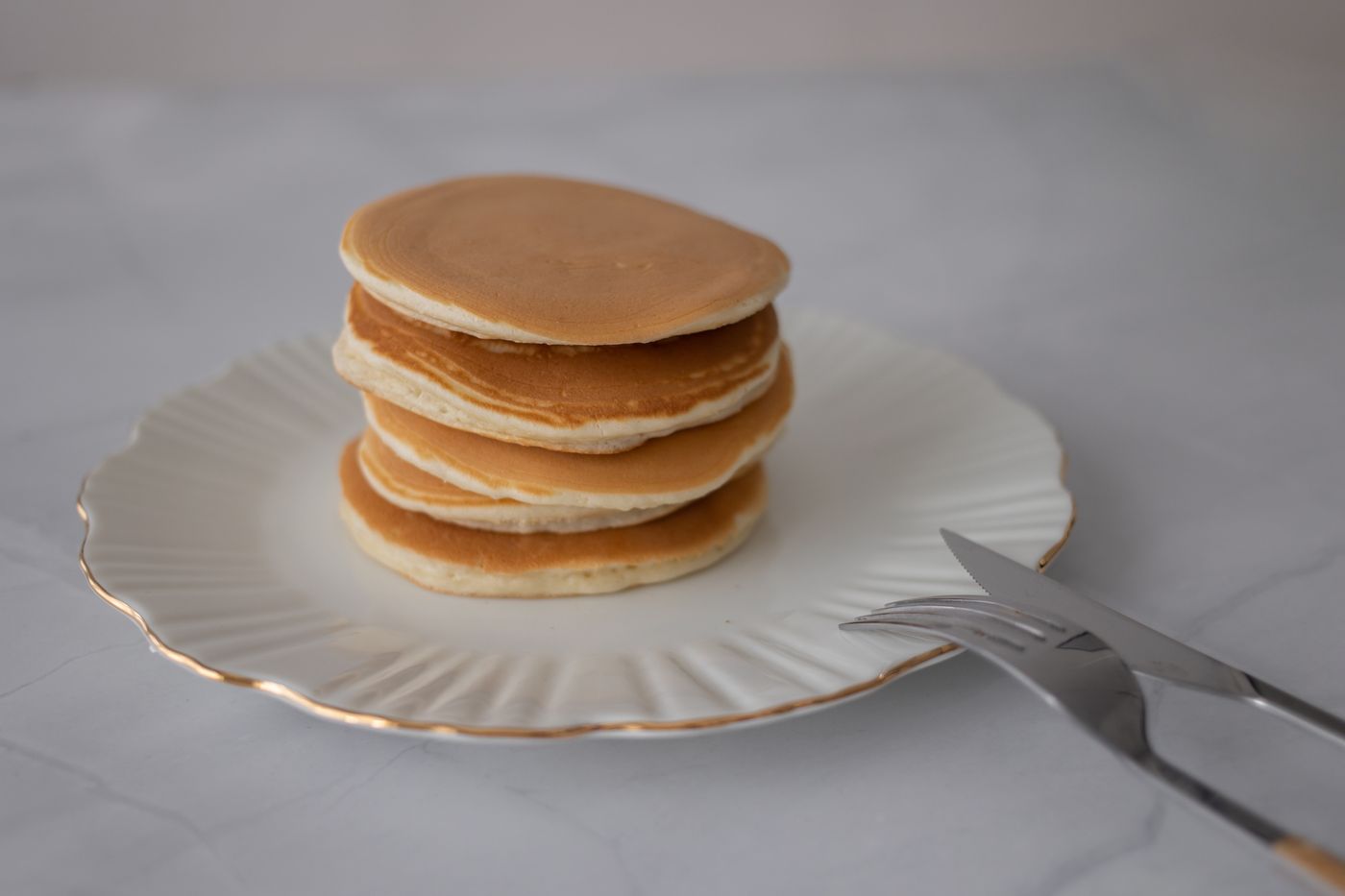
Flat pancakes usually come from weak leavening, thin or overmixed batter, poor timing or incorrect pan heat. Diagnose the result before changing the recipe: pancakes that spread wide need a different fix from pancakes that stay small but turn dense and rubbery.
Quick answer
Check four things first: leavener, consistency, mixing and pan heat. Fresh baking powder should create bubbles; the batter should drip slowly rather than run like milk; small lumps should remain after mixing; and the griddle should be hot enough to set the first side without burning it. Cook baking-soda batter promptly, flip only once and never press the pancake with the spatula.
Diagnose the Pancake Before Changing the Batter
“Flat†describes several different failures. A watery pancake that spreads across the pan needs less liquid or more structure. A compact pancake that barely rises needs better leavening. A tough pancake may contain enough leavener but be trapped inside an overdeveloped gluten network.
Flat Pancake Troubleshooting Matrix
| What you see | Most likely cause | Fix now | Prevent next time |
|---|---|---|---|
| Wide, thin pancake | Batter too runny | Fold in a small amount of flour | Reserve some liquid until consistency is checked |
| Small pancake with no lift | Expired or missing baking powder | Usually not fully repairable | Use fresh, accurately measured leavener |
| Flat and rubbery | Overmixed batter | Stop mixing; cook gently | Leave small lumps |
| First pancakes flatter than later ones | Pan not preheated | Wait for stable heat | Preheat before mixing wet and dry |
| Later pancakes flatter than first ones | Batter sat too long | Cook remaining batter promptly | Prepare dry and wet ingredients separately |
| Buttermilk pancakes do not rise | Too little baking soda or weak acid balance | Difficult to correct evenly | Follow one tested formula |
| Large bubbles collapse after flipping | Flipped too early | Let second side cook undisturbed | Wait for set edges and persistent bubbles |
| Pancake deflates under spatula | Pressed after flipping | Stop pressing | Flip once and leave it alone |
| Dense, custardy interior | Too many eggs or too much liquid | Cook lower and longer | Measure accurately |
| Heavy cake-like pancake | Too much fat or flour | Thin very cautiously if needed | Weigh ingredients |
| Gluten-free pancake spreads flat | Blend needs more hydration time or binder | Follow blend-specific directions | Use a tested gluten-free recipe |
| Refrigerated batter produces flat pancakes | Gas escaped during storage | Accept lower rise | Cook first and store finished pancakes |
1. Your Baking Powder Is Old, Missing or Measured Incorrectly
Baking powder creates carbon dioxide bubbles that expand during cooking. Food Network explains that common double-acting baking powder releases some gas when it becomes wet and more when heated. If it has lost strength, the batter cannot build enough internal lift.
Moisture, age and an unsealed container can weaken baking powder. A printed date is useful, but the way the container was stored matters too.
Do not add extra leavener blindly
More is not always better. Excess baking powder can taste metallic or bitter, while excess baking soda can taste soapy and create excessive browning. Use the quantity in a tested recipe and level the measuring spoon.
Baking soda needs acid
Baking soda requires an acidic ingredient such as buttermilk, yogurt, sour cream, lemon juice or vinegar. Regular milk alone does not provide the same acid balance. Food Network and BBC Science Focus both emphasize that the acid-base reaction produces the gas that helps buttermilk pancakes rise.
How the Leaveners Differ
| Leavener | What activates it | Timing risk | Typical failure |
|---|---|---|---|
| Double-acting baking powder | Liquid, then heat | Moderate | Old powder gives weak lift |
| Baking soda | Acid + liquid | High | Gas escapes while batter waits |
| Homemade single-acting powder | Liquid | High | Must be cooked quickly |
| Whipped egg whites | Mechanical aeration | High | Foam collapses after folding or waiting |
| Yeast | Fermentation | Recipe-specific | Under- or over-fermentation |
2. You Overmixed the Batter
King Arthur Baking identifies overmixing as one of the most common causes of tough, flat pancakes. Scientific American explains the mechanism: extended mixing organizes flour proteins into a stronger gluten network, leaving less room for large, light air pockets.
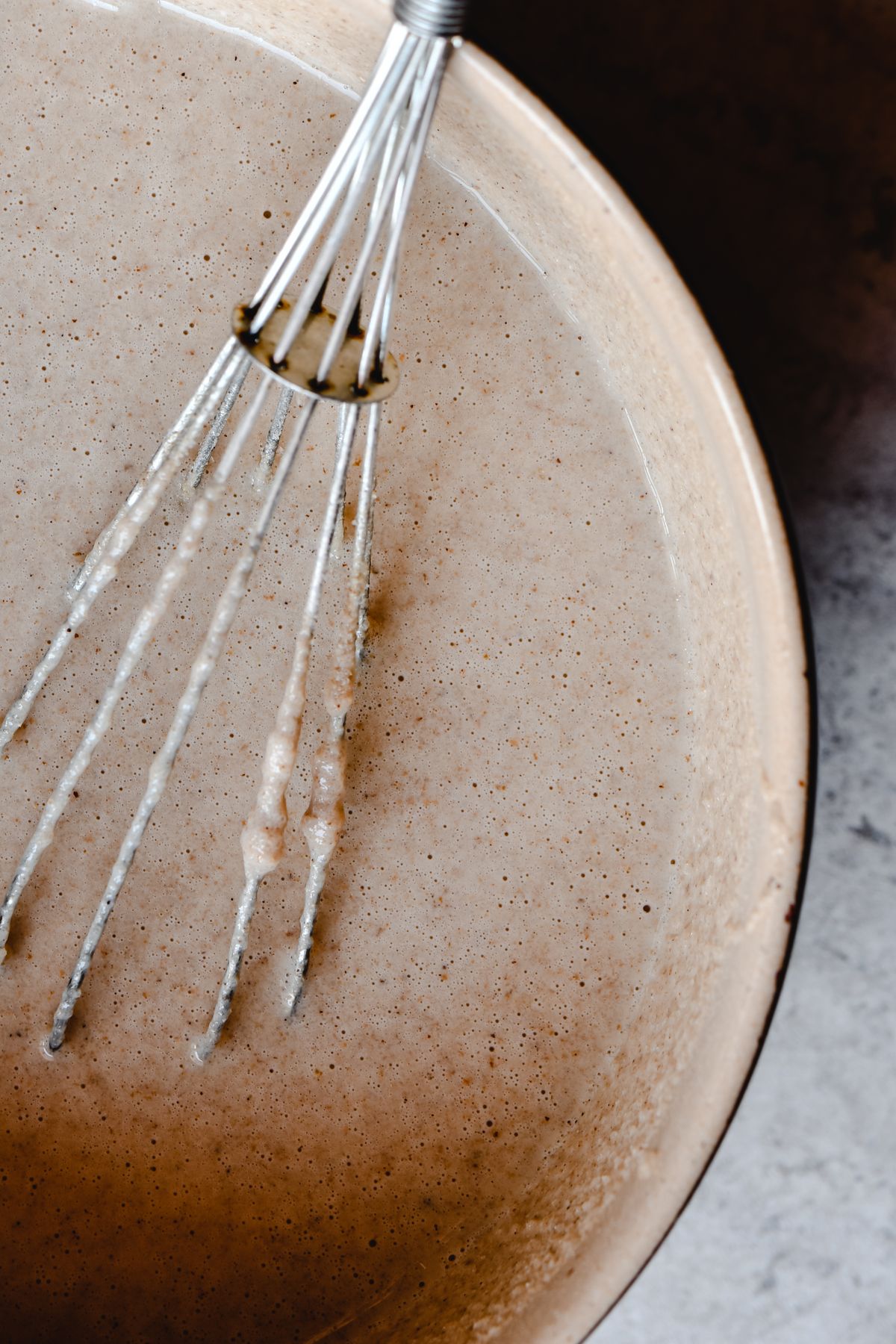
Mix only until no pockets of dry flour remain. Small lumps are desirable. The batter does not need to look like a smooth cake batter.
- Whisk dry ingredients separately first.
- Whisk wet ingredients separately.
- Pour wet into dry once.
- Use a spatula or whisk for only a few turns.
- Stop when small lumps remain.
3. The Batter Is Too Thin—or Too Thick
Too thin
Simply Recipes notes that overly wet batter produces flat pancakes. The batter should fall from a spoon in a slow ribbon or thick drip, not run like milk. Thin batter spreads before heat can set its structure.
To correct it, fold in flour one tablespoon at a time, then cook a small test pancake. Allow each addition to hydrate before adding more.
Too thick
Very thick batter may remain tall initially but cook into a dense, raw center. Thin it with milk one tablespoon at a time. Do not spread batter with the ladle or press it flat in the pan.
Correct consistency
Falls slowly, forms a rounded pool and spreads slightly by itself.
Too thin
Runs immediately, covers a wide area and forms weak edges.
Too thick
Sits like dough, barely spreads and keeps a raw center.
After refrigeration
Often thickens because flour continues absorbing liquid.
4. The Batter Rest Was Wrong for the Recipe
Advice about resting pancake batter appears contradictory because recipes use different leaveners.
A brief rest of about five to fifteen minutes can allow flour to hydrate and gluten to relax in many baking-powder recipes. Recent expert roundups from Better Homes & Gardens and Food & Wine recommend a short rest as one useful technique.
Food Network warns that a long wait is harmful when batter relies on baking soda: the acid-base reaction starts immediately, and bubbles escape while the bowl sits. Whipped egg-white batter is also time-sensitive because its foam collapses.
| Batter type | Useful rest | What to avoid |
|---|---|---|
| Double-acting baking powder | About 5–15 minutes | Long overnight storage for maximum lift |
| Buttermilk + baking soda | Brief or none, recipe-dependent | Waiting while bubbles escape |
| Whipped egg whites | Cook immediately | Long holding after folding |
| Yeasted pancakes | Recipe-specific fermentation | Applying quick-batter timing |
| Gluten-free batter | Often benefits from hydration | Ignoring blend-specific directions |
The safest rule is to follow the timing attached to the recipe instead of borrowing a rest time from another formula.
5. The Pan Is Too Cool or Too Hot
Pan too cool
The batter spreads before its proteins and starches set. The result is wide, pale and thin. Preheat the griddle before adding batter, and allow it to recover between batches.
Pan too hot
The outside browns while the interior remains wet. Large bubbles may form, but the pancake lacks enough cooked structure to retain them after flipping.
Use medium to medium-low heat as a starting point. Food & Wine's current chef roundup recommends a properly preheated surface and a small test pancake before cooking the full batch.
Why the first pancake is often flat
The griddle may not yet be evenly heated, or excess cooking fat may cause irregular spreading. Treat the first small pancake as calibration rather than evidence that the entire batter is wrong.
6. You Flipped Too Early, Flipped Repeatedly or Pressed the Pancake
Wait until bubbles rise and remain open, the edges look set and the bottom releases cleanly. Bubbles alone are not enough if the surrounding batter is still liquid.
- Flip once when the first side has structure.
- Use a thin, wide spatula.
- Turn decisively rather than slowly folding the pancake.
- Do not press the top after flipping.
- Allow the second side to cook undisturbed.
Pressing forces steam and gas from the pancake and compresses the crumb. Better Homes & Gardens and Simply Recipes both caution against pressing or repeatedly flipping when the goal is fluffiness.
7. The Ingredient Balance Is Working Against You
Too many eggs
Eggs give structure, but too many create a dense, custardy texture. Bon Appétit recommends balancing egg with flour rather than assuming more egg always gives more rise.
Too much fat
Butter and oil tenderize pancakes, but excessive fat can make the result heavy and cake-like. Measure melted butter after melting only when the recipe specifies that method.
Wrong flour measurement
A packed cup of flour can produce thick, heavy pancakes. A short cup creates thin batter that spreads flat. Weighing flour gives more repeatable results than scooping directly from the bag.
Ingredient substitutions
Replacing milk with thick yogurt, replacing all-purpose flour with whole wheat, or adding fruit puree changes hydration and structure. Use a tested substitution or adjust one variable through a test pancake.
8. You Deflated Whipped Egg Whites
Whipped whites can make very tall pancakes without relying entirely on chemical leavening, but the foam is fragile.
Beat to the stage specified in the recipe, then fold the foam into the base with a spatula. Do not whisk it in. Cook immediately, because the trapped air begins escaping as the batter sits.
Food Network recommends stiffly beaten whites as a baking-powder-free method, while emphasizing gentle folding and immediate cooking.
9. You Used Refrigerated or Old Batter
Food Network warns that pre-mixed batter loses bubbles while it waits. This is especially damaging to soda-based batter, but even double-acting baking powder batter usually loses some height during overnight refrigeration.
This connects directly to the site's storage guides:
- Use mixed batter the same day for the best rise.
- Store wet and dry ingredients separately for overnight preparation.
- Do not try to rescue old batter with random extra leavener.
- Cook and freeze finished pancakes when you have too much batter.
10. The Recipe Is Intended to Make Thin Pancakes
Crêpes, Swedish pancakes, Dutch babies and some delicate skillet pancakes are supposed to be thin. Do not add extra leavener to a recipe designed around a flexible, flat result.
Compare the intended format, ingredient ratios and serving style before treating low height as a failure.
Can You Fix Flat Pancake Batter Right Now?
| Diagnosis | Possible immediate correction | What not to do |
|---|---|---|
| Batter clearly too thin | Fold in flour 1 Tbsp at a time | Dump in a large amount at once |
| Batter too thick | Add milk 1 Tbsp at a time | Spread it manually on pan |
| Pan too cool | Pause and preheat | Increase batter size |
| Pan too hot | Lower heat and allow recovery | Add cold water to pan |
| Overmixed batter | Stop mixing; cook gently | Whisk in more liquid aggressively |
| Expired leavener | Make a fresh small batch | Add an unmeasured quantity |
| Batter sat too long | Cook now; expect less rise | Promise a full recovery |
A Five-Minute Calibration Method
- Preheat the griddle over medium heat.
- Check that the batter drips slowly from a spoon.
- Cook one small pancake.
- Observe spread, bubble size, edge setting and browning.
- Cut it open and change only the most likely variable.
This method is faster and more reliable than modifying the whole bowl based on appearance alone.
How to Make the Next Batch Fluffier
- Use a tested recipe and fresh leavener.
- Measure flour by weight when possible.
- Match baking soda with an actual acid.
- Mix only until combined.
- Use the recipe's stated rest time.
- Preheat the griddle before combining wet and dry ingredients.
- Cook a test pancake.
- Flip once and never press.
- Cook the entire batch rather than refrigerating leftover quick batter.
Frequently Asked Questions
Why are my pancakes flat?
The most common causes are expired or incorrectly measured leavener, batter that is too thin, overmixing, letting baking-soda batter sit too long, incorrect acid balance, a pan that is too cool, or pressing the pancakes after flipping.
Does overmixing make pancakes flat?
Yes. Overmixing develops a stronger gluten network and knocks out air bubbles, producing pancakes that are flatter, tougher and more rubbery. Stir only until the dry flour disappears; small lumps are normal.
Can old baking powder cause flat pancakes?
Yes. Baking powder gradually loses strength, especially after its container is opened or exposed to moisture. Use fresh leavener and measure it accurately.
Should pancake batter rest before cooking?
A brief rest of about five to fifteen minutes can hydrate flour and relax gluten in many baking-powder batters. A long rest can reduce lift, especially when the recipe relies heavily on baking soda or whipped egg whites. Follow the timing of the specific recipe.
Can you fix flat pancake batter?
You can sometimes correct batter that is too thin or a pan that is too cool, but expired leavener, overmixed batter and lost gas cannot be fully reversed. Cook one test pancake before changing the entire bowl.
Why are my buttermilk pancakes flat?
The baking soda may be weak, incorrectly measured or allowed to react too long before cooking. The recipe may also lack enough acid, or the batter may have been overmixed.
Why do my pancakes rise and then deflate?
They may have been flipped before the structure set, cooked over excessive heat, pressed with a spatula or made with an imbalanced amount of leavener that created bubbles too large to hold.
Bottom Line
Flat pancakes are usually a leavening, consistency, mixing or heat problem. Start by checking fresh baking powder, the correct acid for baking soda, a batter that drips slowly and a properly preheated griddle.
Do not chase every possible cause at once. Cook one small pancake, identify whether it spread, failed to rise, turned rubbery or collapsed, and change only the variable that matches that result.