Pancake troubleshooting
Why Do My Pancakes Stick to the Pan?
When pancakes stick, do not automatically pour in more oil. First identify whether the pancake never releases, releases only after more cooking, or tears because you tried to flip before the first side had set. A cool cooking surface is a documented cause of sticking in published pancake methods, while early flipping can make a pancake seem stuck before its structure is ready.
By Waffle Kitchen Editorial Team · Published August 3, 2026
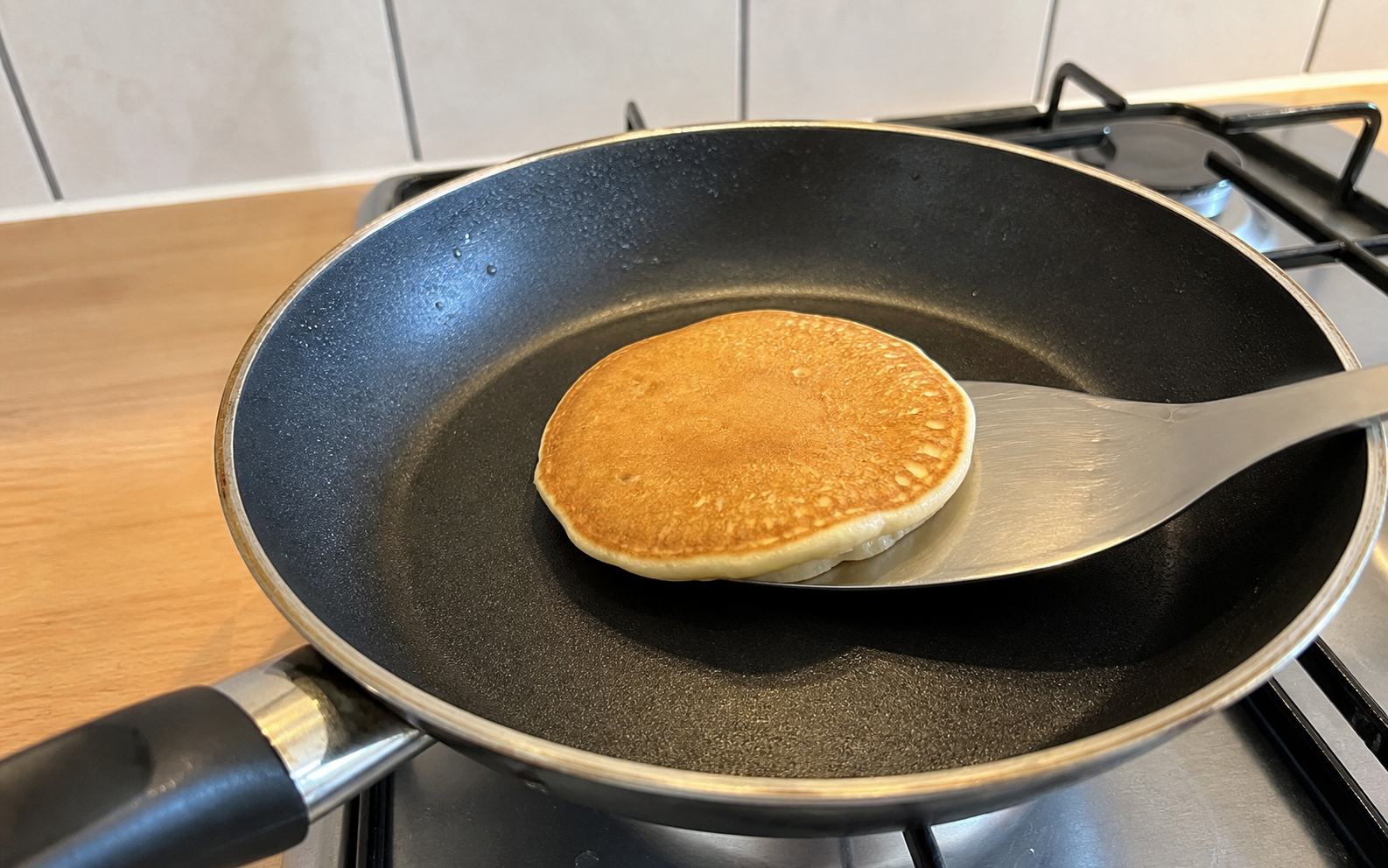
Quick answer
Check heat and timing before changing the recipe. Betty Crocker's self-rising pancake method explicitly warns that pancakes can stick when the griddle is too cool. King Arthur Baking also cautions against flipping early: wait until the edges look more matte and bubbles have broken on top. If those cues are right but the pancake still adheres, then inspect the pan surface, the amount of grease and recipe-specific ingredients.
What Kind of “Sticking†Are You Seeing?
The exact failure matters. A pancake that grips the pan immediately is different from one that loosens after another 30 seconds, and both are different from a pancake that releases at the edges but tears in the center.
| What happens | Best first suspect | What to test next |
|---|---|---|
| The entire bottom seems glued down | Surface temperature or pan condition | Allow proper preheating; compare another clean pan if needed |
| It releases if you wait longer | Trying to turn too early | Use bubbles and set-looking edges as cues |
| Edges release but center tears | Center not set or insufficient support | Wait longer and slide a broad spatula farther underneath |
| First pancake sticks, later ones improve | Pan temperature still stabilizing | Preheat longer before the first pour |
| Only a modified recipe sticks | Batter-specific change | Compare ingredients and method with the original recipe |
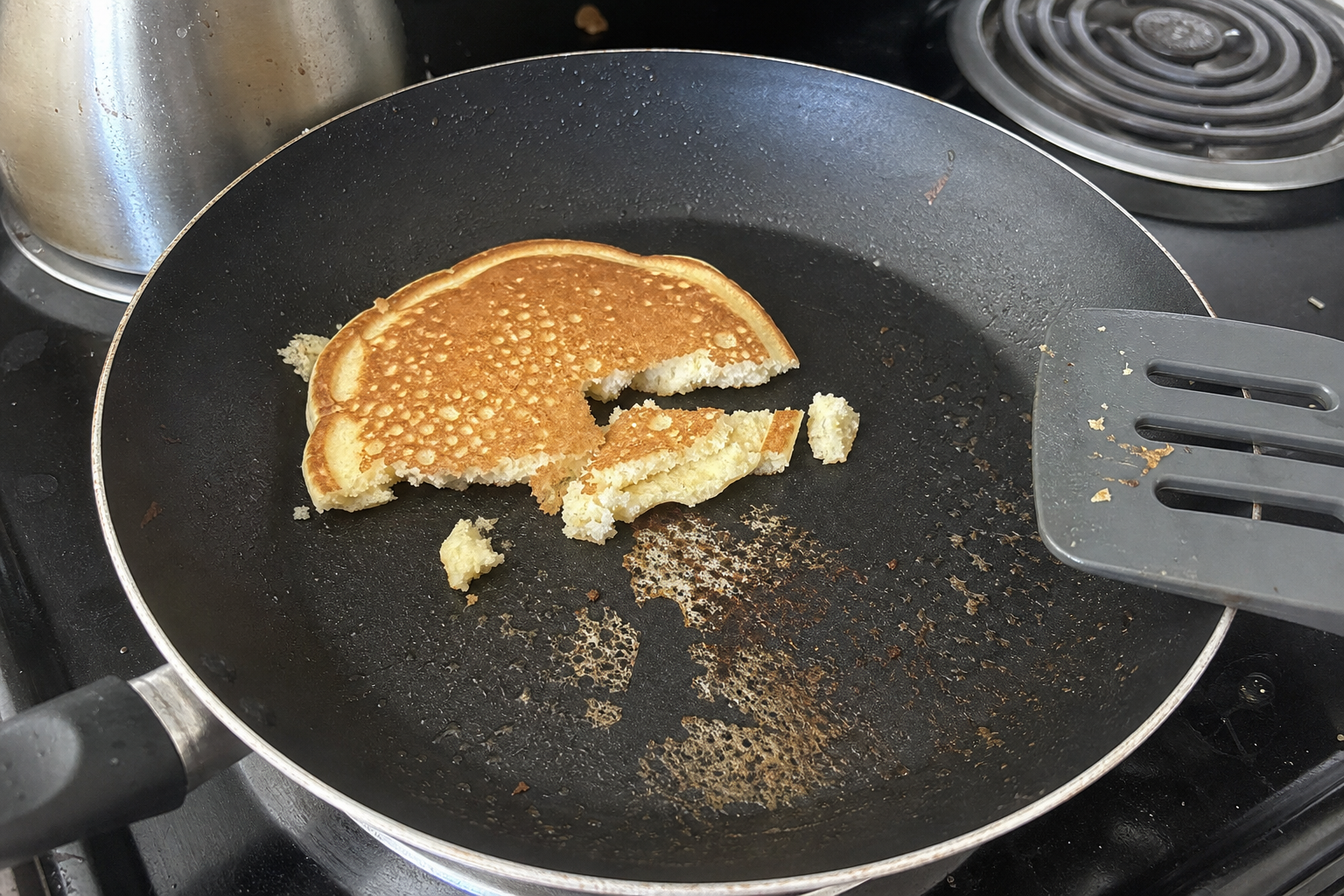
7 Reasons Pancakes Stick to the Pan
1. The pan is too cool when the batter goes in
This is one of the clearest source-backed causes. Betty Crocker's self-rising pancake instructions say pancakes will stick if the griddle is too cool. The same recipe uses medium heat or a 350°F electric griddle, then lightly greases the surface.
2. You are trying to flip too early
A pancake can feel attached simply because its first side has not developed enough structure. King Arthur Baking recommends patience: the edges should begin to look matte and the top should show broken bubbles before flipping.
3. The cooking surface needs a light layer of fat
Many conventional pancake methods lightly grease the skillet or griddle. Betty Crocker's Ultimate Pancakes, for example, calls for vegetable oil or cooking spray before heating. That does not mean every pan needs a large pool of butter; follow the needs of the pan and recipe.
4. The pan surface is damaged, dirty or poorly seasoned
If heat and timing are consistent but sticking repeats in exactly the same areas, inspect the cooking surface. Burnt residue, a degraded nonstick coating or an inadequately seasoned reactive pan changes the release behavior independently of the batter.
5. The heat is high enough to brown before the pancake is ready
Dark color is not proof that the pancake is ready to turn. If the underside browns rapidly while the top remains fluid, lower the heat and give the pancake time to set.
6. A recipe substitution changed release
Alternative flours and ingredient swaps can change batter thickness and cooking time. King Arthur notes, for example, that its gluten-free pancakes use a thicker batter and take slightly longer to cook than wheat-based pancakes. Troubleshoot these recipes within their own method.
7. You are forcing a pancake that is not ready
If the spatula meets resistance, stop and observe. Waiting briefly can distinguish a timing problem from true persistent sticking without destroying the pancake.
How to Fix Pancakes That Keep Sticking
Start with a clean pan
Remove burnt crumbs and residue so the next pancake is a meaningful comparison.
Preheat before pouring batter
Give the surface time to stabilize. For recipes written for an electric griddle, 350°F is a common published setting; for a skillet, follow the recipe's heat guidance rather than treating one number as universal.
Grease only as the recipe and pan require
Use a light, even coating when the method calls for it. More fat is not automatically a better fix.
Wait for visible turning cues
Look for a surface with bubbles and edges that are beginning to dry or lose their gloss. Recipe-specific cues are more useful than an arbitrary timer.
Test release before the full flip
Slide a broad spatula under an edge. If the pancake releases, continue underneath and turn once. If it resists, give it more time unless the underside is already burning.
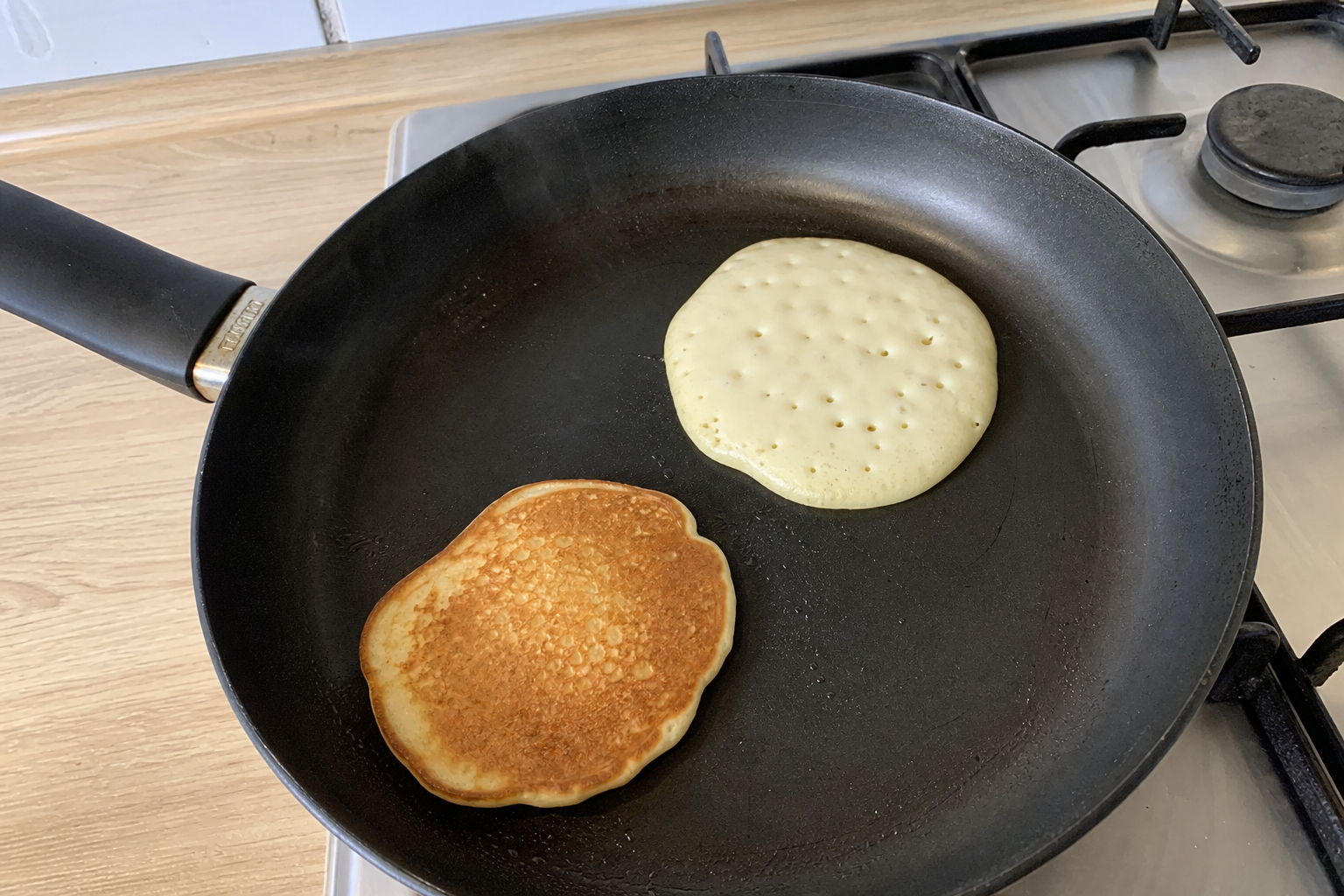
Do Pancakes Need Butter or Oil to Stop Sticking?
There is no single answer for every pan and recipe. Many published recipes instruct cooks to lightly grease a griddle, while a well-performing nonstick surface may need very little. The useful goal is predictable release, not a visibly oily pancake.
What If Pancakes Stick in Nonstick, Cast Iron or Stainless Steel?
Nonstick
Check for worn or scratched coating, residue and insufficient preheating. Follow the manufacturer's care limits.
Cast iron
Seasoning and heat management matter. A pan can be hot in the center while cooler elsewhere, so allow time for the mass of the pan to heat.
Stainless steel
Release is more technique-sensitive than on nonstick. If you are troubleshooting a basic pancake recipe, comparing with a known-good nonstick pan can isolate whether cookware is the variable.
Electric griddle
Use the recipe's temperature setting when provided and allow the griddle to fully preheat before the first batch.
Can Pancake Batter Cause Sticking?
Yes, but batter should come later in the diagnosis unless the problem began after a recipe change. A wetter, sweeter or alternative-flour batter may cook and release differently. Do not add flour simply because one pancake stuck.
King Arthur's gluten-free pancake method illustrates why recipe context matters: its batter is intentionally thicker, rests for 10 minutes and cooks a little longer. A conventional wheat-pancake rule applied blindly could make that recipe worse rather than better.
Rescue the Current Batch Without Rewriting the Recipe
- Clean away stuck fragments.
- Let the pan return to the intended cooking temperature.
- Use only the normal light coating of fat for that method.
- Make one slightly smaller pancake.
- Wait for visible set cues before testing release.
- Use a broad spatula and flip once.
If that pancake releases, keep the batter unchanged and continue with the corrected technique. If it still sticks in the same way, compare a different pan before changing the formula. This one-variable approach prevents a pan problem from turning into a batter problem.
What This Guide Is Based On
This is a source-based troubleshooting guide, not a controlled kitchen test. Cooking cues and temperatures are synthesized from published pancake methods from King Arthur Baking and Betty Crocker. The images are original generated editorial illustrations created to clarify the symptoms and cooking stages; they are not presented as photographs of a test performed by the site.
Frequently Asked Questions
Why do my pancakes stick even in a nonstick pan?
Check whether the pan is fully preheated, whether the coating is worn or dirty, and whether you are trying to turn the pancake before it has set.
Why does the first pancake always stick?
If later pancakes release better, the cooking surface may not have reached a stable temperature before the first pour. Give the pan more preheating time and keep the other variables unchanged.
Should I use more butter when pancakes stick?
Not automatically. Many pancake recipes call for a light coating of fat, but persistent sticking can also come from low heat, early flipping or pan condition.
How do I know a pancake is ready to flip?
Use the cues in your recipe. Common published cues include bubbles on the top and edges that begin to look dry, matte or set.
Why do gluten-free pancakes stick more easily?
Do not assume they always do. Gluten-free formulas vary. Follow the specific recipe's batter thickness, resting and cooking guidance because it may differ from wheat pancakes.
Bottom Line
When pancakes stick, diagnose heat and timing before changing the batter. Fully preheat the cooking surface, use the recipe's normal amount of grease, wait for visible set cues and test release gently. If sticking persists, investigate pan condition and recipe-specific substitutions one variable at a time.