Waffle batter troubleshooting
Why Is My Waffle Batter Too Thick? 8 Causes and Easy Fixes
Waffle batter should usually be thicker than crepe batter but still loose enough to scoop or pour and spread across a hot waffle iron. If it sits like dough, barely leaves the spoon or will not spread into the grid, check your flour measurement and liquid first. Then consider resting time, ingredient temperature and absorbent add-ins.
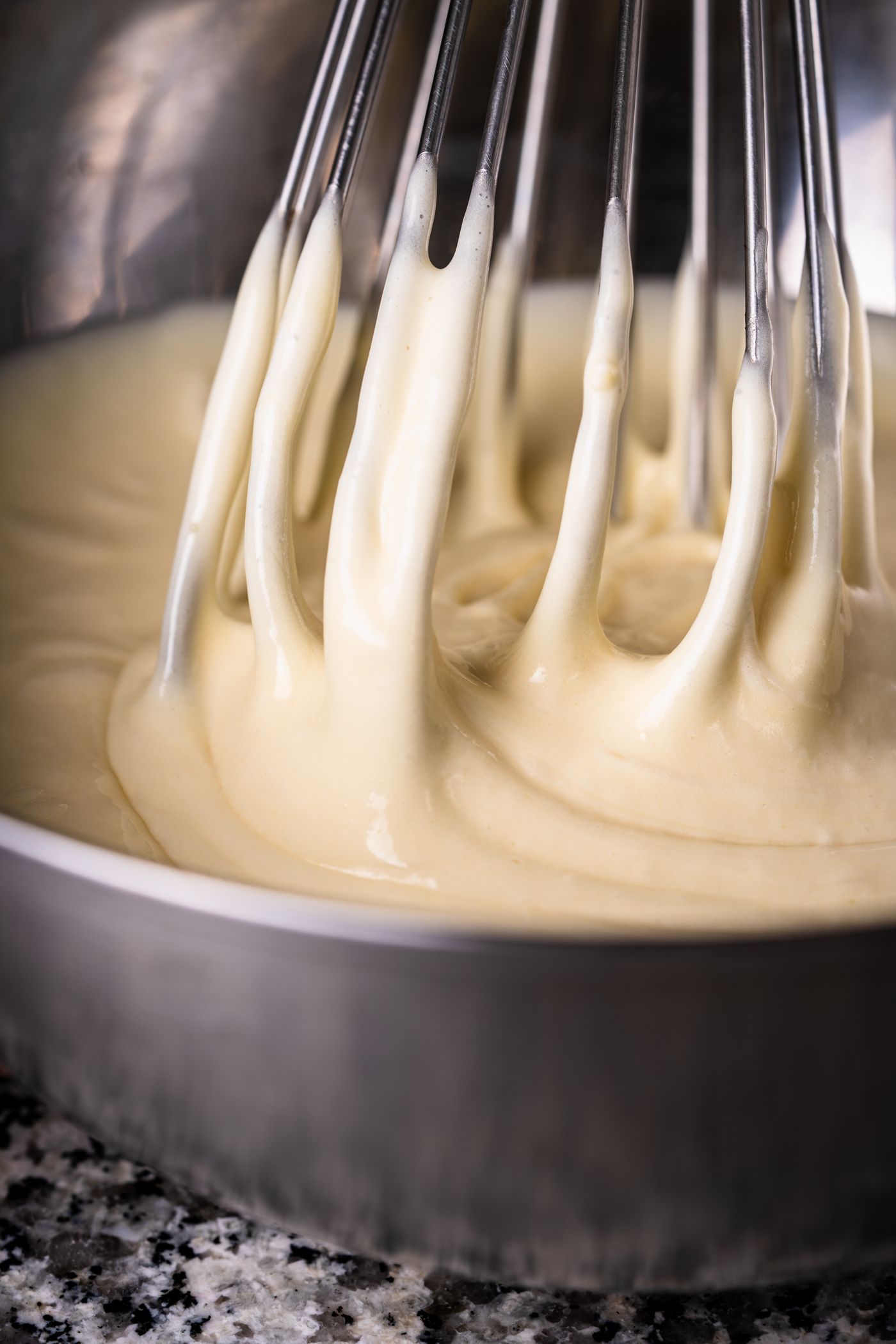
Quick answer
If your waffle batter is clearly too thick, add the recipe's liquid gradually—about 1 tablespoon at a time—until it becomes scoopable and can spread into the waffle grid. Do not immediately add a large splash. First make sure the batter is actually too thick for that specific recipe: Belgian, whole-grain and whipped-egg-white batters can naturally be thicker than basic pancake-style mixtures.
How Thick Should Waffle Batter Be?
There is no single viscosity that fits every waffle. A classic batter should generally fall from a spoon or measuring cup rather than remain in a stiff mound. It should spread when it contacts the hot plates, although it does not need to flow as freely as crepe batter.
General Mills' waffle troubleshooting guidance specifically treats batter that is too thick as a formula problem and recommends adding water to reach the correct consistency. The important part is making small adjustments rather than converting the batter into something runny.
| Consistency | What it looks like | Likely action |
|---|---|---|
| Too thin | Runs like milk; races through grid | Check liquid measurement |
| Usually workable | Pourable/scoopable; spreads with heat | Cook a test waffle |
| Thick but recipe-specific | Slow ribbon; needs a little spreading | May be normal |
| Too thick | Sits like paste or dough; will not spread | Add liquid gradually |
8 Reasons Waffle Batter Gets Too Thick
1. Too much flour
Packed measuring cups can add substantially more flour than intended.
2. Too little liquid
A missed or under-measured portion of milk or water quickly changes viscosity.
3. Batter sat too long
Flour and starch continue absorbing liquid during a rest.
4. Whole-grain flour
Bran and whole-grain components often absorb more liquid.
5. Protein powder or cocoa
Dry add-ins can bind liquid and thicken the mixture.
6. Cold melted butter
Butter can firm back up when mixed with very cold ingredients.
7. Ingredient substitution
Greek yogurt, plant milk or alternate flour can change hydration.
8. Recipe is meant to be thick
Some Belgian or separated-egg batters are intentionally less fluid.
1. Check the Flour Before Adding More Liquid
Flour measurement is one of the easiest ways to accidentally thicken waffle batter. Scooping a measuring cup directly into a flour container can compact the flour. For repeatable results, weigh it when the recipe supplies grams; otherwise fluff the flour, spoon it into the cup and level it.
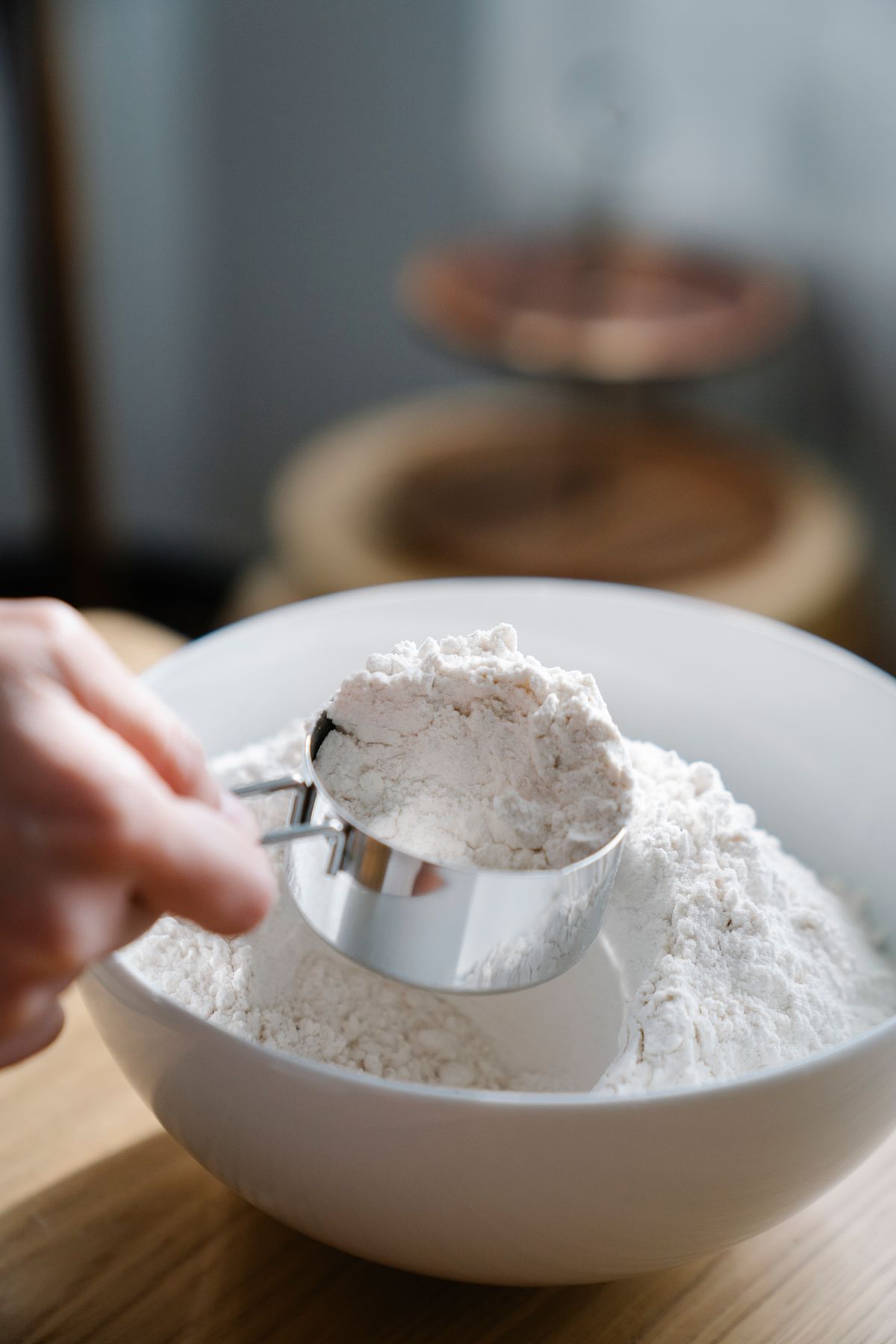
The image is placed here because this section is specifically about dry-ingredient measurement. It is more useful than another decorative waffle photo: excess flour is one of the variables the reader is trying to diagnose.
2. Why Waffle Batter Gets Thicker as It Sits
Freshly mixed batter can become thicker after 10–30 minutes because flour and starch continue hydrating. Whole-grain flour, oat flour, bran, cocoa and some gluten-free blends can make the change more noticeable.
That does not mean rested batter is ruined. Stir it gently, evaluate the actual consistency, and only then add liquid. Avoid aggressive whisking because overmixing can develop gluten and work against a tender waffle.
3. Cold Ingredients Can Make Butter-Based Batter Look Too Thick
If melted butter meets refrigerator-cold milk or eggs, some of the butter can solidify into small flakes or clumps. The batter may appear thicker even when the flour-to-liquid ratio is correct.
Before adding extra milk, check whether the apparent thickness is coming from chilled fat. Using ingredients at the temperature recommended by the recipe reduces this problem.
How to Thin Waffle Batter Without Ruining It
Confirm it is genuinely too thick
If the recipe says the batter should be thick, cook one test waffle before changing it.
Use the same liquid as the recipe
Usually milk, buttermilk or water. This preserves the intended flavor and balance.
Add about 1 tablespoon
Fold gently until incorporated.
Check the flow
The batter should become scoopable or pourable rather than dough-like.
Repeat only if necessary
Small corrections are easier to control than one large addition.
Cook a test waffle
The iron is the final test: watch how the batter spreads and how the waffle cooks.

This process image belongs after the correction steps because the waffle iron is where consistency becomes practical: corrected batter should portion cleanly and spread enough to fill the cooking grid without behaving like stiff dough.
Thick Waffle Batter Can Be Normal
| Waffle style | Typical tendency | Before thinning |
|---|---|---|
| Basic American waffle | Pourable to moderately thick | Check recipe ratio |
| Belgian waffle | Can be thicker / aerated | Check whether egg whites are folded in |
| Buttermilk waffle | Moderately thick | Do not replace buttermilk blindly |
| Whole-wheat waffle | Often thickens more on standing | Allow for hydration |
| Gluten-free waffle | Highly blend-dependent | Follow recipe-specific consistency |
| Protein waffle | Often much thicker | Protein powder may need extra liquid |
What Happens If Waffle Batter Is Too Thick?
Excessively thick batter may not reach the outer grid before it begins cooking. That can create undersized waffles, uneven thickness, dense centers and patchy browning. It can also encourage overfilling because the cook adds more batter trying to cover the plates.
But density is not proof of thick batter by itself. Overmixing, weak leavening, low waffle-iron temperature and ingredient substitutions can produce similar symptoms.
Waffle Batter Troubleshooting Matrix
| What you notice | Likely cause | First adjustment |
|---|---|---|
| Batter sits like dough immediately | Too much flour / too little liquid | Verify measurements |
| Batter was fine, then thickened | Hydration during rest | Add liquid gradually if needed |
| Small firm butter flecks | Cold ingredients | Check temperature before adding liquid |
| Whole-wheat batter thickens fast | High absorption | Recipe-specific small liquid adjustment |
| Protein batter becomes paste-like | Protein powder absorption | Add liquid gradually |
| Batter is thick but waffles are excellent | Recipe intended it | Do not change it |
| Waffle does not fill grid | Batter too thick or portion too small | Test consistency, then portion |
| Waffles are dense and pale | Multiple possible causes | Check heat and leavening too |
Do Not Make These Fixes
- Do not add a full cup of milk to a slightly thick batch.
- Do not aggressively whisk rested batter to make it look thinner.
- Do not add extra baking powder just because the batter is thick.
- Do not assume pancake and waffle batter should have identical consistency.
- Do not change flour, liquid and fat simultaneously—you will lose the diagnosis.
Frequently Asked Questions
Why is my waffle batter too thick?
Waffle batter can become too thick because of too much flour, too little liquid, flour settling during measuring, absorbent ingredients, cold ingredients or a long rest that allows flour and starch to hydrate.
How do you thin thick waffle batter?
Add the recipe's liquid, usually milk or water, in small increments of about one tablespoon at a time. Fold gently and stop as soon as the batter becomes scoopable and spreadable.
Should waffle batter be thick or runny?
Most waffle batter should be thicker than crepe batter but still fluid enough to scoop or pour and spread across a hot waffle iron. Exact consistency depends on the recipe and waffle style.
Does waffle batter get thicker as it sits?
Yes. Flour, starches and some whole-grain ingredients continue absorbing liquid during a rest, so batter can become noticeably thicker over time.
Can thick waffle batter make dense waffles?
Yes. Excessively thick batter can spread poorly and contribute to heavy, uneven waffles, although overmixing and leavening problems can also cause dense texture.
Can I add milk to waffle batter?
Yes, when milk is compatible with the recipe. Add it gradually rather than making one large correction.
Why did my waffle batter thicken overnight?
Flour and starch continued absorbing liquid. If the recipe was not designed for overnight storage, the leavening system may also have changed, so consistency is only one issue to evaluate.
Bottom Line
If waffle batter is so thick that it behaves like dough or will not spread into the iron, verify the flour and liquid measurements first. Then add the recipe's liquid about one tablespoon at a time until the batter becomes workable.
If the batter merely looks thicker than pancake batter, do not automatically change it. Some waffle recipes are supposed to be thick. The best confirmation is a test waffle: good spread, an evenly filled grid and a properly cooked center mean the consistency may already be right.