Freezer breakfast guide
Can You Freeze French Toast? How to Freeze and Reheat It
Yes. Cooked French toast freezes well when the slices are cooled completely, frozen flat and protected from excess air. The best method keeps each slice removable, so you can reheat one breakfast portion without thawing the entire batch.
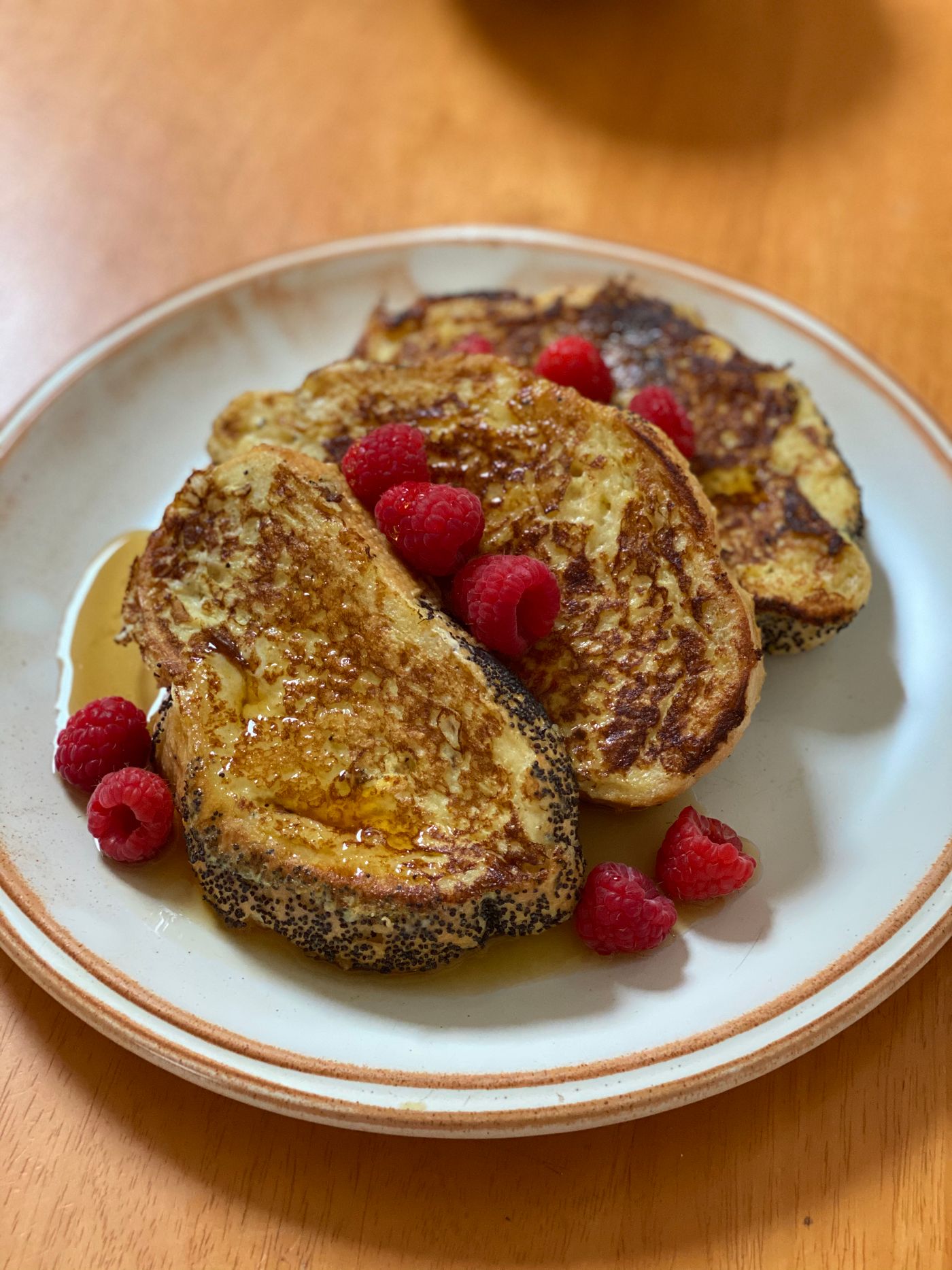
Quick answer
Cook → cool completely → freeze flat → pack airtight → reheat from frozen. Put cooled French toast slices in a single layer on a parchment-lined tray and freeze until firm. Transfer them to a freezer-safe bag or container, placing parchment between stacked slices. Remove excess air, label the package and use within about one to two months for best quality.
Choose the Best Freezing and Reheating Method
The right method depends on thickness, filling and batch size. A plain sandwich-bread slice behaves very differently from thick brioche or stuffed French toast.
| Your French toast | Freeze it this way | Best reheating method | Main caution |
|---|---|---|---|
| Thin sandwich-bread slices | Flat-freeze, then bag with parchment | Toaster or skillet | Can dry quickly |
| Thick brioche or challah | Freeze individually until solid | Toaster oven or oven | Center needs more time |
| Stuffed French toast | Freeze only if filling is freezer-friendly | Oven or toaster oven | Cold center and leaking filling |
| French toast sticks | Freeze in one layer, then bag | Air fryer, oven or toaster oven | Small pieces dry quickly |
| French toast casserole | Follow the specific casserole recipe | Oven | Custard and bread ratios vary |
| Slices with syrup/toppings | Remove toppings before freezing | Reheat plain, top afterward | Wet toppings create sogginess |
| Fully soaked uncooked slices | Cook first instead | Freeze finished slices | Raw custard and fragile bread |
How to Freeze French Toast Step by Step
Cook every slice completely
The center should be set, not wet with uncooked custard. Freezing does not improve an undercooked slice, and reheating can brown the exterior before the middle finishes cooking.
Cool the slices in one layer
Move cooked French toast to a wire rack. StillTasty and several competing guides recommend rack cooling because it lets steam escape from both sides. Do not stack warm slices on a plate.
Remove wet toppings
Freeze the slices without syrup, whipped cream, butter, yogurt or fresh fruit. Wet toppings freeze and thaw at different rates and work against a crisp reheated exterior.
Freeze flat until firm
Arrange the slices on a parchment-lined tray without touching. Freeze until solid enough to handle without bending. Competitor methods range from about one to four hours; firmness matters more than a universal clock time.
Separate stacked slices
Place parchment or wax paper between layers. This lets you remove one slice at a time and reduces the chance of surfaces freezing together.
Pack with minimal air
Use a freezer-safe bag or rigid airtight container. Press out excess air gently so you do not compress thick slices. For longer storage, individually wrapping slices before bagging adds protection but also adds material and prep time.
Label the package
Add the date and type: plain, cinnamon-raisin, stuffed or French toast sticks. The label helps you choose the right reheating appliance later.
The Freezer Workflow at a Glance

How Long Does French Toast Last in the Freezer?
StillTasty recommends using frozen French toast within one to two months for best quality. Baking Kneads and EatDelights use a similar range, while some broader storage guides extend closer to two or three months.
The difference is mainly about quality, not a magical expiration date. Freezer temperature, package air, bread type and fat content all affect how quickly the toast dries out or develops stale flavors.
| Storage time | Expected quality | What to watch |
|---|---|---|
| Up to 1 month | Best texture and flavor | Minimal drying with good packaging |
| 1–2 months | Still a strong practical target | Check exposed edges and frost |
| 2–3 months | More variable | Freezer burn, dry centers, stale flavor |
| Beyond 3 months | Quality increasingly uncertain | Use judgment; discard if storage history is unclear |
For a home breakfast workflow, label the bag and plan to use it within two months. That is long enough to be useful without turning the freezer into long-term archive storage.
How to Reheat Frozen French Toast
Plain slices can usually be reheated directly from frozen. Match the method to portion size and thickness.
Toaster
Best for one thin or medium plain slice that fits safely. Start low and repeat if needed.
Toaster oven
Best for thick brioche, filled slices or pieces that do not fit a toaster slot.
Oven
Best for a batch. StillTasty uses 375°F for about 8–10 minutes.
Skillet
Best when you want buttery edges or need gentle control over a thick slice.
Air fryer
Useful for sticks or a few slices, but check early to prevent drying.
Microwave
Fastest, but produces the softest exterior. Use short bursts.
Toaster method
Place a plain frozen slice in the toaster on a low-to-medium setting. Check after one cycle. StillTasty notes that a second cycle may be necessary. Do not use the toaster for slices with exposed cream cheese, chocolate or wet fruit filling.
Oven method
Arrange frozen slices in a single layer. Bake around 350–375°F until hot, usually about 8–12 minutes depending on thickness. Cover loosely with foil for a softer result; leave uncovered for more surface crispness.
Skillet method
Warm a small amount of butter or oil over medium-low heat. Add the frozen or partly thawed slice and cook both sides until the center is hot. Lower heat is safer for thick bread because direct contact browns quickly.
Microwave method
Use short bursts of about 20–30 seconds and check between them. The microwave is useful when speed matters, but the exterior will be soft rather than crisp. Finish briefly in a toaster oven when possible.
Does the Bread Type Change Freezing Quality?
Brioche and challah
Rich, thick bread freezes well but takes longer to reheat through the center. Use a toaster oven or moderate oven heat rather than maximum toaster heat.
Standard sandwich bread
Thin slices freeze and reheat quickly. They are also easier to dry out, so avoid long air-fryer or oven cycles.
Sourdough
Sourdough's sturdy crumb tolerates freezing well. The crust can become quite firm after reheating, so use moderate heat and serve promptly.
Whole-grain bread
Whole-grain French toast generally freezes well, though denser slices can need more center heating.
Gluten-free bread
Freezing performance varies widely. Some gluten-free breads become crumbly or dry after reheating. Test one slice before freezing a large batch.
Can You Freeze Stuffed French Toast?
Sometimes, but the filling determines the result.
| Filling | Freezer suitability | Best reheating method |
|---|---|---|
| Firm cream cheese filling | Usually workable | Oven or toaster oven |
| Nut butter | Good | Skillet or toaster oven |
| Chocolate spread | Good with careful reheating | Toaster oven; avoid upright toaster |
| Fresh watery berries | More variable | Oven at moderate heat |
| Whipped cream | Poor | Add after reheating |
| Custard or very wet filling | Poor to variable | Use a tested recipe |
Freeze stuffed slices individually and reheat gently. The filling insulates the center, so a dark exterior does not prove the middle is hot.
Can You Freeze French Toast Casserole?
Yes, many French toast casseroles are freezer-friendly, but they are not all frozen at the same stage.
Some recipes are designed to be assembled, frozen unbaked, thawed in the refrigerator and baked later. Others perform better after baking, cooling and portioning. Egg, dairy, bread thickness and topping composition all influence the result.
Can You Freeze Uncooked French Toast?
For individual slices, freezing fully soaked uncooked bread is less reliable than cooking first. The bread can become fragile, and the egg-and-milk custard may separate or soak unevenly during thawing.
A better workflow is:
- Cook the entire batch.
- Cool it completely.
- Freeze the cooked slices individually.
- Reheat only what you need.
If you want to prepare ahead before cooking, mix the custard and refrigerate it separately for a short period according to food-safety guidance, then dip and cook fresh bread when needed. Do not leave egg-and-dairy custard at room temperature.
Can You Freeze French Toast Sticks?
Yes. French toast sticks are especially convenient for portioning.
- Cook the sticks fully.
- Cool in one layer.
- Freeze without touching.
- Transfer to portioned bags.
- Reheat in an oven, toaster oven or air fryer.
- Add cinnamon sugar after reheating if the coating tends to burn.
Because sticks have more exposed surface area, they can dry out faster than whole slices. Check them early during reheating.
Frozen French Toast Troubleshooting
| Problem | Likely cause | Try next |
|---|---|---|
| Slices frozen together | Skipped flat-freeze or parchment | Freeze individually until firm before stacking |
| Ice crystals in bag | Packed while warm or too much air | Cool completely and pack more tightly |
| Soggy after reheating | Microwave only, wet toppings or covered holding | Finish with dry heat and top afterward |
| Burnt outside, cold center | Heat too high for thick bread | Use toaster oven or lower oven heat |
| Dry and tough | Long reheating or weak packaging | Shorten time and reduce air exposure |
| Filling leaks | Stuffed slice used in toaster or excessive heat | Use a tray in toaster oven at moderate heat |
| Eggy wet center | Slice undercooked before freezing | Cook fully before storage |
| Powdered sugar becomes wet | Frozen with topping | Add sugar after reheating |
A Better Meal-Prep Workflow
Use medium-thick bread
It is easier to cook through than very thick stuffed slices and reheats more evenly than ultra-thin bread.
Cook a double batch
Use a consistent soaking time and heat level so every slice reheats similarly.
Cool on multiple racks
Give steam room to escape instead of stacking to save counter space.
Freeze breakfast portions
Group one or two slices per section of the bag, with parchment between them.
Keep toppings separate
Freeze berries separately or use fresh toppings in the morning.
Frequently Asked Questions
Can you freeze cooked French toast?
Yes. Cool cooked French toast completely, freeze the slices flat until firm, then transfer them to an airtight freezer bag or container with parchment between layers.
How long does French toast last in the freezer?
For best quality, use frozen French toast within about one to two months. Well-packed slices may remain acceptable longer, but they can gradually dry out or develop freezer burn.
Can you reheat French toast from frozen?
Yes. Plain slices can usually go directly into a toaster, toaster oven, oven, skillet or air fryer. Thick or stuffed slices are better reheated at moderate heat so the center warms before the exterior becomes too dark.
Can you freeze uncooked French toast?
Freezing fully soaked uncooked bread is less reliable because the custard can separate and the bread can become fragile. For individual slices, cook first and freeze the finished French toast.
Can you freeze French toast casserole?
Many French toast casseroles can be frozen, but the correct stage—before or after baking—depends on the recipe. Use a casserole recipe written with freezer instructions rather than applying the individual-slice method blindly.
Do you have to thaw French toast before reheating?
No. Plain slices can usually be reheated directly from frozen. Thick stuffed slices may benefit from a gentler oven reheat or partial refrigerator thaw.
Can you put frozen French toast in a toaster?
Yes, if the slice is plain, fits safely and has no filling or wet topping that could leak. Use a conservative setting and repeat if the center remains cold.
Bottom Line
French toast is a practical freezer breakfast when you freeze the cooked slices rather than fully soaked raw bread. Cool every slice completely, freeze it flat, separate stacked pieces with parchment and remove excess air from the package.
Use the toaster for thin plain slices, a toaster oven or oven for thick brioche and stuffed pieces, and an oven for a full batch. Keep syrup and other wet toppings out of the freezer package and add them only after reheating.