Freezer breakfast guide
Can You Freeze Pancakes? How to Freeze and Reheat Them
Yes. Cooked pancakes freeze well when they are cooled completely, frozen flat and packed with as little excess air as practical. The most reliable strategy is to freeze finished pancakes rather than raw leavened batter, then reheat only the number you need for breakfast.
Quick answer
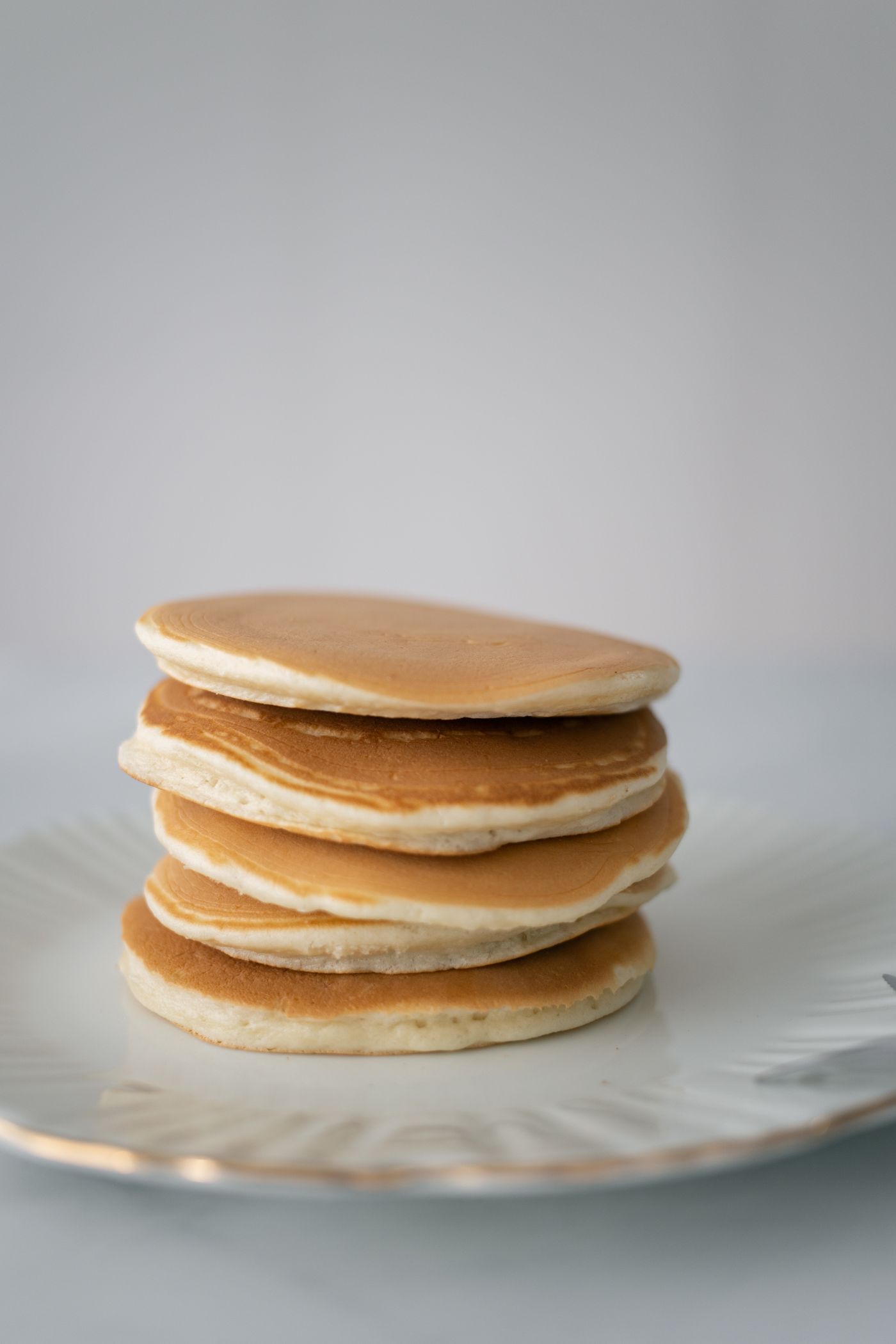
Cool → freeze flat → separate → pack airtight → reheat from frozen. Place fully cooled pancakes in one layer on a parchment-lined tray and freeze until firm. Transfer them to a freezer-safe bag or container, separating stacked pancakes with parchment. Remove excess air, label the package and use the pancakes within about one to three months for best quality. Plain thick pancakes can usually be reheated directly from frozen.
Choose the Best Freezing Method
The same method does not fit every pancake. Thick American pancakes, thin crêpes and pancakes with wet toppings behave differently.
| Your pancakes | Best freezing method | Best reheating method | Main caution |
|---|---|---|---|
| Thick American-style | Flat-freeze, then stack with parchment | Toaster, toaster oven, oven or microwave | Center may remain cold if heat is too high |
| Mini / silver-dollar | Freeze flat in one layer, then bag | Microwave, skillet or air fryer | Small pancakes dry quickly |
| Thin pancakes / crêpes | Stack with parchment and seal flat | Dry skillet or low oven | Toaster slots are unsuitable |
| Blueberry pancakes | Freeze cooked and fully cooled | Microwave, oven or toaster oven | Fruit can release moisture and leak in a toaster |
| Chocolate-chip pancakes | Freeze cooked; parchment between layers | Oven, microwave or skillet | Melted chips can drip in an upright toaster |
| Plain savory pancakes | Freeze wrappers unfilled | Skillet or oven | Wet fillings can make them soggy |
| Soufflé pancakes | Do not freeze when quality matters | Best served fresh | Aerated structure collapses |
| Raw leavened batter | Cook first instead | Freeze finished pancakes | Leaveners lose strength |
How to Freeze Pancakes Step by Step
Cook the pancakes completely
Do not freeze undercooked pancakes in the hope that reheating will finish them evenly. Cook each pancake until the center is set and both sides are properly browned.
Cool them in one layer
Transfer the pancakes to a wire rack or spread them across a large tray. Do not build a warm stack. Steam trapped between hot pancakes becomes condensation and ice inside the freezer package.
Remove toppings
Freeze pancakes plain. Syrup, whipped cream, butter, fresh fruit and wet sauces create uneven moisture and make storage more difficult. Add toppings after reheating.
Freeze flat until firm
Arrange the cooled pancakes on a parchment-lined sheet without overlapping. Freeze until solid. Food Network uses a three-hour flat freeze, while other guides use about one hour; the useful test is firmness, not the clock.
Stack with parchment
Place a square of parchment or wax paper between pancakes if they will be stored in a stack. This lets you remove one or two without thawing the entire package.
Pack airtight
Use a freezer-safe resealable bag or rigid container. Press out excess air without crushing the pancakes. For longer storage, a second protective layer can help reduce freezer burn.
Label and freeze
Write the type of pancake and freezing date. Blueberry, chocolate-chip and plain pancakes may look similar once frozen, but they do not always reheat best in the same appliance.
Do You Need Parchment Between Frozen Pancakes?
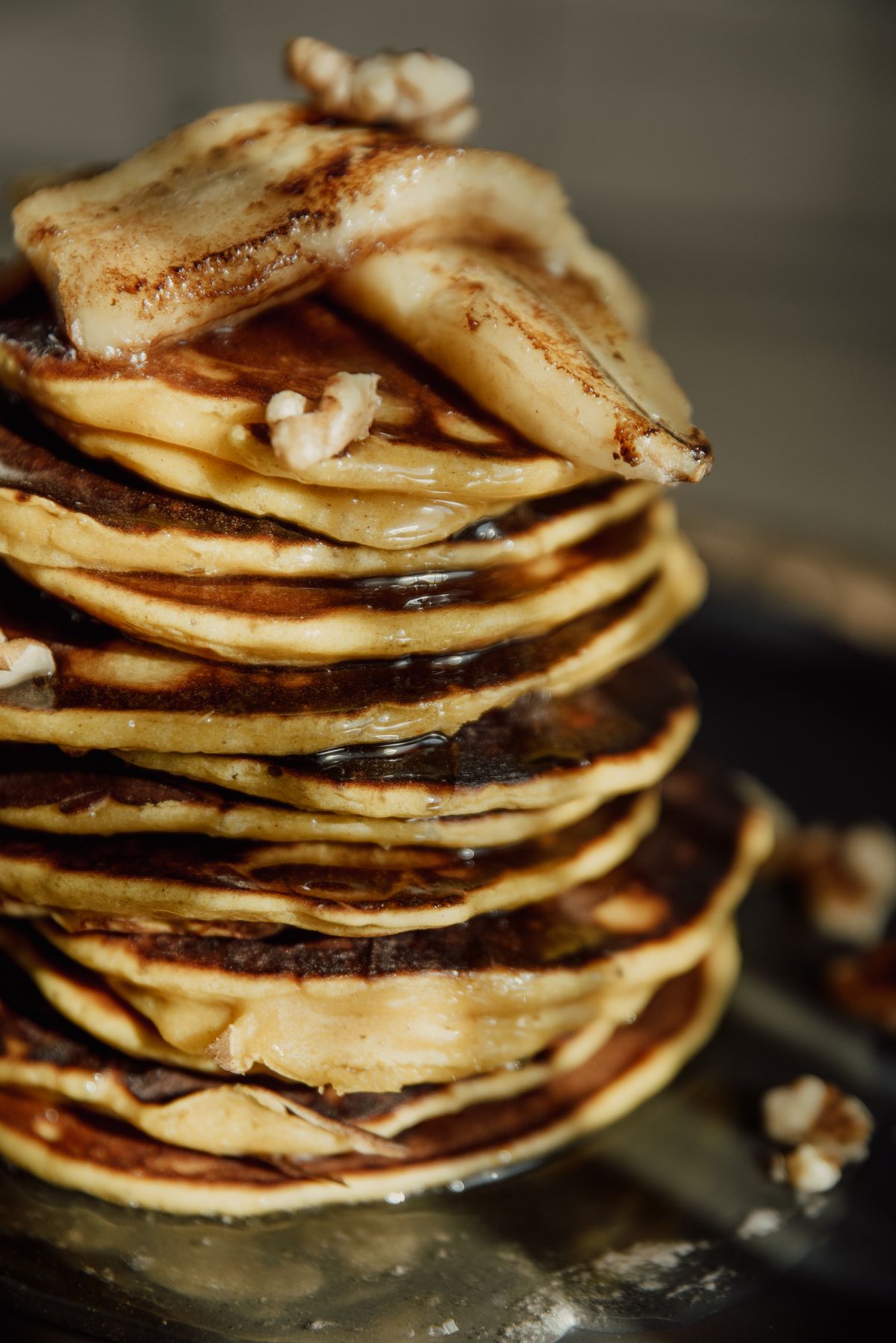
Parchment is not strictly required if every pancake is individually frozen until completely solid before packing, but it remains useful insurance.
Food Network, Nigella, Allrecipes, Better Homes & Gardens and StillTasty all recommend some version of parchment, wax paper or individual separation. The purpose is practical rather than decorative: you should be able to remove a single pancake without bending or tearing the others.
When parchment matters most
- The pancakes are stacked before they are fully solid.
- The pancakes contain fruit or chocolate that can create sticky spots.
- You plan to remove one serving at a time.
- The pancakes are thin and flexible.
- The freezer cycles through minor temperature changes.
Cut parchment squares slightly smaller than the pancake so they separate the surfaces without taking up unnecessary space.
How Long Can You Freeze Pancakes?
Published quality recommendations vary. StillTasty and Better Homes & Gardens use roughly one to two months. Allrecipes recommends about two months. Nigella allows up to three months for cooked American or Scotch pancakes. Food Network gives a more conservative three-week window for one specific pancake recipe and wrapping method.
That range does not mean one source is necessarily wrong. Pancake thickness, packaging, freezer temperature and recipe composition change how quickly quality declines.
| Storage period | Expected quality | What to check |
|---|---|---|
| Up to 1 month | Best and most predictable | Minimal drying when packed well |
| 1–2 months | Good for most pancakes | Check exposed edges for freezer burn |
| 2–3 months | Often acceptable | Texture varies more by recipe and packaging |
| Beyond 3 months | Quality increasingly uncertain | Dryness, frost, stale flavor and freezer burn |
How to Reheat Frozen Pancakes
You normally do not need to thaw plain pancakes. The best method depends on quantity, thickness and whether the pancake contains mix-ins.
Toaster
Best for one or two thick plain pancakes that fit safely. Start on a light setting and check early.
Microwave
Fastest and softest. Use short bursts so the edges do not become rubbery while the center warms.
Oven
Best for a batch. Arrange in one layer or wrap a stack loosely in foil when moisture retention matters.
Skillet
Best for thin pancakes or crêpes. Low-to-medium heat keeps them flexible and can lightly crisp the edges.
Air fryer
Useful for a small batch of thick pancakes. Check early because small pancakes dry quickly.
Toaster oven
Flexible choice for thick pancakes, fruit pancakes and chocolate-chip pancakes that should not enter toaster slots.
Microwave method
Place one to three frozen pancakes on a microwave-safe plate. Cover loosely with a paper towel and heat in short bursts until hot. StillTasty suggests approximately one to one-and-a-half minutes for a serving, while Nigella recommends shorter ten-second bursts. Microwave power and pancake thickness explain the difference, so start conservatively.
Oven method
For several pancakes, heat at about 350–375°F (175–190°C). Better Homes & Gardens uses 350°F for approximately ten minutes; StillTasty uses 375°F for eight to ten minutes; Nigella uses 400°F for ten to fifteen minutes in a sealed foil package. Use lower heat uncovered for a slightly drier edge, or foil for a softer result.
Toaster method
Use only for thick, plain pancakes that cannot fall apart or leak melted fruit or chocolate into the slots. Food Network recommends its lightest setting and checking from about 60–90 seconds. Repeat a short cycle rather than choosing the darkest setting first.
Should You Thaw Frozen Pancakes First?
Usually no. Direct reheating is faster and avoids a damp thawed pancake sitting at room temperature.
Thawing can make sense for delicate crêpes that need to be separated carefully, or when a recipe specifically directs overnight thawing before an oven reheat. Food Network's pancake recipe uses an overnight refrigerator thaw, while Nigella and several other guides reheat directly from frozen. Both approaches can work; the direct method is simply more convenient for individual servings.
Which Types of Pancakes Freeze Best?
American buttermilk pancakes
They freeze well after cooking. The interior may feel slightly less airy than a fresh batch, but proper packaging and gentle reheating preserve a useful weekday breakfast texture.
Whole-wheat and buckwheat pancakes
These sturdy pancakes generally tolerate freezing well. Their whole-grain flavor can mask small texture changes better than very delicate pancakes.
Thin pancakes and crêpes
They freeze very well when separated carefully. Reheat in a dry skillet or gentle oven so they remain flexible enough to fold or roll.
Silver-dollar pancakes
They are easy to portion and useful for children's breakfasts. Because they are small, avoid long air-fryer or oven cycles that can dry them.
Japanese soufflé pancakes
These rely on a fragile aerated structure and are poor freezer candidates. Freezing and reheating cannot reproduce the freshly cooked height and softness.
Filled pancakes
Results depend on the filling. Plain wrappers freeze more predictably than pancakes filled with wet cheese, egg, tomato or sauce. When possible, freeze the pancake and filling separately.
Can You Freeze Blueberry or Chocolate-Chip Pancakes?
Yes. Allrecipes specifically notes that blueberry, chocolate-chip, buttermilk, whole-wheat, cornmeal and buckwheat pancakes can be frozen.
Blueberry pancakes
Cool them fully because cooked berries retain moisture. Use parchment between layers so exposed berry spots do not stick. Reheat in a microwave, oven or toaster oven rather than an upright toaster where juice could leak.
Chocolate-chip pancakes
Freeze them plain, without syrup. Use an oven, toaster oven, microwave or skillet. Melted chips can drip inside a toaster and create a mess or safety problem.
Banana pancakes
They can freeze, but higher fruit moisture often produces a softer reheated pancake. Use dry heat briefly after microwaving if you want firmer edges.
Protein pancakes
Freezing performance varies by formula. High-protein pancakes can become dry or rubbery when overheated, so test one before reheating a full batch.
Can You Freeze Pancake Batter?
The answer depends on the batter.
Leavened American pancake batter
Food Network does not recommend freezing it because air pockets created by baking powder deflate over time. Serious Eats likewise recommends cooking the full batch rather than storing leftover leavened batter, since pancakes made later tend to be flatter and denser.
Unleavened crêpe or thin-pancake batter
It can freeze more successfully because it does not depend on the same immediate baking-powder reaction. Freeze in a sealed container with headspace, thaw in the refrigerator and whisk gently before use.
The safest default
When you are uncertain, cook first. Finished pancakes are easier to portion, faster to reheat and less dependent on active leavening after storage.
A Freezer Pancake Meal-Prep Workflow
Double one reliable recipe
Choose a pancake recipe you already know cooks evenly. Large-batch meal prep is not the best time to experiment with a new batter.
Use a consistent scoop
Uniform pancakes freeze and reheat more evenly. Record the scoop size and cooking time.
Cool every pancake fully
Use multiple racks or trays instead of stacking warm pancakes to save space.
Freeze individual portions
Group two or three pancakes together only after they are firm, or use parchment so breakfast portions separate cleanly.
Label by type and date
Write “plain,†“blueberry†or “chocolate chip†so the correct reheating appliance is obvious.
Add toppings in the morning
Keep fruit, yogurt, nut butter and syrup separate so the pancakes reheat evenly and do not become soggy in storage.
Frozen Pancake Troubleshooting
| Problem | Likely cause | Try next |
|---|---|---|
| Pancakes stuck together | Skipped flat-freeze or parchment | Freeze individually until solid before stacking |
| Ice inside the bag | Pancakes packed warm or excess air | Cool completely and use tighter packaging |
| Dry, white edges | Freezer burn | Remove more air and use pancakes sooner |
| Rubbery after reheating | Microwaved too long | Use shorter bursts or finish in toaster oven |
| Cold center, dark outside | Heat too high for thick pancake | Use lower toaster setting or toaster oven |
| Soggy surface | Covered too long or thawed before reheating | Finish with dry heat and serve immediately |
| Flat pancakes from saved batter | Leavener lost power | Cook the entire fresh batch before freezing |
| Fruit leaked in toaster | Mix-in pancake used in upright toaster | Use toaster oven, microwave or skillet |
Can You Refreeze Pancakes?
Repeated freezing and thawing reduces quality and creates unnecessary uncertainty about how long the pancakes spent warm.
Freeze pancakes in small portions so you only remove what you need. If pancakes have thawed safely in the refrigerator and remained cold, general food-safety guidance may allow refreezing, but the texture will be worse. For a breakfast blog, the practical recommendation is simpler: avoid refreezing and use portioned packages.
Best Method by Goal
| Your goal | Best strategy |
|---|---|
| Fast weekday breakfast | Freeze cooked pancakes in individual portions |
| Soft, fluffy reheated pancakes | Microwave in short bursts or use foil in the oven |
| Crisper edges | Toaster, toaster oven or dry skillet |
| Family-size breakfast | Reheat a single layer or foil-wrapped stack in the oven |
| Crêpes for filling | Freeze with parchment and reheat in a skillet |
| Leftover leavened batter | Cook it now, then freeze the pancakes |
| Fruit or chocolate pancakes | Use oven, microwave, skillet or toaster oven |
Frequently Asked Questions
Can you freeze homemade pancakes?
Yes. Cool cooked pancakes completely, freeze them in a single layer until firm, then transfer them to an airtight freezer bag or container with parchment between layers. Reheat only the number you need.
How long can pancakes stay in the freezer?
For best texture, use frozen pancakes within about one to three months. Different publishers give different quality windows, so packaging, freezer temperature and pancake type matter more than a single exact cutoff.
Can you reheat pancakes from frozen?
Yes. Thick plain pancakes can go directly into a toaster, toaster oven, oven, microwave or air fryer. Thin pancakes and crêpes are better reheated in a skillet or oven so they remain pliable.
Can you freeze pancake batter?
You can freeze some unleavened batters, but baking-powder and baking-soda batters can lose lift after freezing and thawing. For fluffy American pancakes, cooking the pancakes first and freezing the finished batch is usually more reliable.
Do you need parchment paper between frozen pancakes?
Parchment is useful when pancakes will be stacked because it lets you remove individual portions. If every pancake is frozen separately until fully solid before bagging, parchment may be optional, but it remains useful insurance against sticking.
Can you freeze blueberry pancakes?
Yes. Cool them completely and separate them before freezing. Reheat in a microwave, oven or toaster oven rather than an upright toaster where berry juice could leak.
Should you thaw frozen pancakes before reheating?
Usually no. Most cooked pancakes can be reheated directly from frozen. Delicate crêpes may be easier to separate after a short refrigerator thaw.
Bottom Line
Cooked pancakes are one of the easiest breakfasts to freeze. Cool them completely, freeze them flat, separate stacked pancakes with parchment and remove excess air from the package. Aim to use them within about two months for consistently good texture, while recognizing that well-packed pancakes may remain acceptable longer.
For fluffy American pancakes, freeze the cooked batch rather than raw batter. Reheat thick plain pancakes directly from frozen in a toaster, toaster oven, oven or microwave; use a skillet for thin pancakes and crêpes. Add syrup, fruit and other wet toppings only after the pancakes are hot.