Batter comparison
Crepe Batter vs Pancake Batter: What’s the Difference?
Crepe batter and American pancake batter share familiar ingredients—usually flour, eggs, milk and fat—but they are not interchangeable formulas. Crepe batter is built to flow into a very thin layer; American pancake batter is built to hold more thickness and rise. The biggest differences are leavening and liquid-to-flour balance, but those differences also change how you mix, rest, pour and cook each batter.
By Waffle Kitchen Editorial Team · Published August 3, 2026
Quick answer
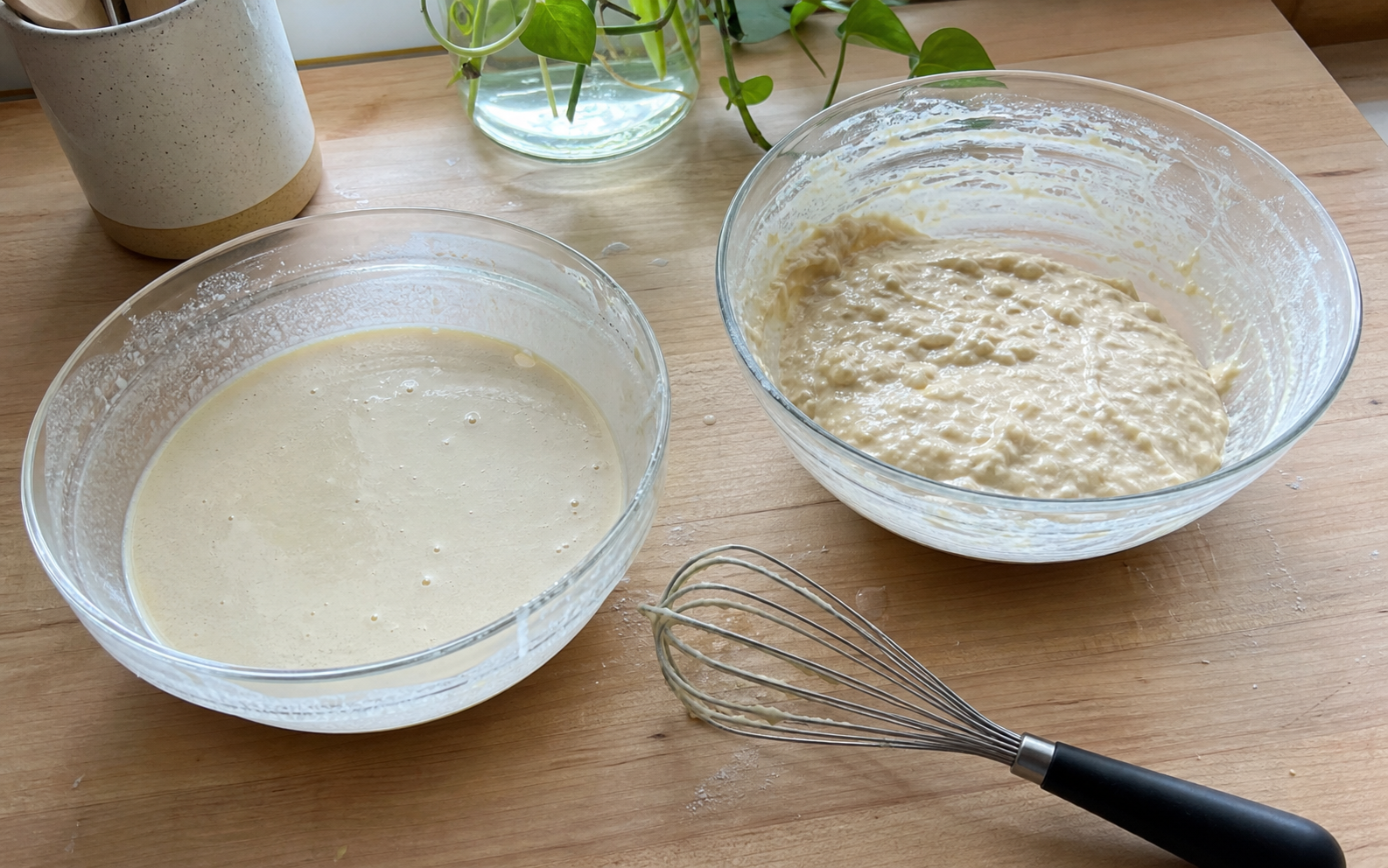
Crepe batter is thinner and is generally unleavened, while American pancake batter is thicker and usually contains baking powder and/or baking soda. That is why crepes spread across the pan into flexible, delicate sheets while American pancakes stay in smaller rounds and rise into a fluffy crumb. Adding extra milk to pancake batter may make it thinner, but it does not automatically turn the formula into true crepe batter because the leavening and ingredient ratios are still different.
Crepe Batter vs Pancake Batter at a Glance
| Feature | Crepe batter | American pancake batter |
|---|---|---|
| Consistency | Thin and readily spreadable | Thicker and pourable |
| Leavening | Usually none | Usually baking powder and/or baking soda |
| Goal | Spread into a very thin layer | Hold a round shape and rise |
| Finished texture | Thin, flexible, delicate | Soft, fluffy, cake-like |
| Pan technique | Pour, then swirl/spread rapidly | Portion and let batter form a round |
| Typical use | Folded/rolled around sweet or savory fillings | Stacked and topped; mix-ins often cooked inside |
| Easy to substitute directly? | No—similar ingredients do not mean identical ratios or behavior | |
Do Crepes and Pancakes Use the Same Ingredients?
Often, they use many of the same base ingredients. The difference is what those ingredients are being asked to do. Crepes commonly combine flour, eggs, milk and butter into a fluid batter. American pancakes commonly use flour, milk, eggs and fat too, but add chemical leavening to create height.
This is why comparing ingredient lists alone can be misleading. Two recipes can both say “flour, milk, eggs, butter†and still produce radically different foods because the proportions and leavening are different.
Crepe formula goal
Enough liquid for the batter to travel quickly across a tilted pan and form a thin sheet.
Pancake formula goal
Enough body to stay in a smaller round while gas from leavening expands the batter upward.
How Much Thinner Is Crepe Batter?
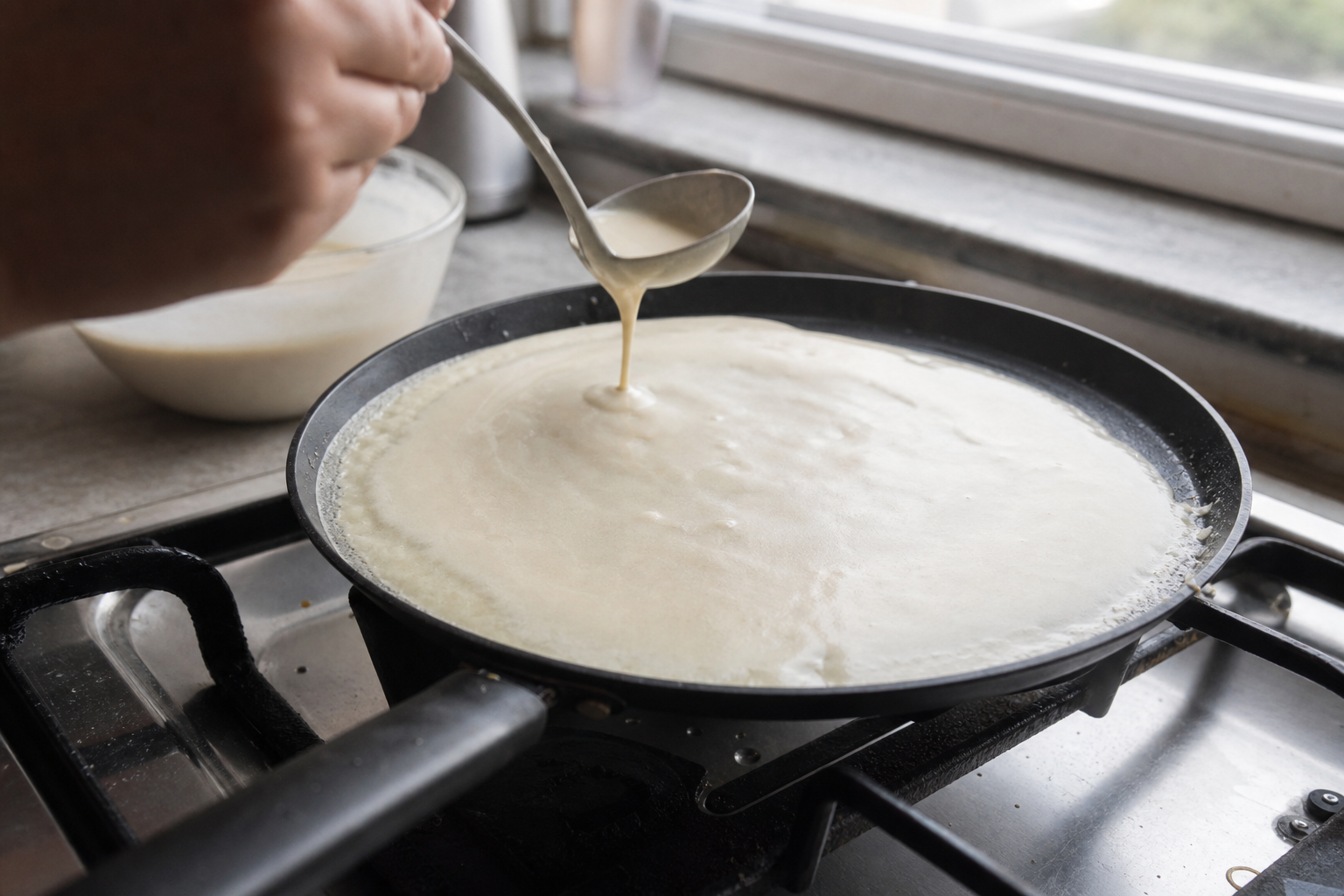
There is no universal viscosity number because recipes vary, but the functional test is clear: crepe batter needs to spread rapidly when the pan is tilted or when a crepe spreader is used. Pancake batter is normally thick enough that it does not race across the entire skillet on its own.
That difference is also reflected in common comparison guides, which describe crepes as using a higher liquid-to-flour relationship than American pancakes. The practical consequence matters more than memorizing a ratio: crepe batter must coat the pan thinly before it sets.
Why Does Pancake Batter Have Baking Powder but Crepe Batter Doesn’t?
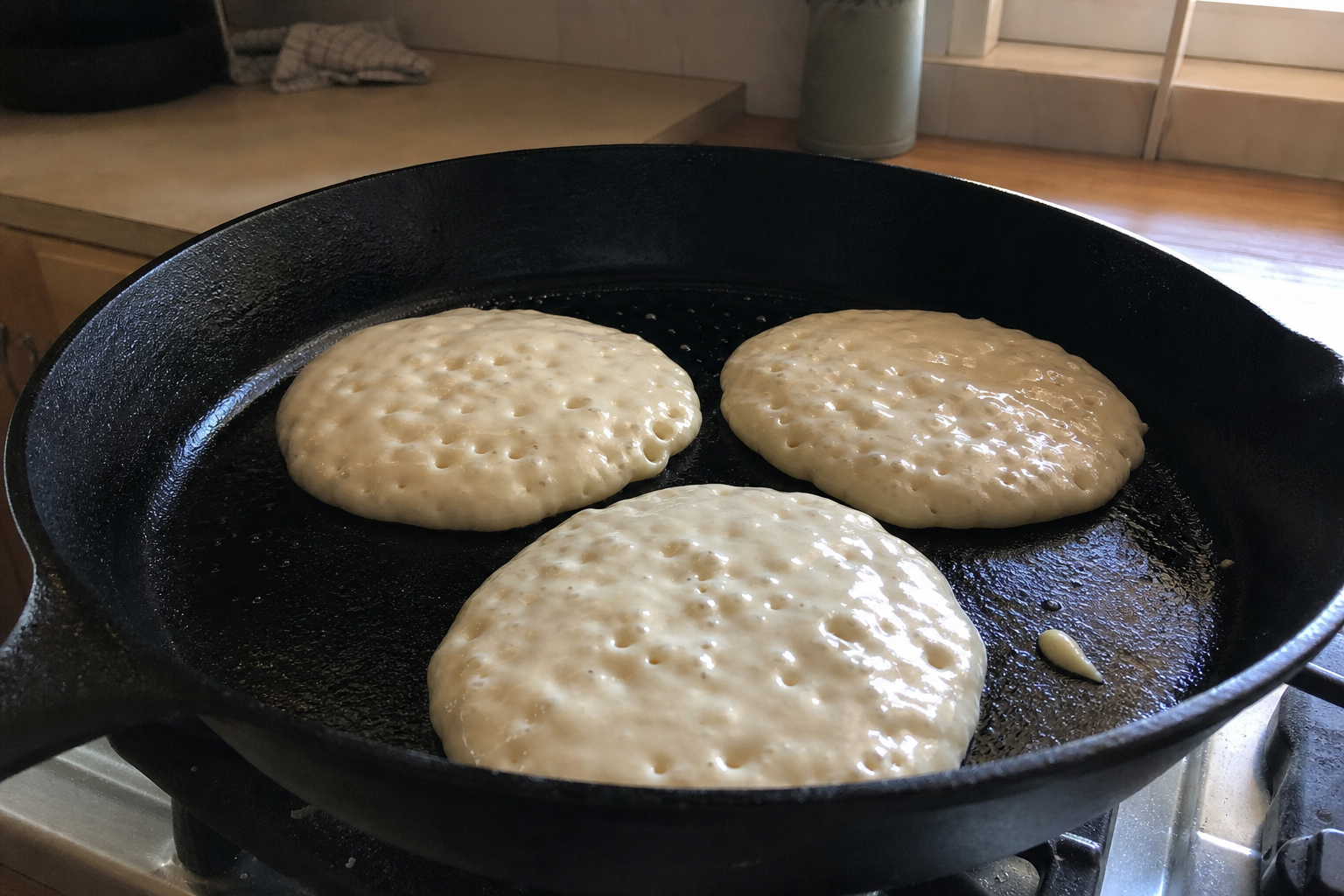
American pancakes are supposed to rise. Baking powder or baking soda creates gas that expands the batter and helps produce a thicker, airy crumb. Crepes are trying to do almost the opposite: they need to remain thin enough to fold or roll.
That makes leavening one of the cleanest distinctions between classic French-style crepes and American pancakes. Food Republic, Chowhound and other comparison guides all identify chemical leavening as a central difference between the two styles.
There are many pancake traditions around the world, so “pancake batter always contains baking powder†would be too broad. The comparison here is specifically between French-style crepes and American-style pancakes.
Can You Turn Pancake Batter Into Crepe Batter?
You can make a pancake batter thinner, but that does not mean the result becomes equivalent to a purpose-built crepe recipe. If the batter already contains baking powder or baking soda, thinning it does not remove those ingredients. The egg-to-flour and liquid-to-flour ratios may also remain different.
This answers a surprisingly common kitchen question: adding milk is not a complete conversion method. It may produce a thinner pancake, but the result can still puff, tear, taste different or behave differently when swirled.
| Starting point | What happens if you modify it? | Better approach |
|---|---|---|
| Pancake batter + extra milk | Thinner, but still contains pancake leavening | Use a crepe formula when you want true crepes |
| Crepe batter + baking powder | May puff somewhat, but ratios are still crepe-like | Use a pancake formula for fluffy pancakes |
| Leftover crepe batter | Can cook into thicker rounds, but texture will not match American pancakes | Treat it as a different thin-pancake style |
| Leftover pancake batter | Can be spread thinner experimentally | Do not expect classic crepe texture |
Can You Make Pancakes With Crepe Batter?
You can pour crepe batter into smaller rounds, but the result will not behave like a standard fluffy American pancake because the batter generally lacks the same chemical leavening and is proportioned to spread thinly.
Making the round smaller does not change its internal structure. Expect something closer to a small thin pancake than a tall breakfast flapjack.
Do Crepe Batter and Pancake Batter Rest the Same Way?
Crepe recipes often include a deliberate resting period. Resting allows the flour to hydrate and the batter to settle before it is spread very thinly. Some crepe recipes can also be refrigerated ahead.
American pancake recipes vary more. A short rest can be useful in some formulas, but a batter containing active chemical leavening is not automatically intended for a long or overnight rest. Follow the specific recipe rather than transferring the storage instructions from crepes to pancakes.
Why the Cooking Technique Is So Different
A crepe cook has only a brief window to distribute the batter. Once a small amount hits the hot pan, the pan is tilted and rotated—or the batter is spread—so it coats a broad area before setting. This creates the signature large diameter and thin body.
Pancake batter is intentionally left more concentrated. You portion it onto the griddle and wait for the batter to rise and set before flipping. Spreading American pancake batter across the entire pan would work against the structure the recipe was designed to create.
Crepe movement
Outward: spread the batter across a large surface.
Pancake movement
Upward: retain enough thickness for leavening to create height.
Why Is My Crepe Coming Out Like a Pancake?
If your crepes are thick, small and fluffy, check the formula before blaming your pan technique. Look for baking powder or baking soda, then compare the liquid-to-flour balance with the crepe recipe you intended to make.
If the formula is correct but the crepe is still too thick, the batter may not be spreading quickly enough. That can come from consistency, too much batter per crepe or waiting too long to tilt the pan.
Why Is My Pancake Coming Out Like a Crepe?
If an American pancake spreads into a very thin, wide disk, the reverse diagnosis applies. Check whether too much liquid was added, whether the leavening was omitted or mismeasured, and whether the batter matches the intended recipe.
Do not automatically add flour by eye. Verify the measurements first; otherwise you can solve thinness while creating a heavy, floury pancake.
Which Batter Is More Versatile?
They are versatile in different ways. Crepes are structurally suited to wrapping and folding, so fillings can become part of the final form. American pancakes have a sturdier crumb and are particularly convenient for stacks, toppings and ingredients mixed directly into the batter.
Neither is inherently “better.†Choose based on what you want the batter to do.
What This Comparison Covers
This article compares classic French-style crepes with common American-style pancakes. The word “pancake†describes a huge global family, including English pancakes, Swedish pancakes, blini, Japanese hotcakes and many other foods that do not fit a single American formula. That is why the distinction here is deliberately specific.
Frequently Asked Questions
Is crepe batter the same as pancake batter?
No. They often share flour, eggs, milk and fat, but crepe batter is generally thinner and unleavened while American pancake batter is thicker and usually chemically leavened.
Can I use pancake batter to make crepes?
You can spread pancake batter thinly as an experiment, but it will not necessarily behave like true crepe batter because it usually contains leavening and different ingredient ratios.
Can I add milk to pancake mix to make crepes?
Extra milk makes the batter thinner, but it does not remove the baking powder or change every other ratio. A dedicated crepe formula gives a more predictable result.
Can I make pancakes from leftover crepe batter?
You can cook it in smaller rounds, but without the structure and leavening of American pancake batter, the result will remain relatively thin rather than fluffy.
Why don’t crepes use baking powder?
Classic crepes are intended to remain thin and flexible. American pancakes use chemical leavening specifically to create more height and a fluffy crumb.
Why is crepe batter runnier than pancake batter?
It needs to move quickly across the pan and form a very thin layer before it sets. Pancake batter needs more body so it can retain thickness and rise.
Bottom Line
Crepe batter is not simply watered-down pancake batter. Crepes use a thin, generally unleavened formula designed to spread outward; American pancakes use a thicker, chemically leavened formula designed to rise upward. Understanding that structural difference explains the changes in consistency, pan technique, texture—and why converting one finished batter into the other is less straightforward than adding milk or baking powder.