AIR FRYER · FROZEN FOOD · UPDATED AUGUST 2026
Frozen potato skins in the air fryer: crisp cheese, no guessing
Frozen potato skins are easy in an air fryer, but the loaded centre makes them different from fries: the shell needs circulating heat while the cheese must stay put. The dependable method is package-first, one layer, an early check and no unnecessary flipping.
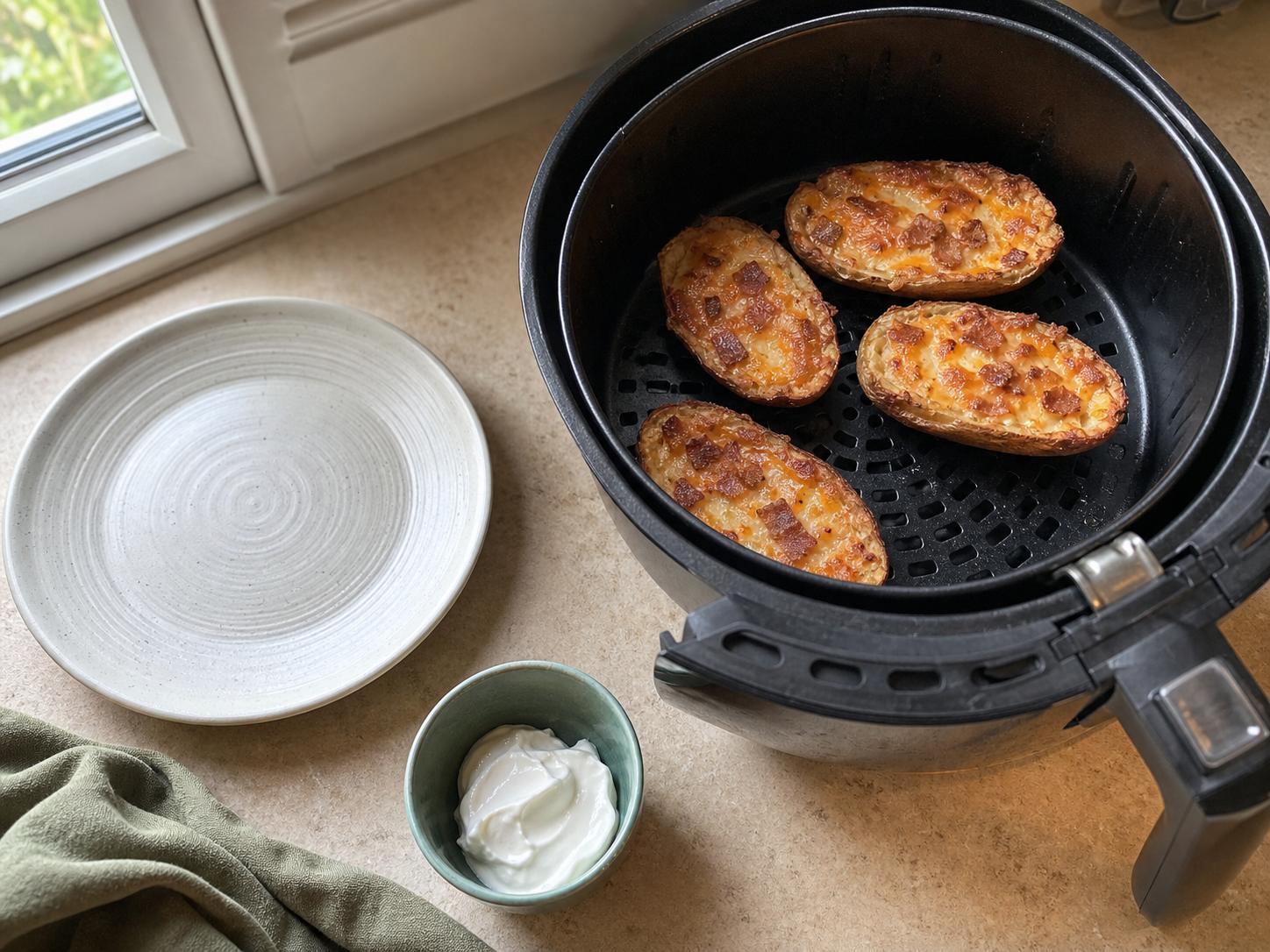
QUICK ANSWER
Cook frozen potato skins directly from frozen in one layer. Start with the air-fryer direction on the package, check at its earliest stated finish, and leave the skins upright so the cheese and topping do not fall out.
There is no safe universal time for every brand and machine. Potato-skin size, filling, basket depth and air-fryer design all change the finish. The readiness cues below are more useful than stretching one number across every box.
The package-first method
Use this method when the box gives an air-fryer direction, or when it gives an oven direction but no air-fryer guarantee. A freezer product is not a blank ingredient: its shell thickness, amount of cheese and whether the filling is already cooked can vary. Do not replace the label with a generic temperature just because another box used one.
- Read the package before opening the basket.Look for the stated cooking method, whether the skins must stay frozen, and any internal-temperature or handling instruction. An air-fryer direction on the package wins over a blog timing chart.
- Preheat only if your appliance or the package asks for it.Preheating can shorten the initial softening stage in some machines, but it is not a universal requirement. A hot basket can also make loaded skins harder to place neatly, so use tongs and keep the filling upright.
- Arrange the skins in one layer, filling side up.Leave a little room between them. Air needs a path around the potato shell; stacking or wedging the skins together traps steam and can leave the edges soft while the cheese browns too quickly.
- Set the package method and check at the earliest finish.Open the basket carefully and inspect the cheese, the centre and the exposed shell. If the filling is not hot or the cheese has not settled, continue in short checks rather than committing to a long unobserved run.
- Rest briefly before serving.Cheese and potato filling hold heat longer than the shell suggests. A short rest lets the topping settle and makes the first bite safer, especially when the skins are small and heavily loaded.
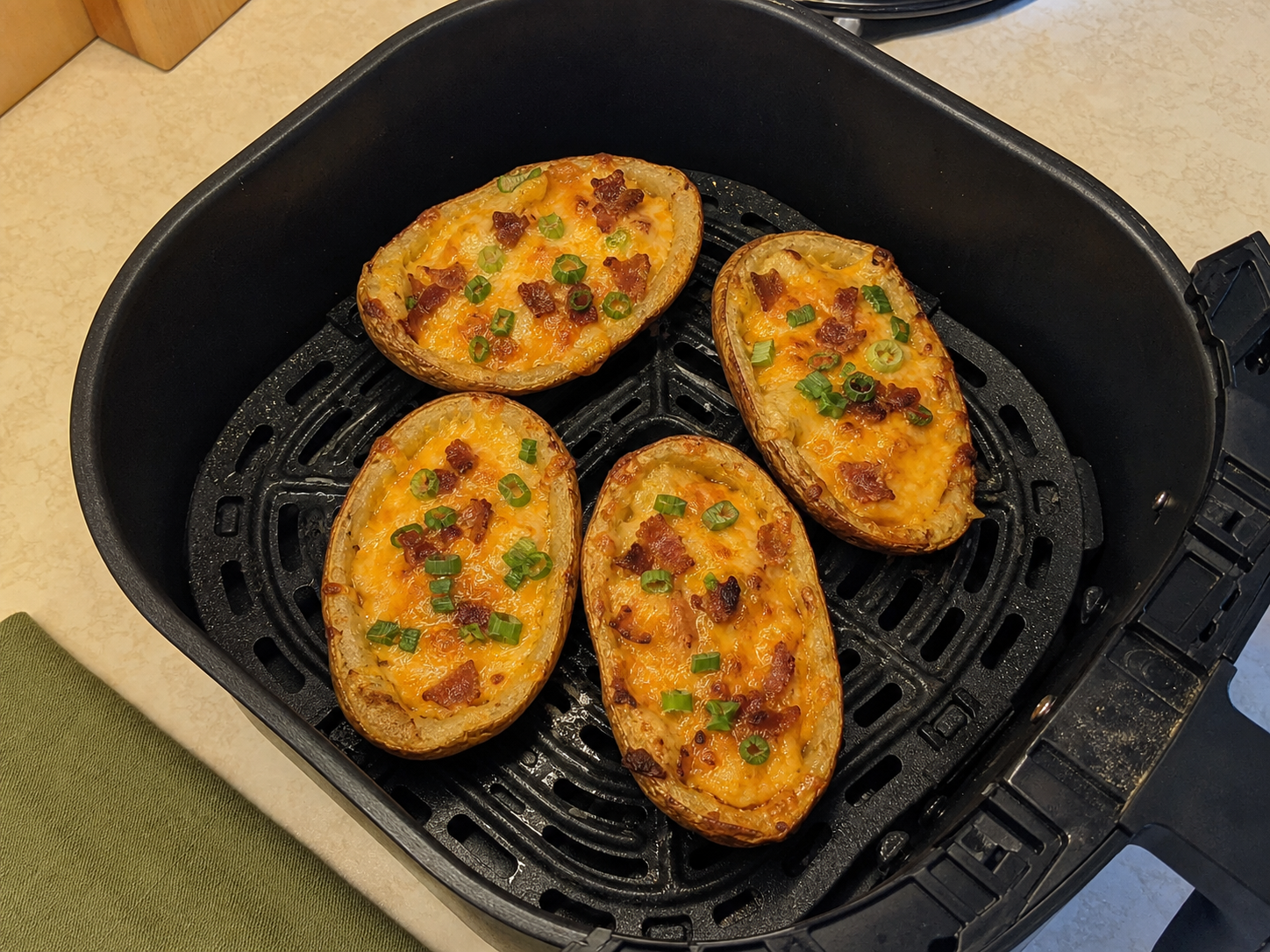
WHY THIS WORKS
The shell and filling finish differently. The exposed potato needs dry moving air to firm up, while the cheese only needs enough time to melt and heat through. Keeping each skin upright and spaced lets you observe both without turning it into a generic fried-snack recipe.
Which setting fits your box?
THE BOX LISTS AIR FRYER STEPS
Use those first
Follow its temperature and time, then check at the earliest finish. The useful adjustment is a short extra check, not an automatic increase in heat.
THE BOX LISTS OVEN ONLY
Use the oven as the documented fallback
Do not assume every oven instruction converts cleanly. If you choose to air fry, inspect early and rely on food-safety and readiness cues rather than a copied setting.
THE SKINS ARE LARGE OR VERY FULL
Protect the topping
Give them more space, keep them level and resist flipping. A large filling can lag behind the browned rim, so centre heat matters more than surface colour.
What done potato skins look and feel like
Colour alone is not a reliable finish signal because cheese can brown before the potato centre is hot. Use several cues together. First, the cheese should be melted across the top rather than sitting in separate shreds. Second, the exposed shell should look dry and feel firm at its edge, not pale and damp. Finally, the filling must be hot throughout according to the package safety instruction.
Cheese: melted, settled and hot
Some cheese browns much faster than the potato beneath it. If the top is coloured but the filling is not hot, avoid raising the heat immediately. A gentler continuation, or following the package fallback, is less likely to split the cheese or burn the exposed rim.
Shell: firm at the edge, not hard like a chip
The goal is a stable shell that holds the filling, not a dehydrated potato cup. If the skin is firm but the very edge is darkening rapidly, it is time to serve rather than chase more colour.
Centre: hot before the plate leaves the kitchen
Because toppings differ, cut or gently test one from the centre only when the package gives no more precise cue. Let it stand after testing; the melted topping can be hotter than it appears.
Troubleshooting without making a mess
The topping slid or spilled
This usually happens when a skin is tipped, flipped or crowded against a basket wall. Keep the filling facing up and use a thin spatula or tongs under the shell when moving it. If cheese has already leaked, let it set for a moment before lifting; pulling at it while liquid can tear the remaining topping away.
The cheese browned but the potato is not hot
That is a sign that surface colour is racing ahead of centre heat. Check the box for an alternative method, reduce crowding and continue with short observations rather than relying on colour. Different machines drive heat at the top and bottom very differently.
The shells are soft
Soft shells usually mean trapped steam, too many skins in one batch or an early serving. Give the items gaps, keep a liner from blocking airflow unless the manufacturer permits it, and cook a second batch rather than stacking a first one.
The edges are drying out
Potato skins have a thin exposed rim, so they can overcook before the centre catches up. Check early, especially with smaller skins. Do not add oil by default: the frozen product already contains its own fat and the package may have different instructions.
Turn potato skins into a simple dinner
Potato skins are rich and salty, so the best additions are cool, sharp or brothy rather than another breaded freezer item. Build a dinner around one serving of skins plus a side that changes the texture of the plate.
FASTEST PLATE
Cucumber + sour cream
Serve sliced cucumber with lime or vinegar beside the skins and use sour cream as a dip. The cold crunch offsets cheese without adding another pan.
FULLER DINNER
Black beans + tomato
Warm simple beans, add a tomato salad and keep the potato skins as the crisp centrepiece. This is more balanced than doubling the number of skins.
SHARED SNACK TABLE
Slaw + two dips
Put out a lightly dressed cabbage slaw, one cool dip and one sharp sauce. Cook skins in batches so the first plate does not soften while the rest finish.
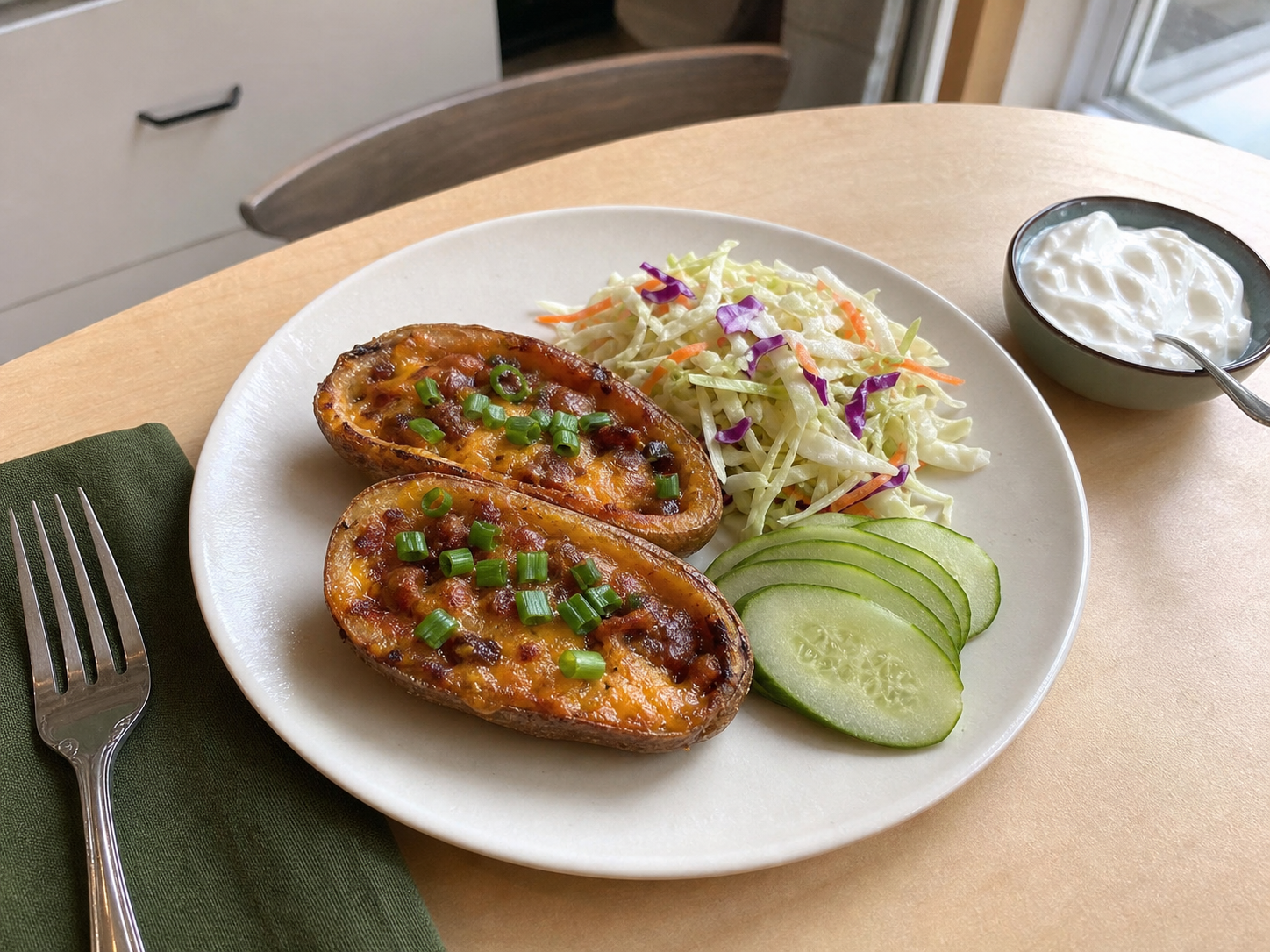
For more ways to give freezer appetizers contrast, use our guide to dips and sides for frozen appetizers. The same rule applies here: one warm crisp item, one fresh side and one sauce with a clear job.
Frequently asked questions
Do you thaw frozen potato skins before air frying?
Usually no. Cook them from frozen unless the package says otherwise; thawing can make the potato and topping softer before the shell has crisped.
Do frozen potato skins need to be flipped in an air fryer?
Usually avoid flipping a loaded potato skin. Check and rotate the basket or tray only if your appliance heats unevenly, because turning can disturb the cheese and topping.
How do you know frozen potato skins are done?
The cheese should be fully melted and hot, the potato centre hot, and the shell should feel firm rather than wet. Use the package food-safety instructions as the final authority.
Can you add extra cheese?
Only if the package method allows it and the topping is already hot. Extra cheese added too early can colour before the potato heats through; adding it near the end is easier to control, but avoid making a guess that conflicts with the product instructions.