AIR FRYER · FROZEN FOOD · UPDATED AUGUST 2026
Frozen spring rolls in the air fryer: a crisp, safe method
The best air-fryer time is not a magic number. It is the package direction, adjusted with space in the basket, a halfway check and clear wrapper-and-centre cues. This guide shows how to do that without pretending every frozen spring roll cooks alike.
QUICK ANSWER
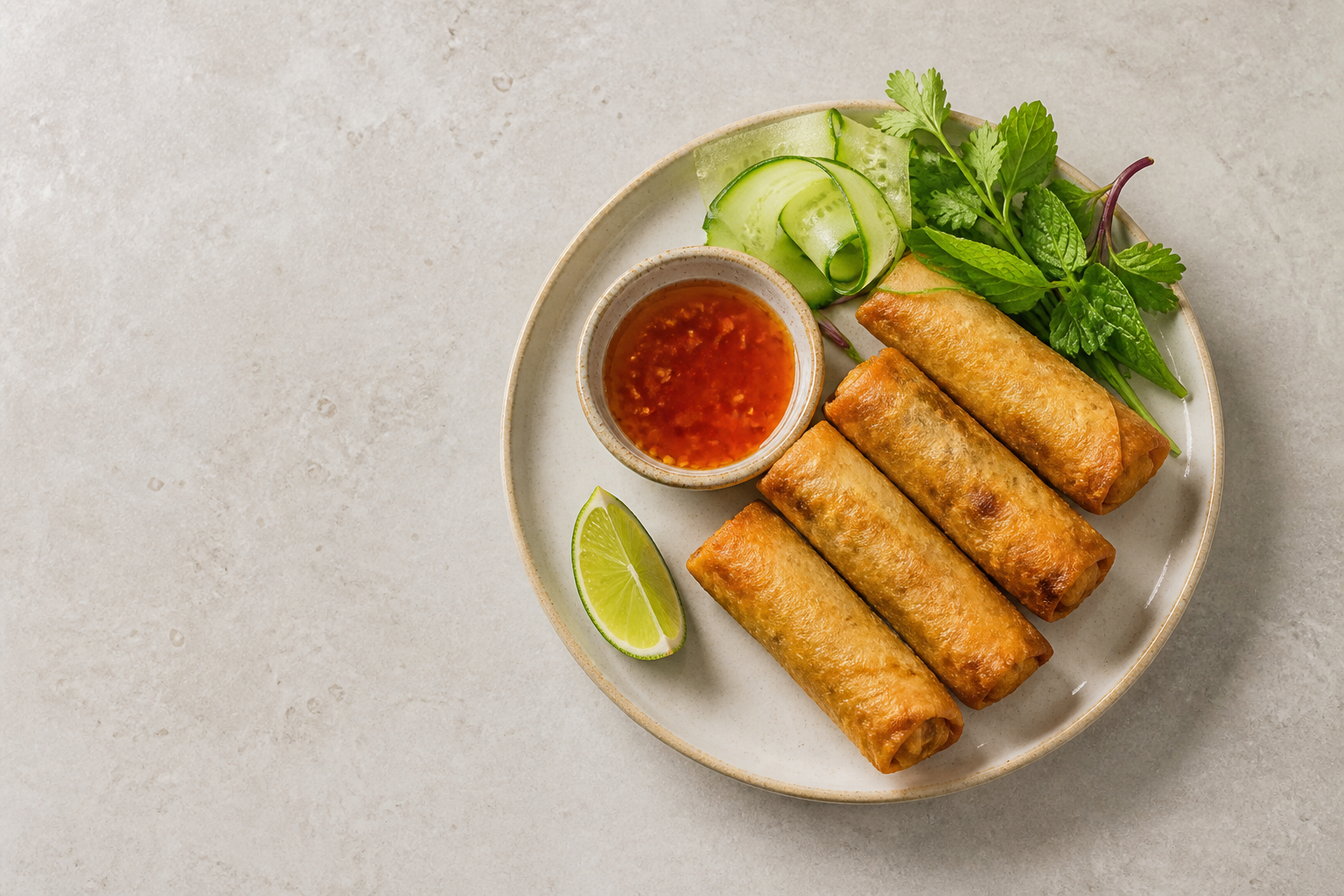
Cook from frozen only if your package says to; arrange the rolls in one layer, check them at the earliest stated time, then finish when the wrapper is crisp and the filling is hot under the product’s instructions.
Across published guides, the useful starting range is often about 8–12 minutes near 390°F. That is a planning range, not a substitute for the label: filling, roll size, appliance power and preheating can all change the result.
Before you start: identify the spring roll, then trust its label
“Frozen spring rolls†is a broad search phrase, not one standardized food. Some are petite vegetable rolls with a thin wrapper; others are large pork or chicken rolls. Some are fully cooked and need reheating, while others have a label with specific food-safety directions. The bag is the source of truth for the starting state, temperature and internal-doneness instruction.
That matters because online recipes are written for different products and machines. One published method may preheat, another may not. One might use a smaller roll or a powerful drawer air fryer. Treat a blog time as a comparison point only after it agrees with the package—not as permission to ignore the package.
THE 30-SECOND DECISION
If the package has air-fryer directions: use those first. If it gives only oven directions: use the oven as the guaranteed option unless the manufacturer provides an air-fryer equivalent. If the bag is damaged, thawed or the filling instructions are unclear: do not improvise a food-safety time from a search result.
The package-first air-fryer method
This sequence is designed to work across brands because it prioritizes the variables that travel well: starting condition, airflow, early checking and clear finish cues. It is also more useful than a single exact time when your basket, batch size and roll thickness are different from a recipe writer’s.
- Read the front and back of the package.Confirm that air frying from frozen is allowed. Note the stated temperature, time range, serving size and any instruction about turning, oil or preheating. Keep the bag available until the batch is done.
- Preheat only when your appliance or package calls for it.Preheating is not a universal rule; it changes the clock. If you preheat, begin checking at the early end of the package’s range. If you do not, do not borrow a preheated timing from another recipe.
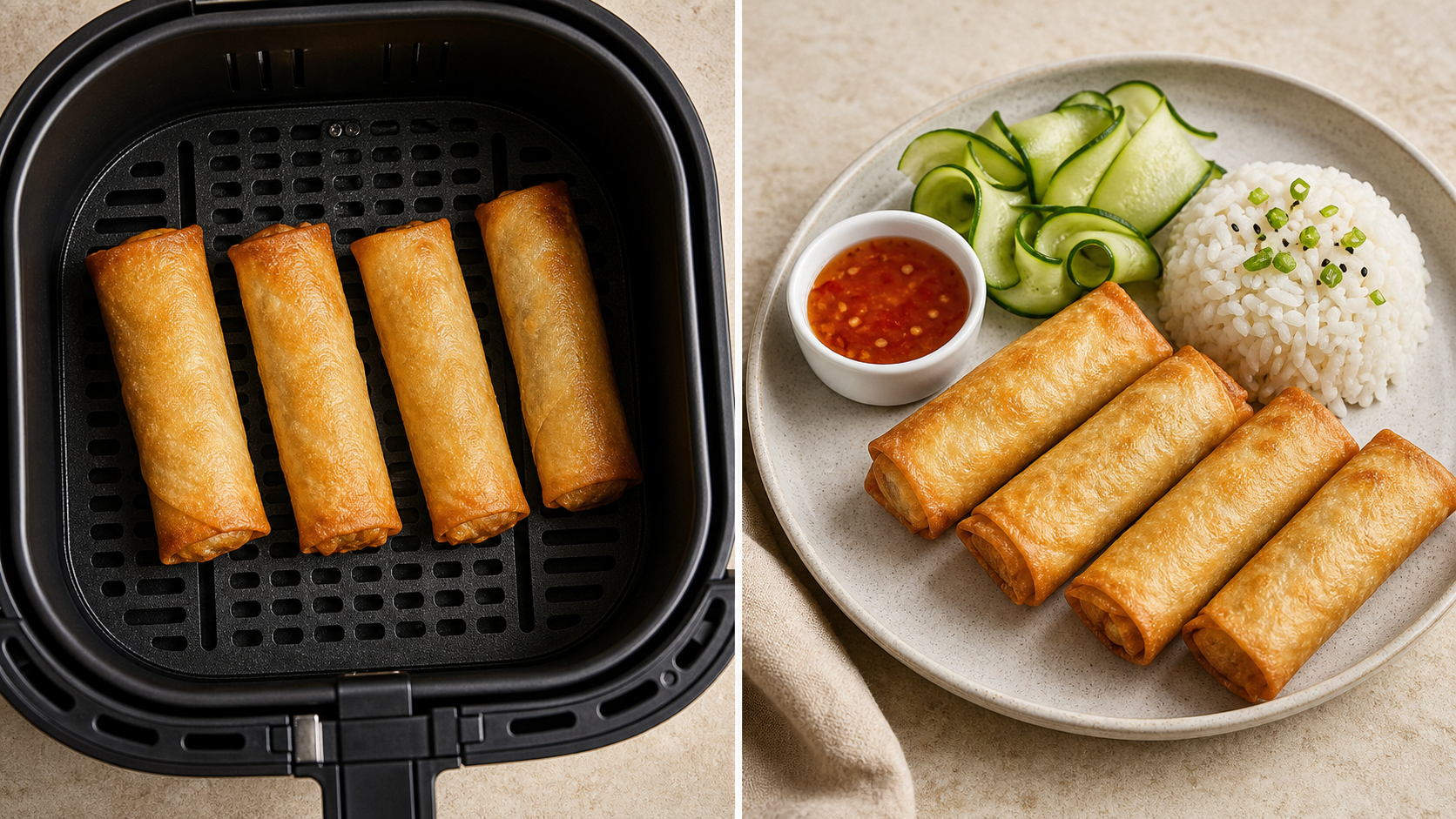
- Place the rolls in one layer with a visible gap.Do not stack them or let a crowded line become one solid mass. The basket’s job is to circulate hot air. If you need more servings, cook a second batch rather than trading crispness for speed.
- Check at the earliest credible finish point.Use tongs to turn one or shake gently only if the package allows it. Look for a dry, firmer wrapper; do not decide by colour alone, especially if the filling is not already fully cooked.
- Finish with texture and safety together.The wrapper should be crisp rather than floppy, and the centre must meet the product’s heating instruction. Rest for a minute before biting: the filling holds heat longer than the shell.
How to tell when a spring roll is ready
WRAPPER
Dry and crisp
It should look dry, lightly blistered or evenly golden where your product normally browns, and feel firm when lifted with tongs. A pale, flexible roll may need more time or better airflow.
CENTRE
Hot to the label standard
Colour is not a safety test. Open one carefully and use the package’s cooking and serving instructions for the particular filling. Steam alone is not a guarantee.
BATCH
Consistent, not just one good roll
Look across the basket. If the outside rolls crisped but the touching ones did not, the issue is crowding—not a reason to overcook the good ones.
A useful habit is to make the first batch a calibration batch. Note the package’s finish range, whether you preheated and how many rolls fit with gaps. Your next batch can then use your own appliance-specific observation instead of a generic ranking-page promise.
Troubleshooting: solve the cause, not just the symptom
The wrapper is pale or soft
Start with airflow. Rolls that touch or overlap trap steam, as does piling them into a bowl after cooking. Use fewer per batch, keep them in one layer, and serve sauce on the side. If the package specifies preheating, missing that step can also change the result.
The ends are dark but the middle needs more heat
Do not keep escalating a high temperature blindly. The roll may be thicker than the recipe you copied, or your appliance may run hot. Follow the product directions; if the result repeatedly browns too fast, the manufacturer’s oven route is the safer fallback.
A roll splits or leaks
Frozen wrappers can be damaged in the bag or weakened if they thawed and refroze. Handle with tongs, avoid aggressive shaking, and do not overfill the basket. A split roll is still a clue to inspect the package condition rather than an excuse to claim a new “best†setting.
They become soggy after plating
Steam is the likely culprit. Move rolls to a single layer on a plate, avoid covering them and let everyone dip individually. A deep bowl, a closed container or sauce poured over the top all soften the crust quickly.
Sauces and a simple dinner around spring rolls
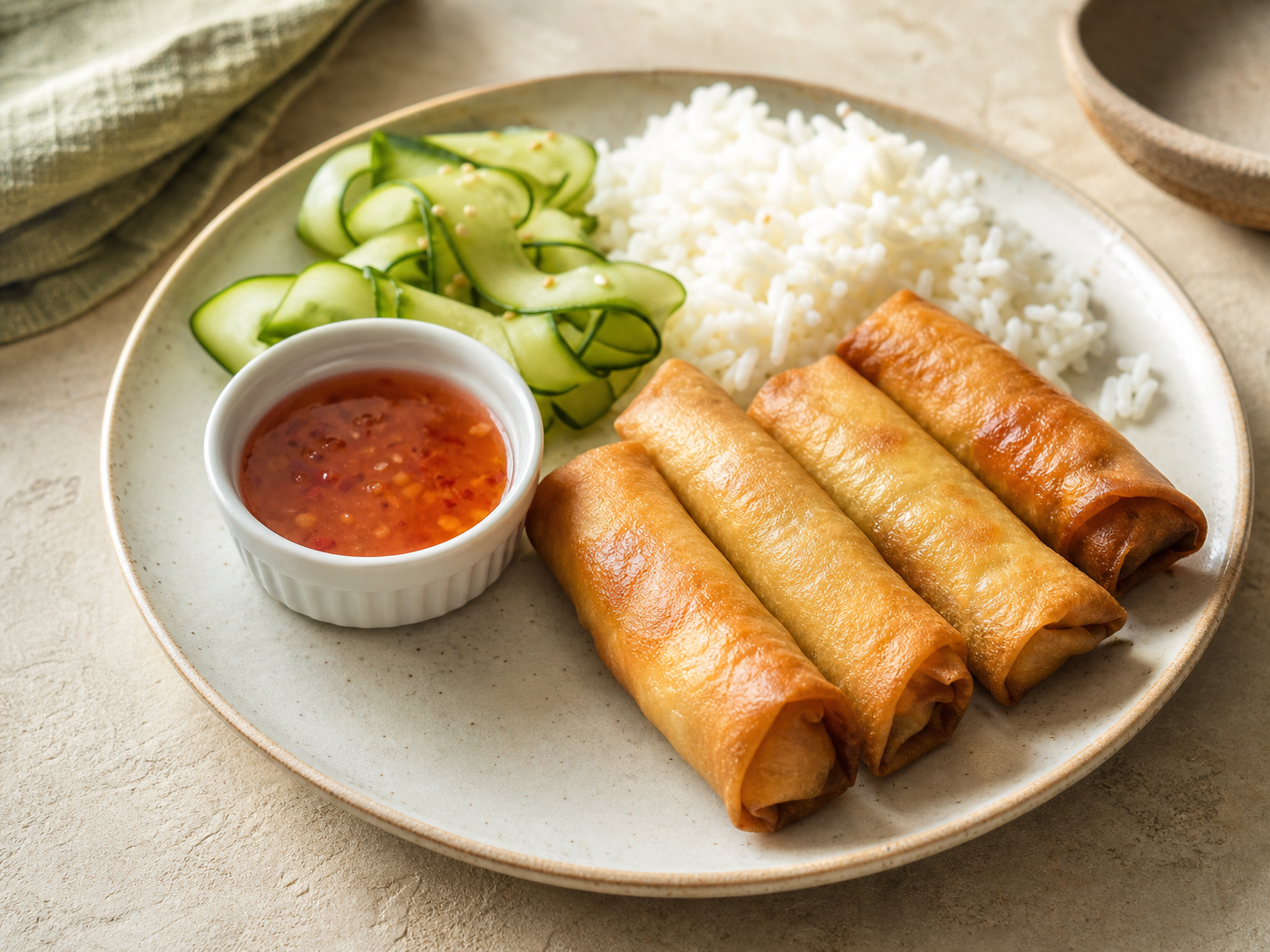
Spring rolls are usually the rich, crisp element of the plate. The easiest way to turn them into dinner is to add one neutral base, one cool raw ingredient and a sauce that is served separately. That gives contrast without another cooking project.
SWEET + HEAT
Sweet chili and lime
Use a small bowl of sweet chili sauce with a squeeze of lime at the table. It works especially well when you want the sauce to be bright rather than heavy.
SALTY + TANGY
Soy and rice vinegar
Combine a modest amount of soy sauce with rice vinegar and optional chili. This is a lighter direction for rolls with a richer filling.
COOL + CRUNCHY
Rice, cucumber and herbs
Warm rice, sliced cucumber and fresh herbs turn a snack plate into a weeknight meal without competing with the wrapper’s crunch.
For a wider set of “one crisp thing + one fresh thing + one sauce†dinner combinations, see our potsticker dinner plans. The same balance works with spring rolls, dumplings and other freezer staples.
Frequently asked questions
How long do frozen spring rolls take in an air fryer?
Published methods commonly use roughly 8–12 minutes around 390°F, but the package and appliance are the authority. Check at the earliest package or recipe time, turn if needed, and continue only until the wrapper is crisp and the centre is hot according to the package directions.
Do I need to thaw frozen spring rolls before air frying?
Usually no, but follow the product label. Thawing can make some wrappers fragile or damp. Use the starting state and food-safety directions printed on the package.
Why are my air-fryer spring rolls not crispy?
Crowding, overlapping rolls, excess moisture and insufficient heat circulation are common causes. Cook in one layer with space, keep sauce separate, and check whether the package calls for a specific temperature or preheat.
Can I stack spring rolls in the air fryer?
A single layer is more reliable. Stacking blocks airflow and can leave the wrappers soft. Make a second batch if the basket is crowded.