Protein-waffle troubleshooting
Why Are My Protein Waffles Dry?
Protein waffles usually turn dry, chalky or crumbly because the batter contains more protein powder than its moisture and fat can support, or because the waffle stays in the iron too long. Start by comparing the protein-to-flour ratio, batter thickness and cooking time. Do not pour in a large amount of milk or rewrite the entire recipe after one dry waffle.
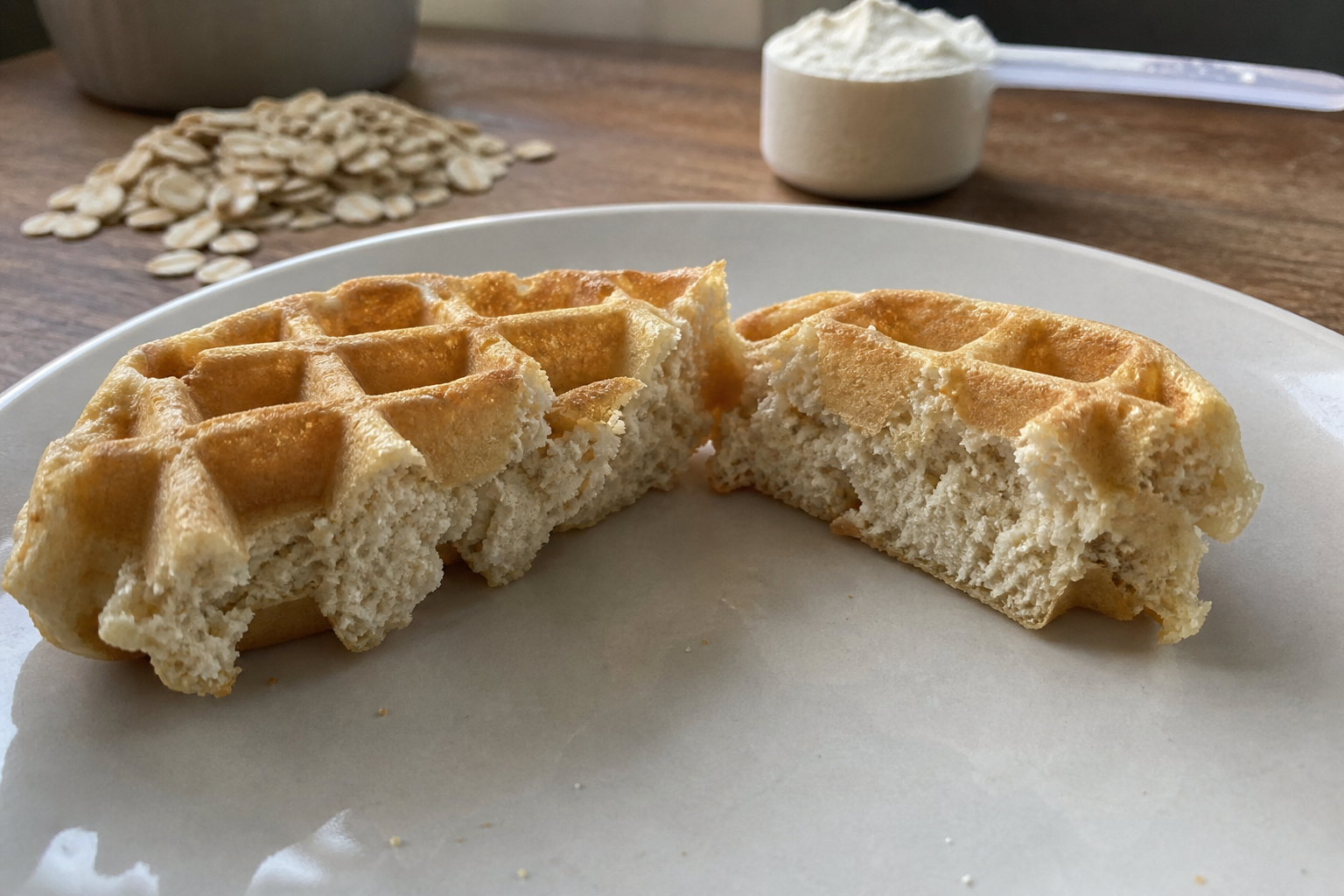
Quick answer
Change one variable on the next waffle. If the batter is unusually stiff, add milk one tablespoon at a time. If the batter looks normal but the waffle is hard and dark, shorten the cook slightly. If every batch tastes chalky, reduce the protein-powder load only after confirming the measurements and the type of protein used.
Is the Waffle Dry, Chalky or Simply Too Crisp?
These descriptions overlap, but they are not identical. A dry waffle has a crumb that lacks moisture. A chalky waffle can create a powdery or mouth-drying sensation even when the measured moisture is not extremely low. An overcrisp waffle may be hard mainly at the surface because it cooked too long.
| What you notice | Best first suspect | First controlled test |
|---|---|---|
| Crumbly interior and stiff batter | Too much dry material or insufficient liquid | Add 1 tablespoon milk to the next portion |
| Hard, dark exterior and dry center | Overcooking | Use the same batter and shorten the next cook slightly |
| Powdery or mouth-drying sensation | Protein type or excessive fortification | Review the powder and protein-to-flour ratio |
| Dry only after cooling | Formula plus moisture loss | Compare a fresh waffle with one held for several minutes |
| Dry after reheating | Reheating method or duration | Reduce reheating time and avoid repeated heating |
7 Reasons Protein Waffles Turn Out Dry
1. Too much protein powder
Protein powder is not a one-for-one flour replacement. Research on whey-fortified bread and bakery products shows that increasing protein can raise hardness and chewiness, particularly at higher inclusion levels. A review of whey in baked products found that concentrations at or above about 30% frequently damaged texture characteristics.
2. Not enough liquid for that specific powder
Protein powders do not absorb liquid identically. Casein-rich blends and many plant proteins can thicken a batter more strongly than some whey products. A batter that was correct with one powder may be too stiff with another.
3. Too little fat
Fat supports tenderness and reduces the perception of a dry crumb. Removing oil, butter, egg yolk and full-fat dairy at the same time can leave a high-protein batter with very little protection against toughness.
4. The waffle cooks too long
Protein-rich batter can move from set to dry quickly. If the waffle is already dark and rigid, extending the cook will not improve its interior texture.
5. The batter is overmixed
If the recipe contains wheat flour, aggressive mixing develops more gluten. Even without much wheat flour, prolonged blending can create a more homogeneous, dense batter and remove some of the lightness you wanted.
6. The recipe is built like a shake, not a waffle
Protein powder, egg whites and water can produce high protein numbers but very little starch, fat or tenderness. A waffle still needs a balanced structure rather than the ingredient list of a drink poured into an iron.
7. The waffle is judged after it has cooled
Protein-fortified foods can become firmer as they cool. Research on protein-enriched cakes and biscuits found greater perceived hardness and mouth-drying than controls, even when final moisture was adjusted to be similar.
Why Protein Type Changes the Result
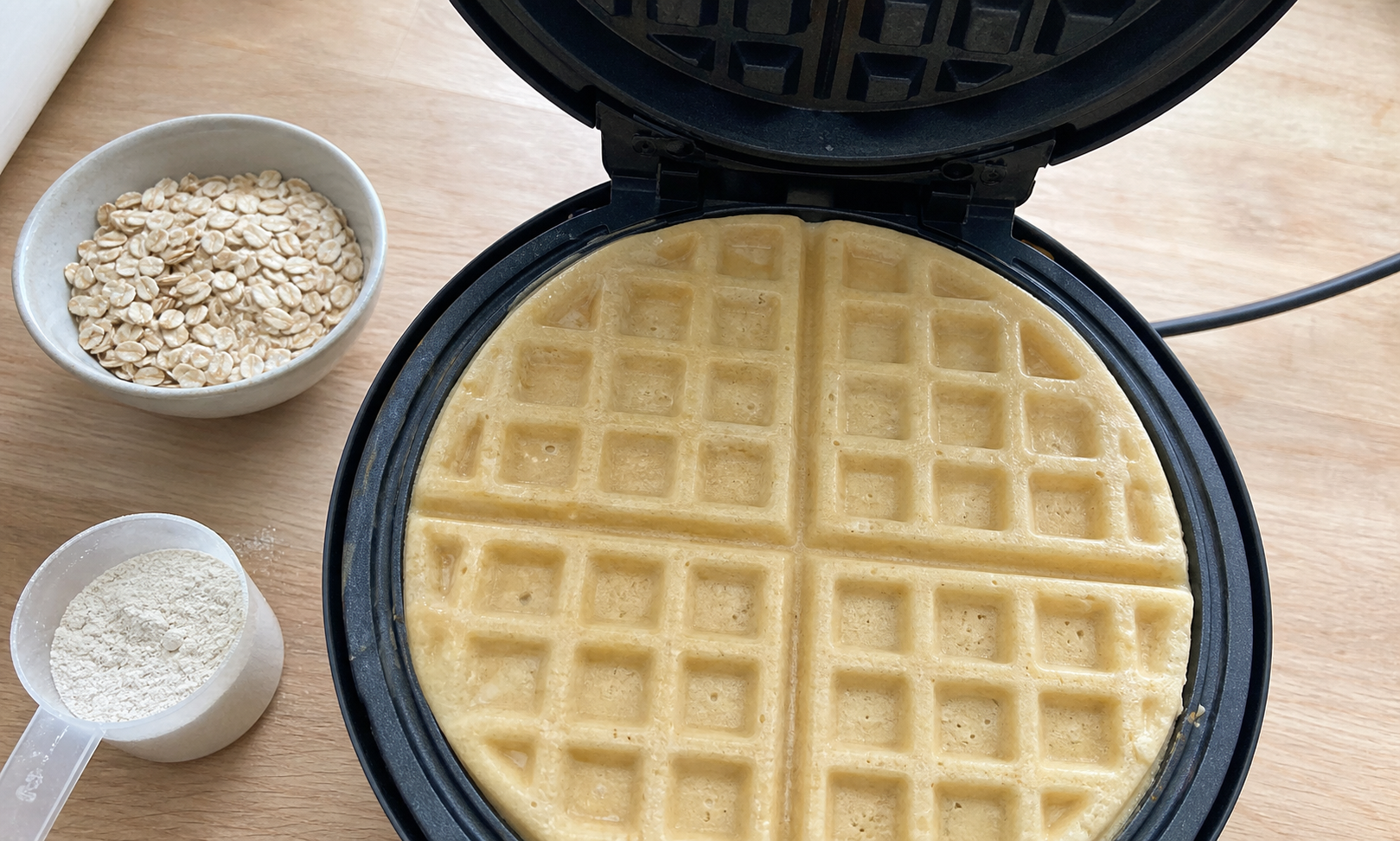
“Protein powder†is a category, not a standardized baking ingredient. Whey isolate, whey concentrate, casein, egg-white protein and plant blends differ in composition, particle size and water binding. The amount of liquid that works with one product may fail with another.
Whey isolate
Can set quickly under heat and may feel dry when the formula is protein-heavy.
Whey concentrate
Contains additional components that can make it behave differently from isolate.
Casein blends
Often thicken strongly; judge the rested batter before adding more powder.
Plant protein
Absorption varies widely across pea, soy, rice and blended products.
The practical rule is simple: when you change protein powder, treat the first waffle as a new calibration rather than assuming the old liquid quantity will transfer exactly.
How to Add Moisture Without Making the Batter Runny
Confirm the measurements
Check whether the protein scoop was larger than the recipe's stated gram amount. Scoop sizes are not interchangeable.
Let the batter sit briefly
Some powders continue absorbing liquid for a few minutes. Judge the consistency after a short rest, not only immediately after mixing.
Add liquid gradually
If the batter is too stiff, add milk or water one tablespoon at a time. Stop when it is thick but able to spread when the iron closes.
Use a moisture-rich ingredient when the formula allows it
Greek yogurt, cottage cheese, mashed banana or applesauce can add moisture, but each changes flavor and structure. Use a tested version rather than adding several at once.
Retain some fat
A small amount of oil, melted butter, nut butter or egg yolk can improve tenderness more effectively than simply flooding the batter with extra liquid.
Cooking Technique That Prevents Dry Protein Waffles
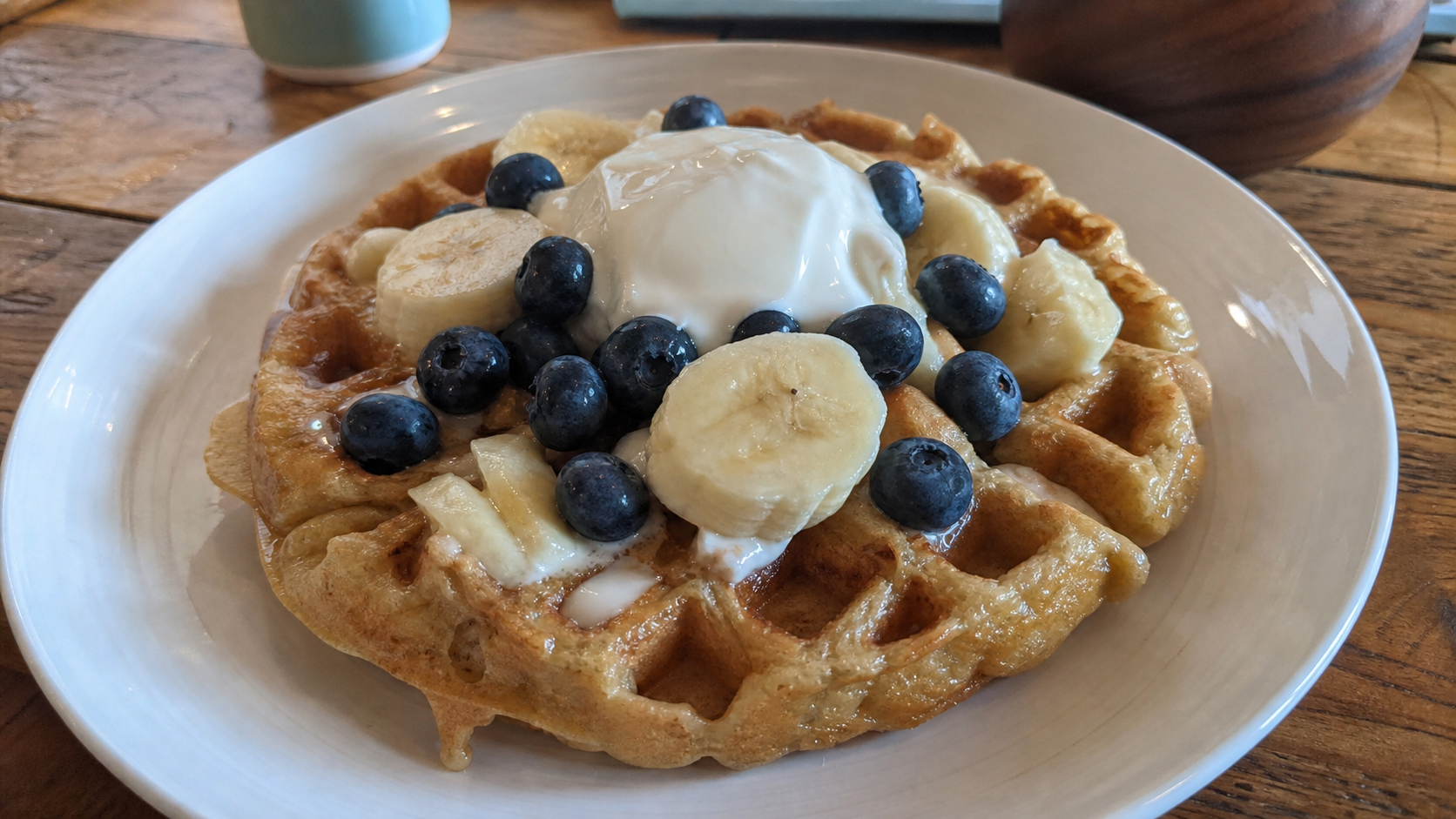
- Preheat fully. A cool iron extends cooking time and can dry the interior before the exterior sets properly.
- Use a consistent portion. Overfilling creates a thick waffle that takes longer to cook through.
- Do not open repeatedly. Check according to the appliance guidance rather than releasing heat several times.
- Stop at done, not extra-dark. Use the first waffle to calibrate your iron and powder combination.
- Cool briefly on a wire rack. Avoid stacking, but do not leave the waffle exposed until it becomes stale and hard.
How to Rescue the Batter You Already Mixed
Do not alter the whole bowl after one dry waffle. Divide off enough batter for one more waffle and make a controlled change.
| If the batter... | Change for one test waffle | What the result means |
|---|---|---|
| Is very stiff and barely spreads | Add 1 tablespoon milk | Improvement points toward insufficient hydration |
| Looks normal but cooks very hard | Shorten cooking slightly | Improvement points toward overcooking |
| Tastes chalky despite adequate moisture | Reduce powder in a future batch | Current formula may be too protein-heavy |
| Is thin but the waffle is still dry | Do not add more liquid | Review protein type, fat and cook time |
If the batter has already been heavily over-diluted, adding flour and protein back and forth can create an unpredictable formula. At that point, restarting from a measured recipe may be more reliable.
What the Research Supports—and What It Does Not
Studies of protein-fortified cakes, biscuits and bread consistently show that additional protein can increase hardness, chewiness and mouth-drying or reduce perceived moistness. That supports the general diagnosis that a protein-heavy waffle formula can feel dry. It does not provide a universal protein-powder percentage for every waffle recipe, because waffles differ in flour, eggs, dairy, fat, appliance temperature and protein type.
This article is therefore a source-based diagnostic framework, not a controlled waffle test. The images are generated editorial food photographs and are used to illustrate the visible problems and corrections rather than claim a test performed by the site.
Frequently Asked Questions
Why are my protein waffles dry?
Check protein-powder quantity, batter thickness and cooking time first. A powder change can also alter how much liquid the batter needs.
How do I make protein waffles less dry?
Keep the protein amount moderate, add moisture gradually, retain some fat, mix gently and cook one calibration waffle before changing the entire batch.
Why do protein waffles taste chalky?
Protein fortification itself can create mouth-drying or chalky sensations. The effect can become stronger when the formula contains a high proportion of powder or insufficient fat and moisture.
Can I add milk to protein waffle batter?
Yes, if the batter is clearly too stiff. Add one tablespoon at a time and stop when it is thick but spreadable.
Which protein powder is least drying?
There is no universal answer because commercial powders differ. Use the type specified by a tested recipe or recalibrate liquid when changing products.
Why are my protein waffles dry after reheating?
They may have been overcooked initially or reheated too long. Use the shortest dry-heat reheat that restores temperature and crispness.
Bottom Line
Dry protein waffles are usually a ratio or timing problem, not a reason to add random ingredients. Verify the protein amount, judge the rested batter, add liquid gradually and shorten cooking only if the exterior is already hard. Change one variable per waffle so the next result tells you what actually worked.