Waffle troubleshooting
Why Are My Waffles Unevenly Cooked?
If your waffles are dark on one side, pale in patches, burnt around the edges or cooked unevenly from batch to batch, do not start by changing the recipe. First map the pattern. A pale corner usually points to a different problem than the same side burning on every waffle.
By Waffle Kitchen Editorial Team · Published August 3, 2026
Quick answer
Repeatable patterns usually point toward the appliance or batter placement; random patterns more often point toward process. Fully preheat the waffle maker, use the same measured portion for each waffle, distribute batter consistently, and compare two or three waffles without changing the recipe. If the same physical area stays pale or burns every time, the waffle maker's heat distribution becomes a stronger suspect.
The Browning Pattern Is Your Best Clue
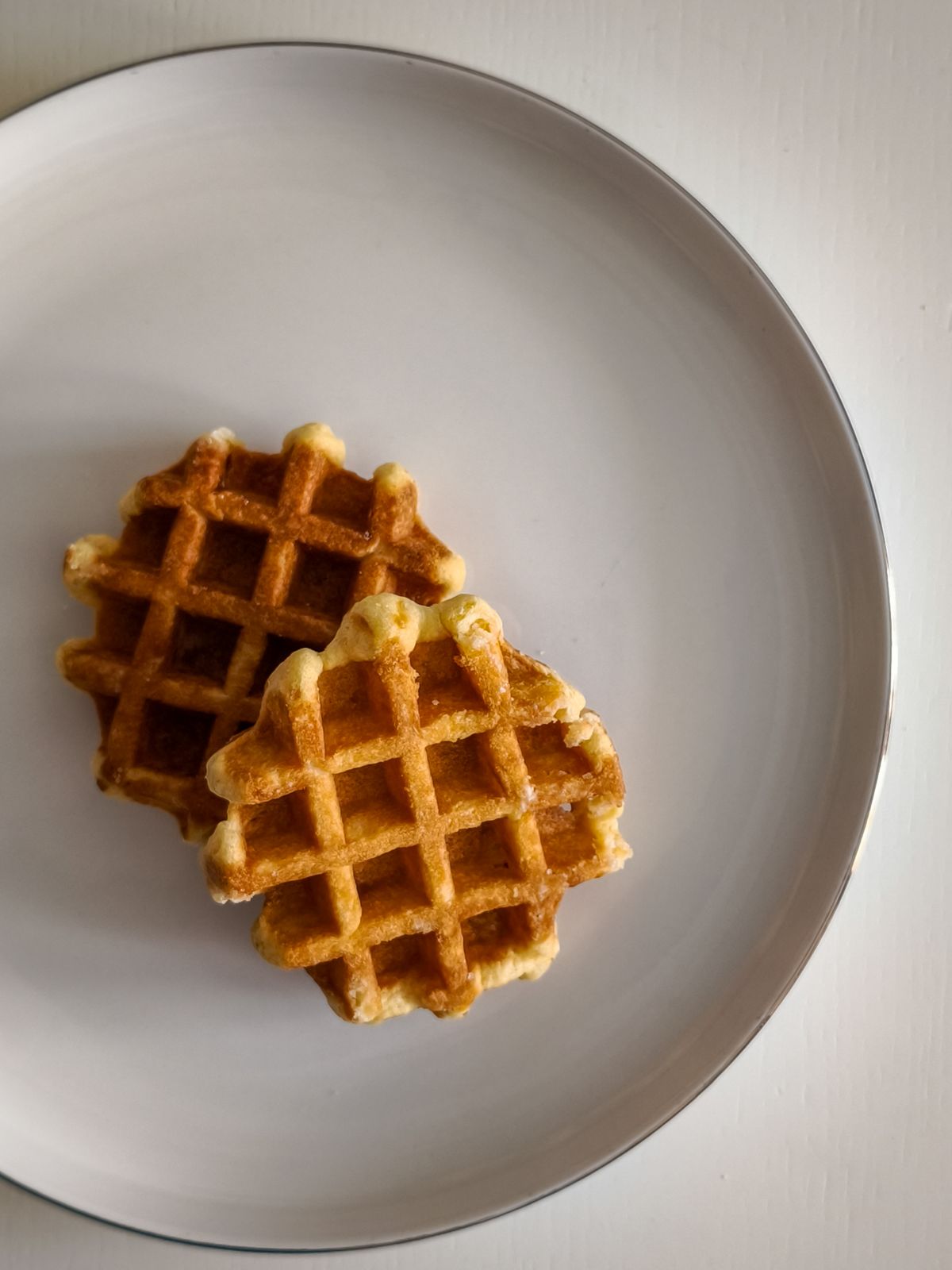
Before changing temperature, batter or cooking time, look at where the waffle is uneven. Bon Appétit's 2026 waffle-maker testing found that some machines produced inconsistent or uneven results, which confirms an important troubleshooting point: not every uneven waffle is caused by the recipe.
| What you see | First suspect | Best next test |
|---|---|---|
| Same corner is pale every time | Uneven heat / plate contact | Repeat with identical portions and orientation |
| One entire side is darker | Top-vs-bottom plate heating or contact | Compare multiple waffles before changing batter |
| Pale patches move around | Uneven batter distribution | Measure and spread the next portion consistently |
| First waffle pale, later waffles better | Incomplete preheating | Allow a longer initial preheat |
| First waffle good, later ones pale | Heat recovery between batches | Wait for the iron to recover before refilling |
| Edges burn while center is pale | Fill level, heat or batter distribution | Use a smaller measured portion at the same setting |
7 Reasons Waffles Cook Unevenly
1. The waffle maker was not fully preheated
The ready light is useful, but the first waffle is also diagnostic. If the first comes out noticeably paler than later waffles while everything else stays the same, give the machine more time to stabilize before the next session.
2. The iron does not recover between waffles
Opening the plates, removing a waffle and adding cool batter removes heat. If successive waffles become progressively paler, allow recovery time between batches instead of increasing the recipe's sugar or fat.
3. Batter is not reaching the plates evenly
A thick batter dropped in one mound may not reach every corner before the lid closes. A very small portion can also leave shallow areas with less plate contact. Use a repeatable portion and follow the manufacturer's filling method.
4. You are overfilling the waffle maker
More batter does not guarantee a fuller, more even waffle. Excess batter can overflow while still creating inconsistent thickness inside the grid. Measure the next portion so you can compare results rather than pouring by eye.
5. The plates have hot and cool zones
This becomes more likely when the same exact location is consistently darker or lighter across multiple waffles. Bon Appétit's testing specifically rejected some machines for uneven cooking consistency.
6. The top and bottom plates make different contact
If one face is consistently darker than the other, the difference may be related to heat delivery or how the lid contacts the waffle. Avoid pressing down on a lid unless the manufacturer's instructions explicitly tell you to do so.
7. The batter itself is inconsistent
If dry ingredients, melted fat or add-ins are unevenly distributed, different spoonfuls can cook differently. Mix according to the recipe, scrape the bowl as needed, and avoid making several formula changes while diagnosing an appliance pattern.
The Three-Waffle Test: Is It the Batter or the Waffle Maker?
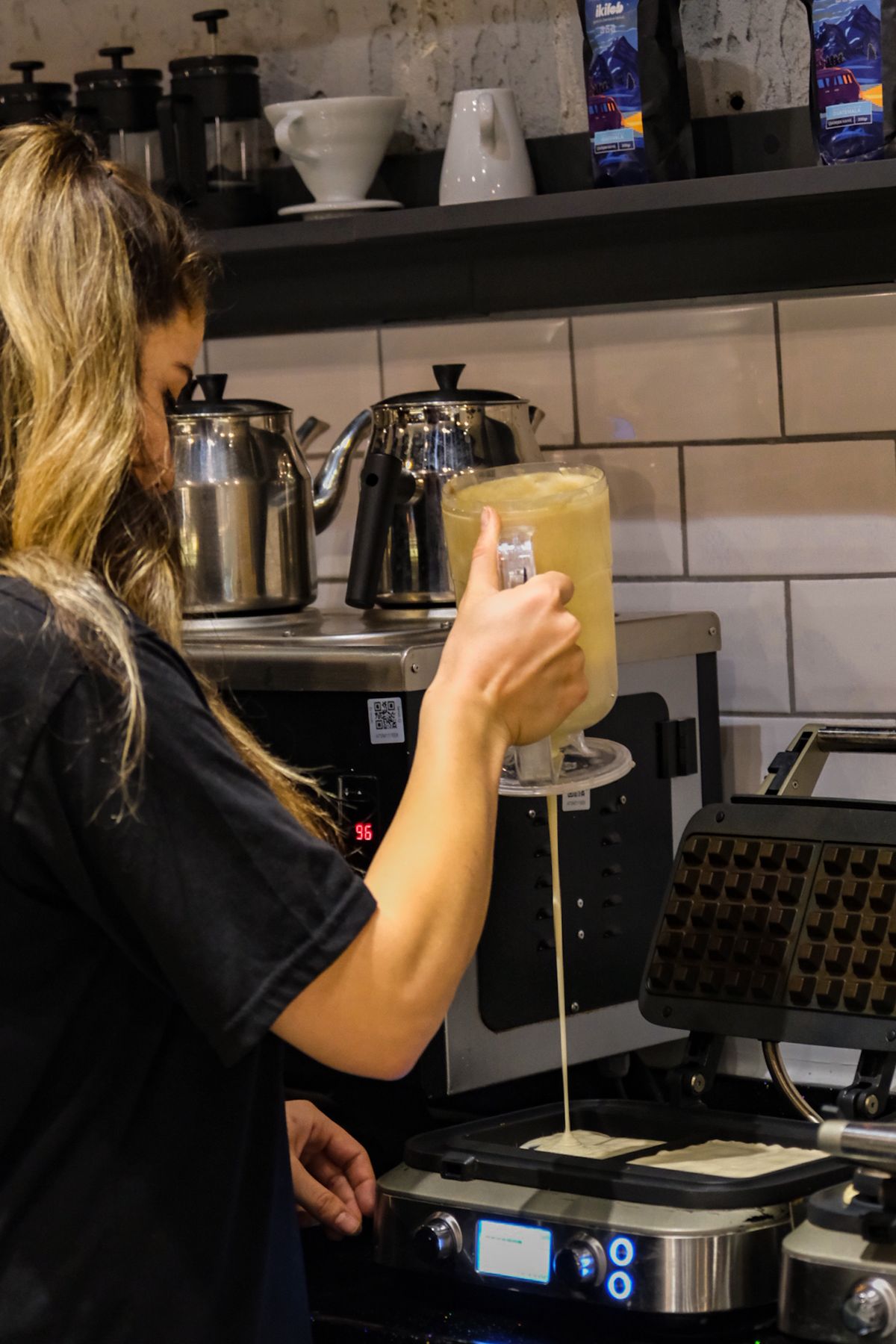
This is the most useful way to narrow the problem without guessing. Keep the recipe unchanged and make three controlled waffles.
Fully preheat the waffle maker
Start only after the machine has reached its normal cooking state.
Measure the same amount of batter
Use a measuring cup or scale so portion size is not changing between tests.
Place the batter the same way
Keep the starting position and spreading method consistent.
Use the same browning setting and cook cue
Do not compensate midway through the test.
Compare the location of pale and dark areas
If the same zones repeat, appliance heat distribution becomes more plausible. If the pattern moves, portioning and batter distribution deserve more attention.
Why Is One Side of My Waffle Darker Than the Other?
Top-to-bottom differences can happen when the two plates transfer heat differently or when the waffle makes better contact with one plate. This is particularly noticeable when one face repeatedly develops deep browning while the opposite face stays pale.
Do not flip a fixed waffle maker upside down unless it is specifically designed to rotate. Instead, test several identical waffles at a moderate browning setting. If the difference remains highly repeatable, consult the manufacturer's troubleshooting information for that model.
Why Are My Waffles Pale in Spots?
Patchy browning is often more informative than overall paleness. First ask whether the pale spots occur in the same grid locations. If they move from waffle to waffle, batter distribution, portion size and how the lid closes are more useful variables to inspect.
Fixed pale patch
Repeatable cool zone or plate-contact issue becomes more plausible.
Moving pale patches
Look first at how much batter you use and where it spreads.
Pale first batch only
Extend initial preheating before changing the recipe.
Pale later batches
Give the iron time to recover between waffles.
Do Rotating Waffle Makers Cook More Evenly?
Rotation is intended to help distribute batter and heat exposure more evenly in some waffle-maker designs. Current rotating models are explicitly marketed around more even cooking, while independent appliance testing shows that consistency varies substantially by machine.
That does not mean you need a rotating iron to make an evenly browned waffle. A well-designed fixed machine can cook consistently. Rotation is a design feature, not a substitute for proper preheating, portioning and following the appliance instructions.
How Do I Know If My Waffle Maker Is the Problem?
Do not replace an appliance because of one uneven waffle. Look for a repeatable pattern under controlled conditions.
- the same physical area stays pale or burns across multiple waffles;
- you used equal batter portions and the same setting;
- the machine was fully preheated each time;
- the plates are clean and the lid closes normally;
- the problem appears with more than one suitable recipe.
If the machine has suddenly changed behavior, inspect it according to its manual. Stop using an appliance with damaged wiring, cracked components or other electrical defects and follow the manufacturer's service guidance.
What Not to Change First
Uneven browning often triggers recipe hacks—more sugar for color, extra oil for release, thinner batter for spreading. Those changes can mask the original problem. If the waffle maker has a cool zone, adding sugar does not repair the heating element; it simply changes how the rest of the waffle browns.
Keep the formula stable until you know whether the pattern follows the machine or the batter placement.
30-Second Diagnostic Checklist
| Question | If yes | Next move |
|---|---|---|
| Same spot pale every time? | Possible heat/contact pattern | Run controlled repeat test |
| Only first waffle pale? | Preheat may be incomplete | Preheat longer |
| Later waffles get paler? | Recovery may be slow | Wait between batches |
| Pale areas move? | Distribution more likely | Measure and place batter consistently |
| One face always darker? | Top/bottom difference | Check manual and repeat at moderate setting |
What This Guide Can and Cannot Establish
This is a source-based diagnostic framework, not a controlled test of your specific waffle maker. The pattern test can help distinguish repeatable appliance behavior from variable cooking technique, but it cannot identify a failed thermostat or heating element remotely. Exact fill amounts, settings, preheat cues and safe operation should come from your waffle maker's manual.
Frequently Asked Questions
Why does my waffle maker cook unevenly?
Possible causes include incomplete preheating, slow heat recovery, inconsistent batter placement or uneven heat across the plates. Make several waffles with identical portions and settings to see whether the same zones repeat.
Why is one side of my waffle darker?
If the same face is darker every time, top-to-bottom plate heat or contact may be involved. Repeat the test at the same setting and consult the manufacturer's instructions rather than pressing the lid or modifying the appliance.
Why are my waffles pale in some spots?
If pale areas move around, check batter quantity and distribution. If the exact same grid areas stay pale across multiple controlled waffles, a cool zone or contact issue becomes more plausible.
Why does the first waffle cook differently?
The plates may still be stabilizing at cooking temperature. If later waffles are consistently better, try a longer initial preheat.
Why do later waffles get lighter?
The iron may need more recovery time after each batch. Wait until it returns to its normal ready state before adding more batter.
Should I replace a waffle maker that cooks unevenly?
Not based on one batch. First control preheating, portion size, batter placement and settings. A repeatable hot or cool zone across recipes is stronger evidence that the appliance deserves inspection.
Bottom Line
Map the unevenness before you fix it. A repeatable pale corner, a dark top surface and random patchy browning are different clues. Fully preheat the iron, measure the batter and run a controlled three-waffle comparison. If the same hot or cool zones repeat, investigate the waffle maker; if they move, investigate your process first.