TRADER JOE’S · AIR FRYER · UPDATED AUGUST 2026
Trader Joe’s Vegetable Bird’s Nests in the air fryer
A crisp freezer-aisle appetizer that works best when you give the coating space, keep the sauce until the end, and pair it with something cool and fresh.
THE SHORT VERSION
Use the current box as the authority; air fry in one layer and serve as soon as the nests are hot and crisp.
A detailed label transcription reports 370°F for 8–10 minutes from frozen. Independent food writers used different times and temperatures, so a copied number is less useful than the package plus three visible readiness cues: crisp coating, hot centre and no cold spots.
What are Vegetable Bird’s Nests?
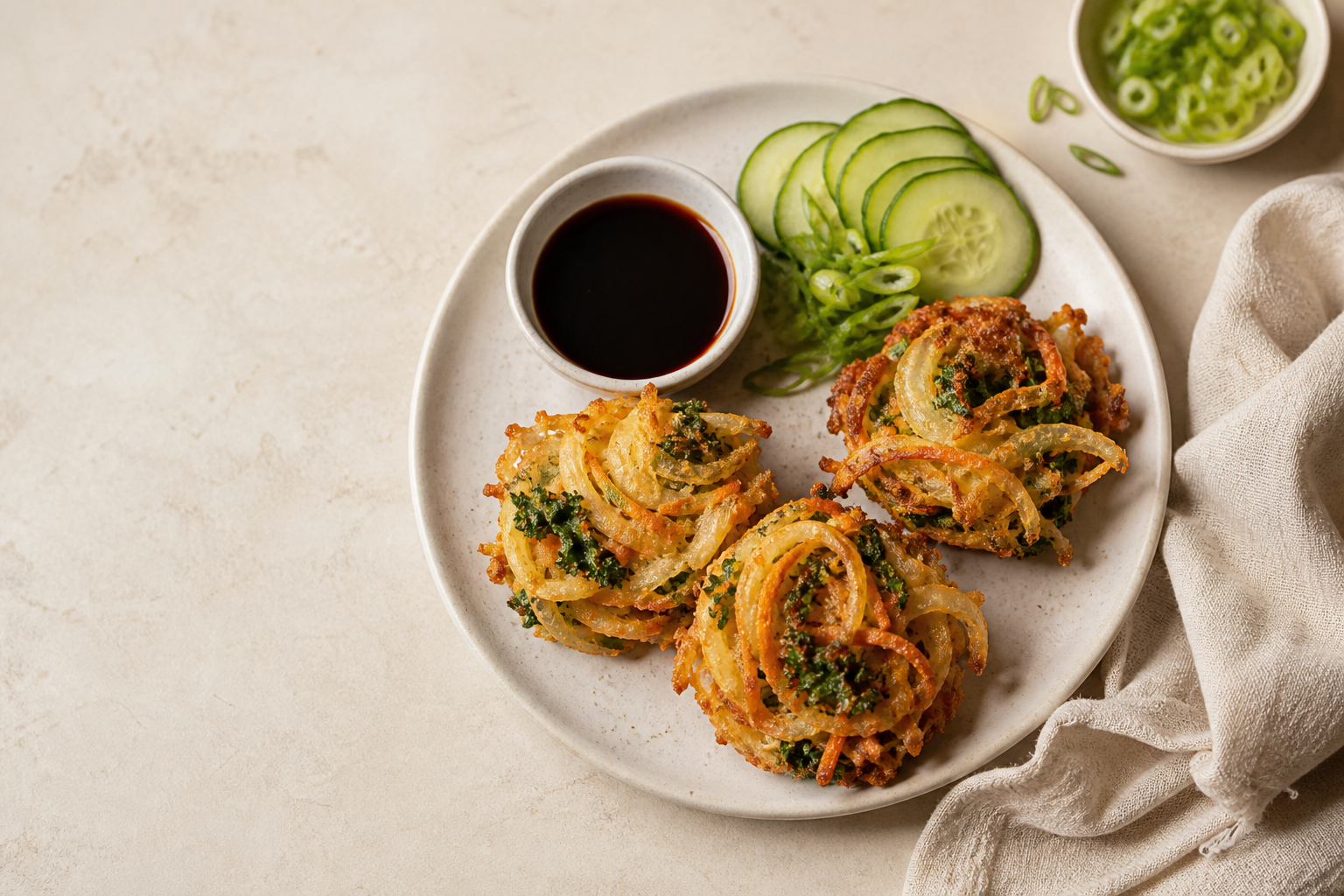
They are frozen bundles of thinly cut vegetables woven into a nest shape and coated in a tempura-style batter. Think of them as an appetizer or crunchy side, not as a plain vegetable serving: the coating and included sauce are a meaningful part of the dish.
A label-based review of the product identifies onion, carrot and kale and says the box includes oven, frying and air-fryer directions. The package in your freezer is always more current than a blog post, particularly for ingredients and allergens.
Air-fryer method: a useful starting point
- Start with the current package.Confirm the directions and whether your product should go in frozen. Do not use this page to override the label.
- Make one uncrowded layer.Leave a small gap around every nest. Stacking traps steam and softens the tempura.
- Use the box’s timing as the baseline.A published transcription reports 370°F for 8–10 minutes. Check before the end of that range, because basket shape and heat output differ.
- Warm the sauce separately.Keep it out of the basket and dip at the table; sauce on hot tempura works better than sauce on steaming tempura.
How to tell they are ready
LOOK
Dry, crisp coating
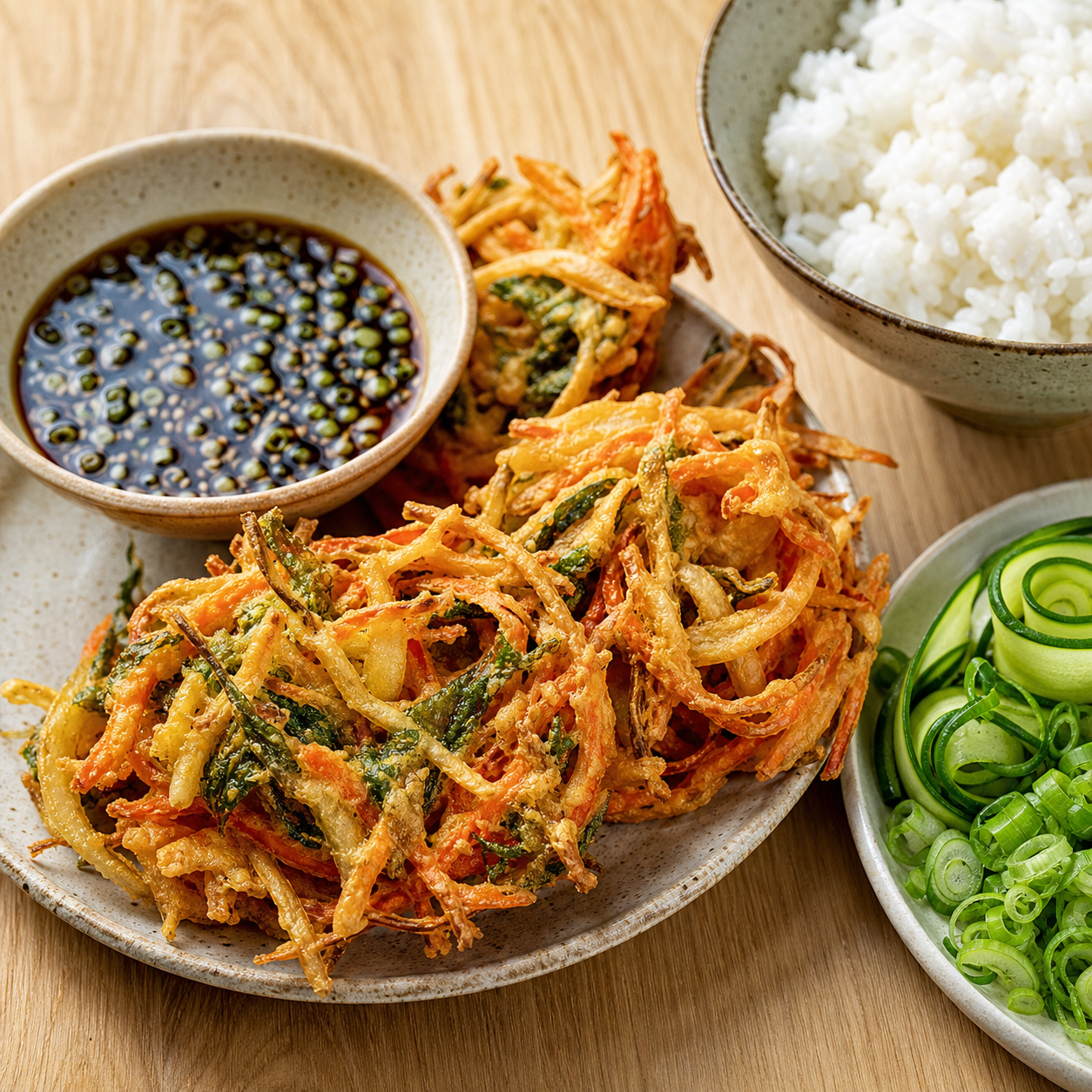
The outer strands should look golden and dry rather than pale and glossy. A dark exterior alone is not a doneness test.
FEEL
Firm enough to lift
Use tongs or a spatula. A nest that bends and sheds coating probably needs more time or more space around it.
EAT SAFELY
Hot centre
Break one open carefully and check that the middle is hot. Follow the package’s food-safety advice.
Three ways to serve them
1. The 10-minute rice bowl
Use the nests as the crunchy element beside plain rice, sliced cucumber and the included sauce. Add scallions or herbs if you have them. It is a more balanced lunch than a plate of fried tempura on its own, while remaining very low effort.
2. A sharper appetizer plate
Set out the nests with cucumber, radishes or snap peas and two dips: the included soy-based sauce plus a simple soy-and-rice-vinegar mixture. The extra acid helps if the supplied sauce tastes sweet to you.
3. A crisp side for noodles or soup
Serve the nests beside warm noodles or broth, not submerged in them. The contrast works; soaking the tempura eliminates the exact texture you cooked for.
Sauce ideas that make sense
USE THE INCLUDED PACKET
Quickest route
Warm it as the package directs and dip just before each bite.
IF YOU WANT LESS SWEETNESS
Soy + rice vinegar
Mix equal small amounts. Add sliced scallion or chili only if you want more heat.
IF YOU WANT A FULLER PLATE
Yogurt or mayo dip
Use a small amount beside the soy sauce, with cucumber or herbs to keep it fresh.
Ingredient and label notes
The older label transcription lists wheat and soy in the product and sauce. Treat that as background, not an allergy statement. Recipes, suppliers and allergen information can change; inspect the current box every time you serve someone with a food allergy, celiac disease or another medical dietary requirement.